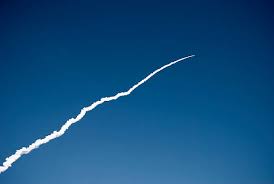
A contrail is a trail of condensed water from an aircraft or rocket at high altitude, seen as a white streak against the sky.
Imposter syndrome can be loosely defined as “feeling like a fraud”.
When I first decided to enter the teaching profession, I knew I was not suffering from imposter syndrome. The reason being: I was in fact an imposter! I had very little teaching experience and no real credentials. (At this time during the late 1980s, it was all too easy to obtain an Emergency Teaching Credential in the State of California.)
I obtained my first real teaching position in October of 1987 by “cold-calling” school districts within a 30 minute driving radius of my home in Pomona, California. It was a Monday. By my fifth call I had an interview. By Friday morning I had a teaching position. By Friday afternoon I had my first classes.
I joked with my friends about being a teacher. Someone suggested I show up to work with a nice briefcase, empty except for a squirt gun. I thought it would be fun and funny to pretend at teaching for a while.

Then, something happened. It happened quickly. It came upon me suddenly. I started to care. I started to care a lot.
Teaching became a very important part of my life and it also turned out to be so much work! That’s okay because it has been one of my most rewarding experiences. I figured out early not to expect riches. Nor did I imagine gaining recognition from administrators. I learned how to ace the twice yearly evaluations, which was not hard. They were basically “dog and pony” shows. I also learned that the most important feedback in teaching was that which came from students, colleagues and parents.
I was a science teacher, which could be fun. I also discovered that I could be funny, which proved to be a real asset. Immature students never phased me. I could always one up them by being even more immature than they were.
Early in my career I taught “Ciencia” to Spanish speakers. Teaching limited English students was very rewarding. Later I taught basic, rudimentary science classes. Those classes were so, so daunting – certainly not for the faint of heart.
As I earned my stripes, I started teaching college preparatory classes like Biology. Biology was great. It felt like summer camp – lots of activities and rooms full of smart, enthusiastic sophomores. I also taught some classes in Earth Science, Environmental Science and Physics.
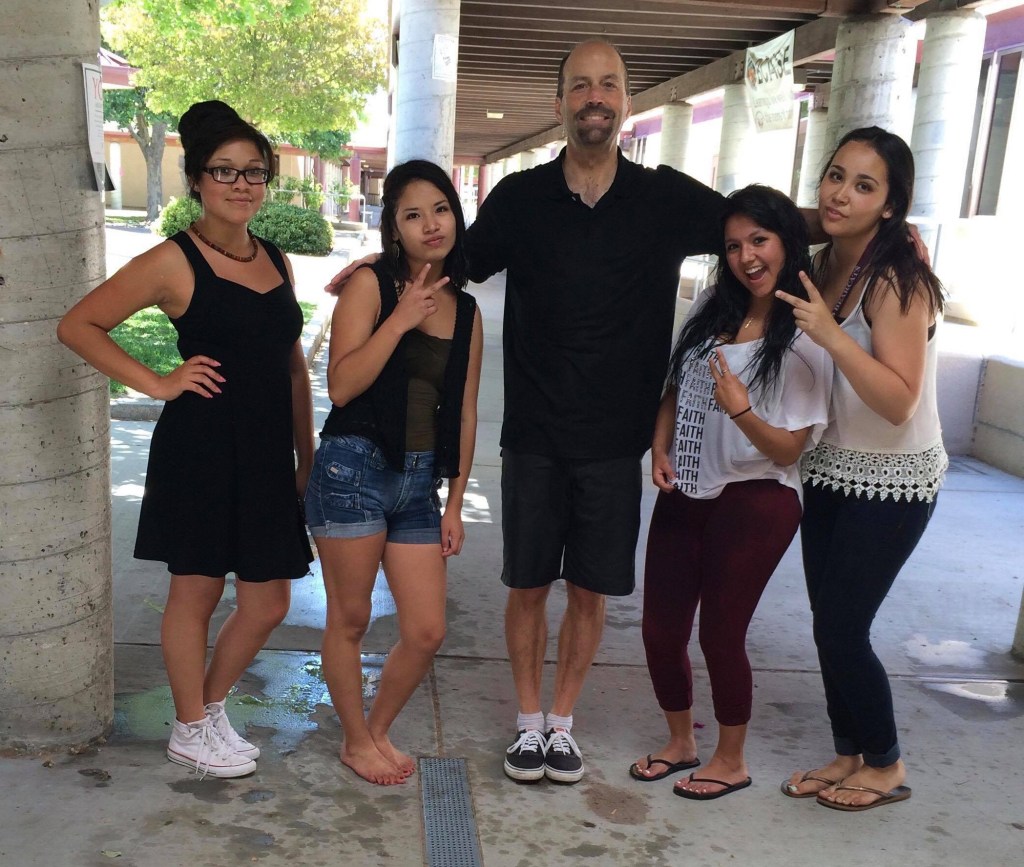
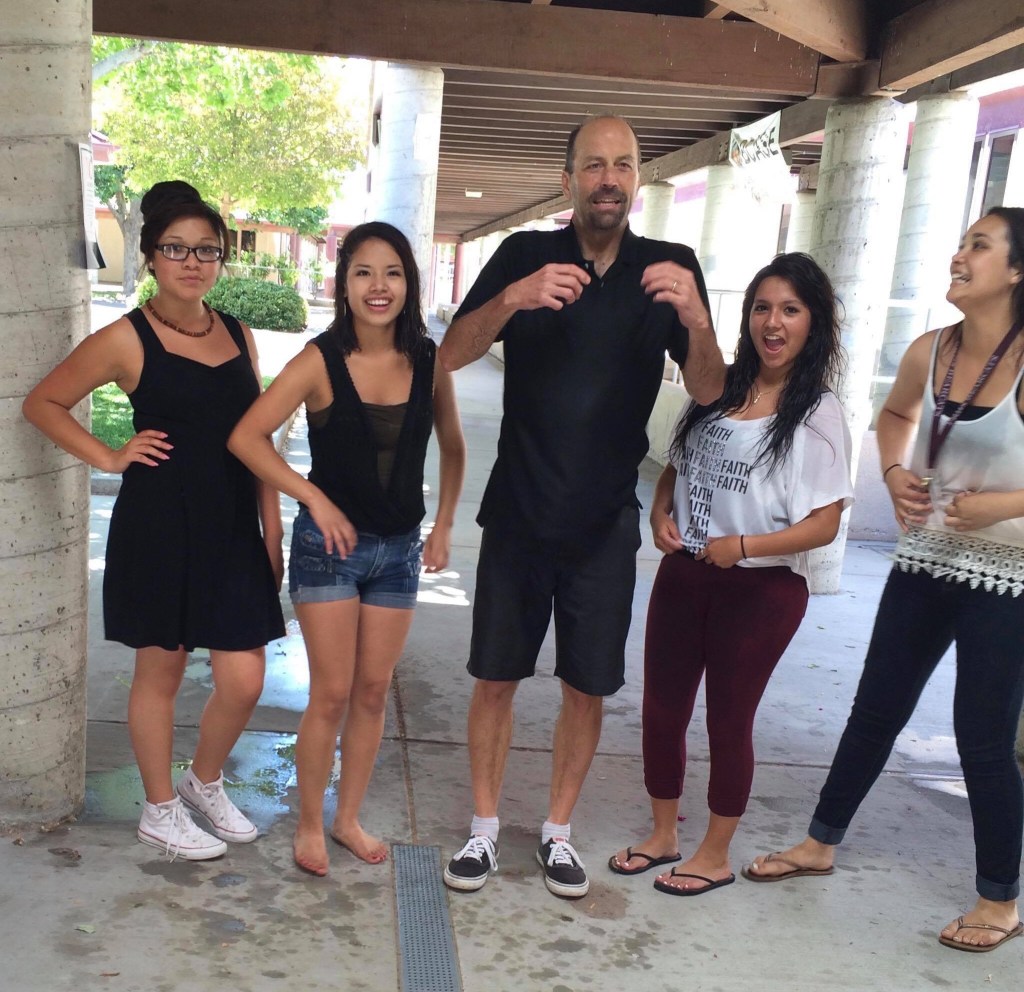
I ended my career teaching Chemistry. Chemistry was the best. It was my worst subject in both high school and college, but it was wonderful to teach. What made Chemistry so wonderful to teach? The answer to that was simple: the students. The classes were made up of highly motivated (and nervous) juniors intent on attending a University of California campus. If you planned on applying to a UC, there was no way around taking Chemistry. It also helped that it was extremely challenging to teach (for me) and extremely challenging to learn (for them.) We were in it together. There were lots of labs and activities, many of them smoky. It became a source of pride for me when I achieved the status of folk hero for setting off the smoke alarms on a near weekly basis – thus evacuating every classroom on campus and providing students with a much needed break, stretch and breath of fresh air.
When I retired in 2018, I was the last chemistry teacher at the school where I taught. After my departure, chemistry would no longer be taught there.
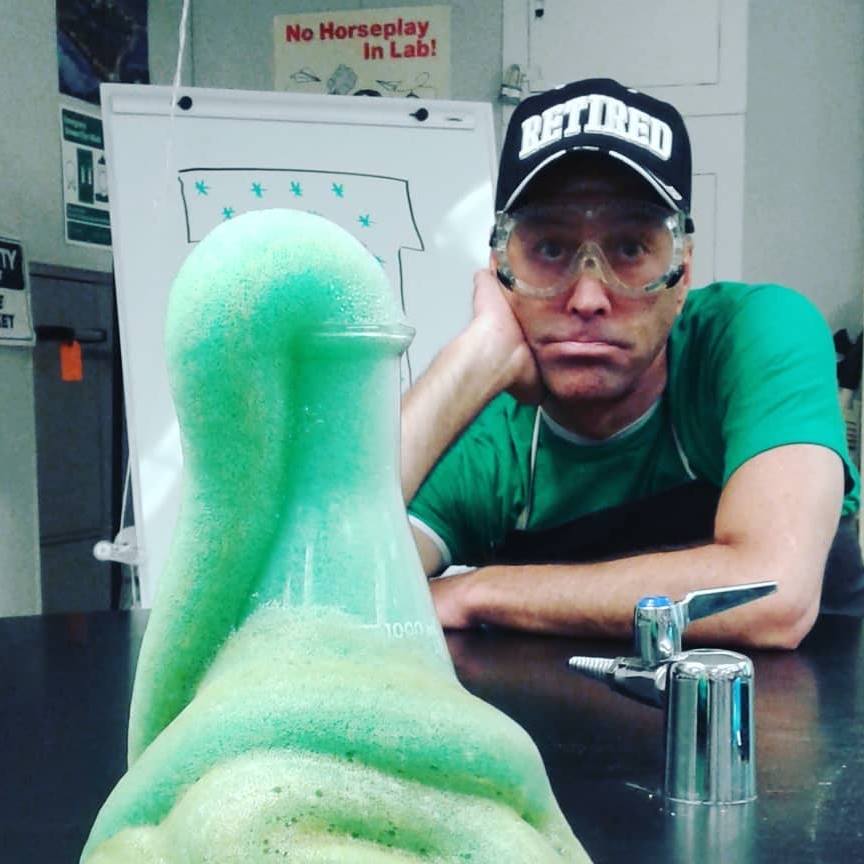
What I want to record here and now however is my experience with contrails.
I was in the middle of my career during the extreme 2000’s, when even Jenga went “extreme”.
Inspired by Mountain Dew’s extreme advertising and shows on The Discovery Channel, like “Extreme Volcanoes: When Nature Attacks”, I decided to propose a new course offering to the school board. It would be called “eXtreme Science” and it would allow me, Mr. Boicourt, to teach whatever the heck I wanted! Woohoo! Extreme!
The idea for “eXtreme Science” (lower case ‘e’, upper case ‘X’) began as a bit of a gag or lark but once again ended up being very productive and rewarding – just like my chosen career. Even the title was an inside joke. (The whole purpose of science is to explore the extremes of human understanding.)
Thanks mainly to the support of my vice principal at the time, Mr. Smith – the course was approved and I was on my way to making it up and teaching it. Again, I thought it would be fun and funny – a bit of a prank, to teach a made up course with a ridiculous name. (Thank you Mr. Smith! Note: Mr. Smith also served as Mrs. Boicourt’s principal, my son’s principal and my daughter’s principal. He was principal to the stars!)
I’ll never forget using school money to order water balloon launchers from a website called “Silly Town”. When I got a call from the district office I was sure the jig was up – only to hear the secretary say “Mr. Boicourt, I’m calling to let you know your order from Silly Town has been approved.”
The course turned out to be very successful. The course was the most popular science elective ever offered at my high school. 30 students signed up for the first class the first year it was offered. Within a few years there were more students signing up for the class than I could teach.
Each of the year’s two semesters had a general theme. Semester One was “Adventure”. Semester Two was “Explosions”. There were units within each semester. For the “Adventure Semester” the units were Mountains, Weather, The Ocean, Waves, Flight and Exploration. Within the flight unit we studied Projectiles (water balloons, lots of water balloons), Rockets, Airships and Airplanes. The “Explosions” units were: Explosions on Earth such as Mechanical Explosions (including loud dry ice “bombs”), Combustion (including extreme fire behavior), Chemical Reactions, Nuclear Reactions (Manhattan Project), Volcanoes, Asteroid and Comet Impacts and Explosions in Space (Stars and The Big Bang.)
The curriculum was interdisciplinary and was concentrated on extremes. For example, we didn’t learn about all mountains, but instead focused on the extreme: Mount Everest, the tallest mountain. We learned everything there was to know about Mount Everest (aka Chomolungma or Sagamartha.) We studied the geology, weather, culture, politics, history, climbing, ecology and high altitude physiology of Everest. It took one month. Every May we would pick an Everest expedition to follow. The culminating project was for students to make a three dimensional Mount Everest board game. A week would be set aside for game play. (I had to play each one, of course.)
We watched movies like Contact and Deep Impact. We read books like Into Thin Air and The Perfect Storm.

Every topic covered in eXtreme Science had to meet the following requirements. The topic had to be extreme! The topic had to be interesting. The activities had to be hands-on. The activities had to be fun. We had to climb onto the roof at least twice a month! (It’s surprising how many things can be thrown off the roof in the name of science: eggs, Barbies, marbles, boulders, paper airplanes, water balloons, etc.) Finally, there had to be some kind of clear connection between topics.
The first year I taught the course was special. In that first year, the students were “guinea pigs”, so if at any time, any student felt that what we were studying did not meet the above requirements, they could veto the unit and we would move on to the next unit. Each student enjoyed complete autonomy.

In order to transition from “Explosions on Earth” to “Explosions in Space” we studied NASA’s space program and built model rockets. Thus brings us to contrails.
Having grown tired of building model rockets from kits, I decided one year that students should design their own rockets.

I purchased some software that would predict each rocket’s performance based on the design. We would also manually test each rocket using string. Students would be graded on two equally important factors. How high the rocket went and how closely it returned to the launch site. (The grading rubric was a complicated formula that only I understood.) In addition, students would be allowed to form their own groups!
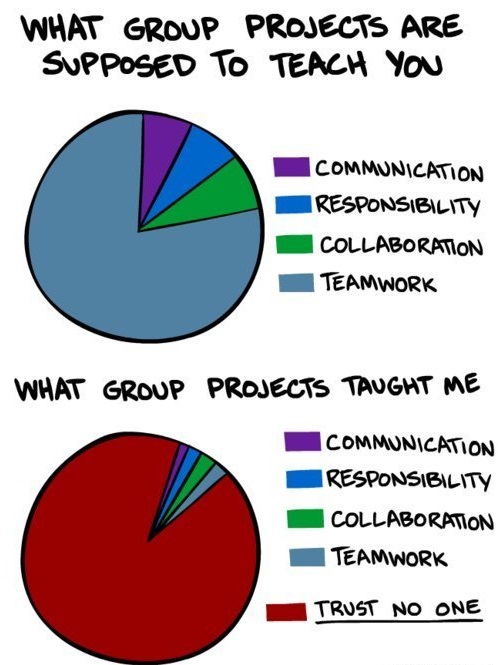
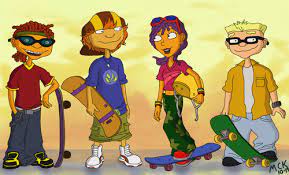
A group of skaters quickly formed a working group with cheers and high fives. Then they got to work. I had never seen them so focused and serious.
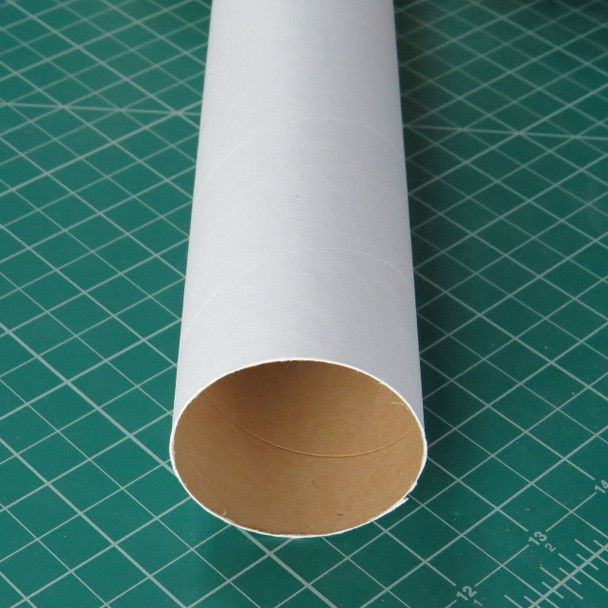
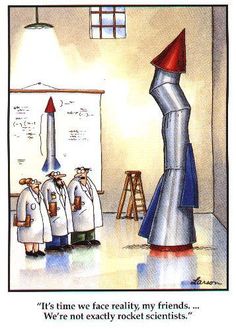
For their body tube, “The Skaters” chose the fattest, longest body tube available. They didn’t even trim it down, which seemed odd. I queried them, competently modeling the Socratic Method: “That might provide you with a stable rocket, but how do you think that is going to affect its performance?’ “We’re cool”, was their reply.
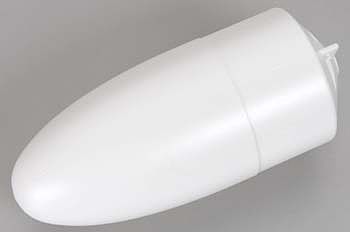
Next the young rocketeers chose a nose cone. They chose a classic, long nose cone with a rounded nose. Good.
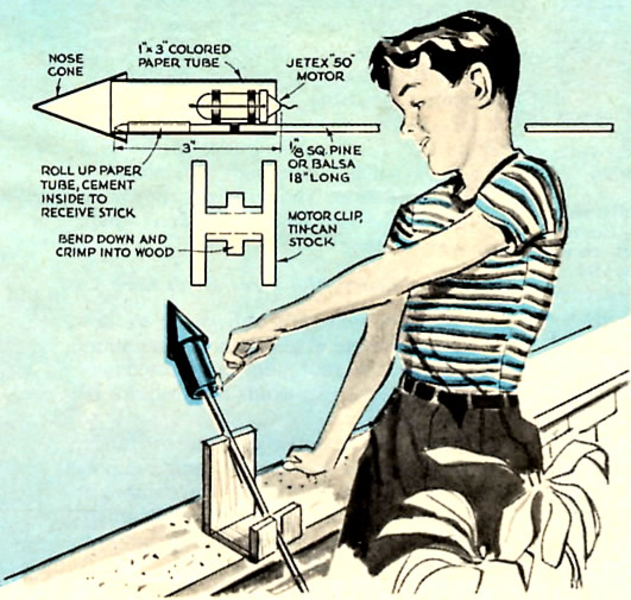
The next step in the process was fin design. The Skaters designed large, droopy fins that were reminiscent of a sack of soccer balls. Interesting. I queried them again: “That should provide for excellent stability, but have you considered the effect those large fins will have on the coefficient of friction?” “We’re cool”, was their reply.
Painting the rockets was something students always looked forward to. The students grew very excited in anticipation of “Painting Day”. On Painting Day, The Skaters mixed up a batch of paint that was a combination of white, red and yellow. The result was a kind of jaundiced, fleshy pink. Interesting!
I must admit that The Skaters had one of the most carefully constructed rockets in the class. That is until they “spilled” Elmer’s glue all over the tip of the nose cone. The glue had dribbled down the sides of the rocket and dried. So messy. “That’s going to cost you some points” was my comment. “We’re cool”, was their reply.
One of the final steps in the whole process was for students to name their rocket and display the final result. The Skaters named their rocket the “USS Penetrator” and stuck a condom on top. Their classmates would walk by the “rocket” and ask “What is that?” to which one of The Skaters would always indignantly respond, “It’s a rocket! Jeez!”
The Skaters were so proud of their “rocket” – and rightfully so. It was a job well done. They even finished ahead of schedule. “Can we go show our rocket to Mr. Williams’ class?”, they asked? “No.”, I replied. I explained that in fact, their “rocket” had become a major distraction and that they were testing the “extremes of my patience”. However, they had not broken a single rule or guideline. I informed them that I would store the rocket for them (out of public view) until launch day. If they kept themselves busy and out of trouble, their rocket would fly with the others on launch day. “What if we make another rocket out of these scrap pieces?” they enthusiastically proposed. Well of course! I gave them the go ahead and they went to work. They worked very stealthily in their own corner of the room – The Skaters’ Skunk Works. Not even the Russians could have figured out what The Skaters were up to.
After a few days I could tell by the gleam in their eyes that they had something good – something really, really good. “We named it after you, Mr. Boicourt!” They then dramatically revealed an identical replica of the USS Penetrator. Only it was about one tenth the size. It was a tiny, tiny version of the grand USS Penetrator and it was called the USS Boicourt. It had the same fleshy, yellow-pink colors, the same nose cone shape, the same sack-like fins and it even had dried Elmers glue that had been “spilled” atop the nose cone.
Oh don’t you fret my dear readers, I had a plan.
Only one thing exceeded the excitement of Painting Day and that was Launch Day.
Twas the night before Launch Day. Earlier that day I had demonstrated how a model rocket engine works by igniting one in a work bench clamp behind the classroom. Cool! The students then armed their rockets. After that they locked them up securely. It was quiet on campus late that afternoon when I opened up the locked cabinet containing the USS Penetrator and the lilliputian-sized USS Boicourt. I could hear the sound of a coach’s whistle off in the distance. I set the two rockets on the counter. What excellent craftsmanship! I noticed that The Skaters had armed their behemoth with the largest model rocket engine I had available. It would give the rocket enough thrust to propel it a few hundred feet into the air. I removed that engine and replaced it with the weakest engine I had. As far as the USS Boicourt went, it was all set. I doubted we would see it again after its launch the next day. It was so light that it would outperform any other rocket on the field!
Launch Day dawned cold, blue and clear. (Cue the orchestral piece “The Planets” by Gustav Holst – movement “Mars”.)
The USS Penetrator stood on the launch pad. Stand clear! Arm the ignition! Commence count down! The tension was unbearable! Oh my! Oh my goodness!
Ten, nine, eight, seven, six, five, four, three, two, one… BLAST OFF!
The USS Penetrator barely cleared the launch tower. It rose to an elevation of approximately two feet, then flopped onto the grass where it sputtered impotently for a while and then, finally, ejected its nose cone and deployed its folded parachute. It was sad. The Skaters looked on in dismay and disbelief.
I feigned surprise. “That’s okay lads! It can happen to anyone! Let’s try your other rocket!”
As I expected, the USS Boicourt whistled nimbly off the launch pad to an altitude of well over one thousand feet never to be seen again.
Mission accomplished.
Footnote: The Skaters were allowed to reload their rocket with a new engine and give it a proper flight after its “surprising” malfunction. They received an A- for their group project.

 "Trail Reports"