So ends another ski season: skiing eighteen inches of fresh powder at Mammoth Mountain on a Monday in April.
The 2025/2026 season was definitely a mixed bag. The season had a late start and then was interrupted by a persistent “heat dome” over the West that almost entirely melted the Sierra snowpack. Mammoth Mountain survived and plans on staying open until Memorial Day. This is mainly due to its high altitude and east-facing slopes. (The Lake Tahoe resorts were not as fortunate.) As I write this, Mikaela Shiffrin is training at Mammoth Mountain, and they just go more snow!
I had modest goals for this season but came up short. My goal was to ski 15 days. My metric for one day of skiing is 20,000 vertical feet of descent. That’s a season total of 300,000 vertical feet. On this most recent trip to Mammoth, I rode the chairlift with a gentleman who was a few years my senior. In a typical year, he skis forty days. He considers one day of skiing to be 30,000 vertical feet of descent. That’s a season total of 1.2 million vertical feet. Humbling! Yet, because of the heat dome, I only skied 12 days for a total of 240,000 vertical feet of descent.
This is my fifth season skiing on Alterra’s Ikon ski pass. By skiing at least 12 days a season, I am maintaining my daily lift rate at early 21st-century dollars. Someone skiing forty days in a season is skiing for twenty bucks a day. Those are 1980 prices!
Alterra wants everyone to buy their season pass. It is priced so that this is possible. The walk-up window ticket price is prohibitive. Does this strategy violate antitrust laws? We’ll see, as a class-action suit against Alterra is making its way through the courts.
I like the model. In an age of climatic uncertainty, a consortium like Alterra can amass enough capital each season to make improvements. A new fleet of Piston Bully snowcats? Check! A new lift or gondola? Check! How about a machine that is both a snowcat and a whiskey bar? Check!
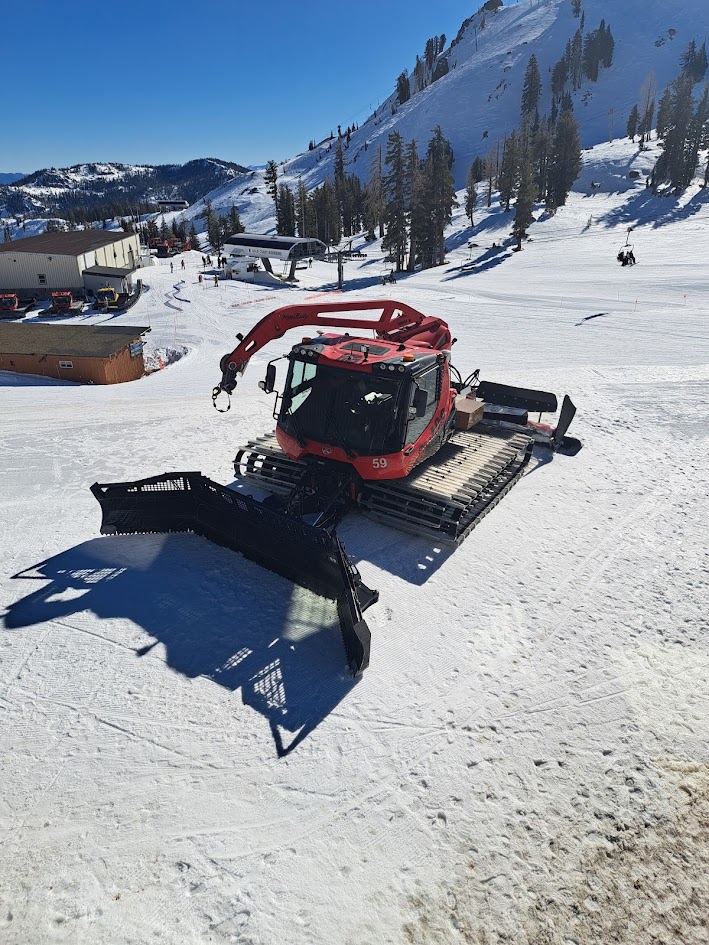
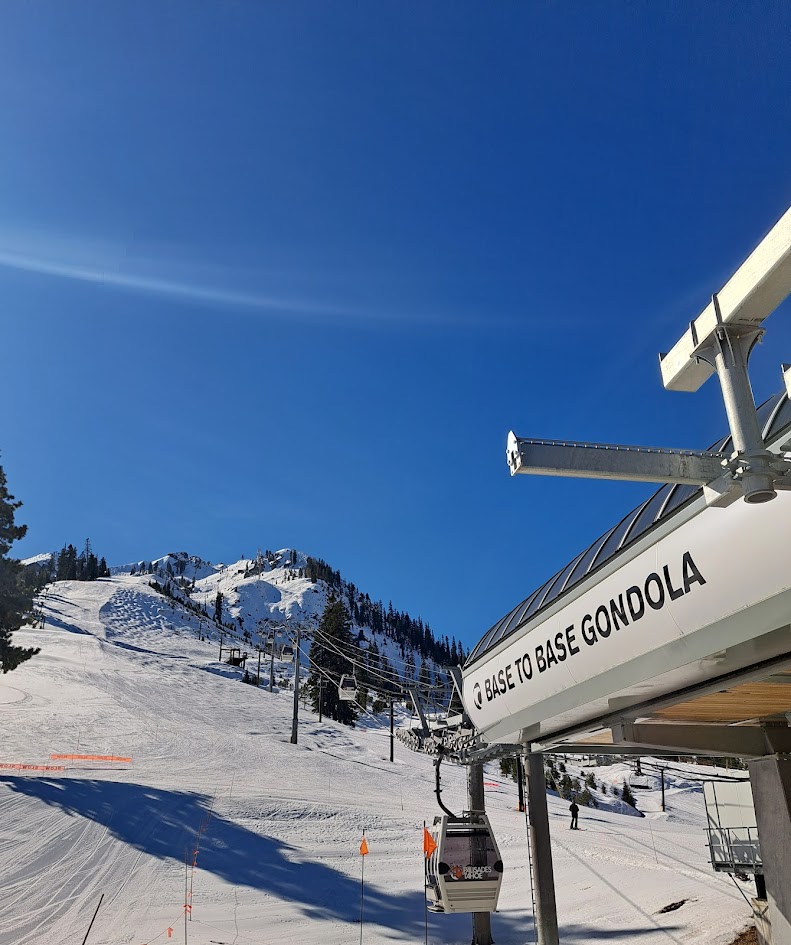
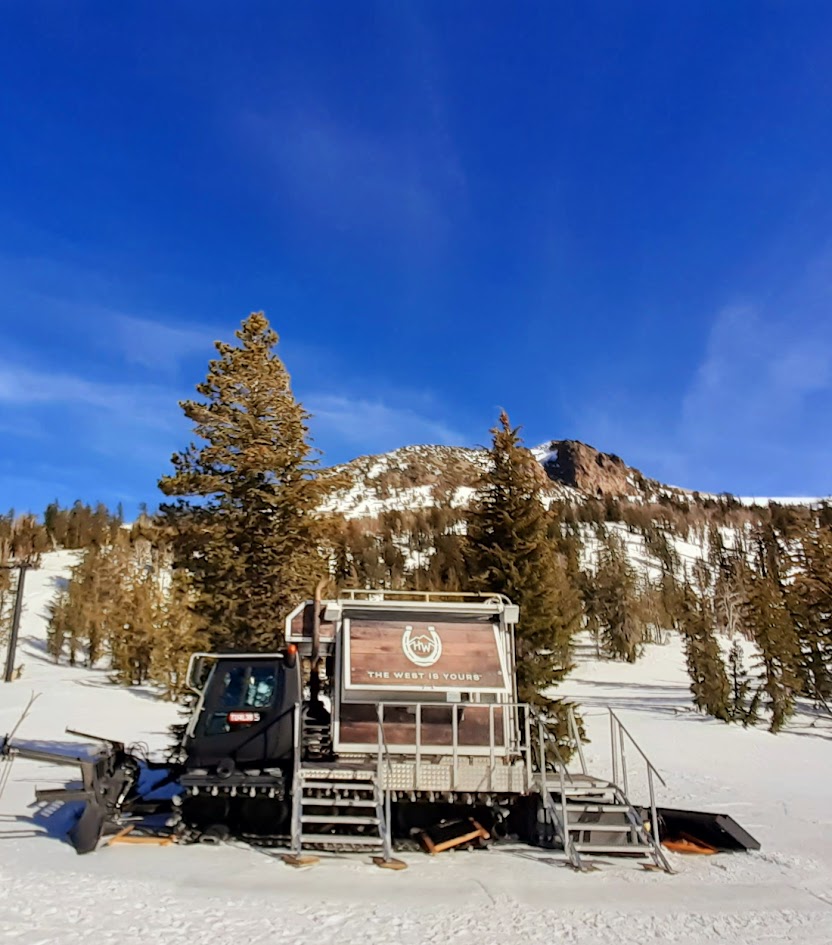
Another advantage is that their ski resorts can stay open on slow days without fretting over “losing money”.
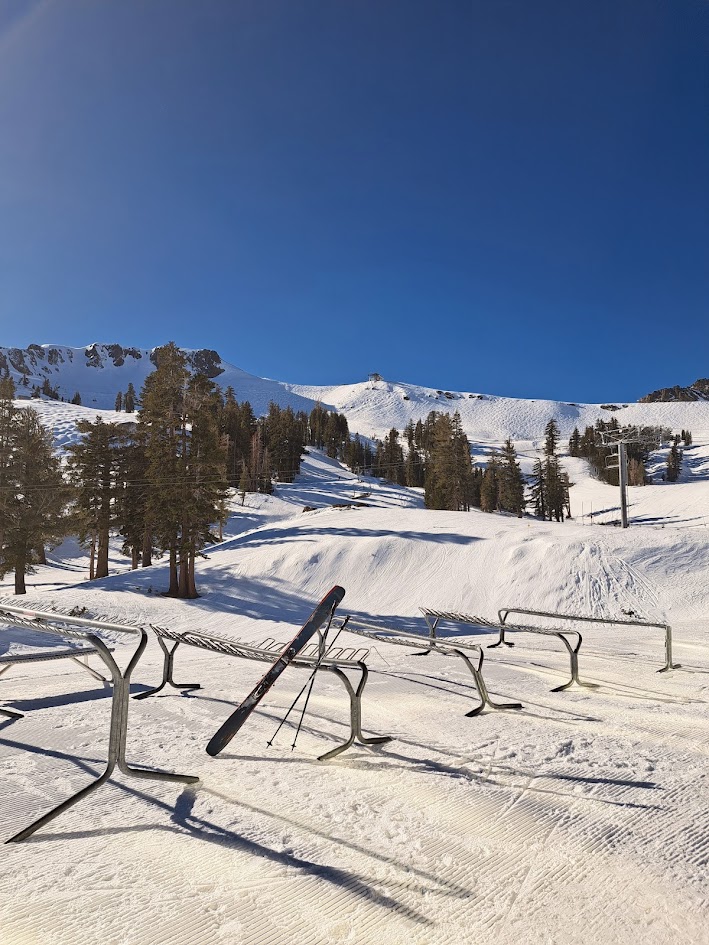
And from what I can see, Alterra is not the most horrible of companies. They are taking steps to achieve sustainability and they also continue to pursue diversity
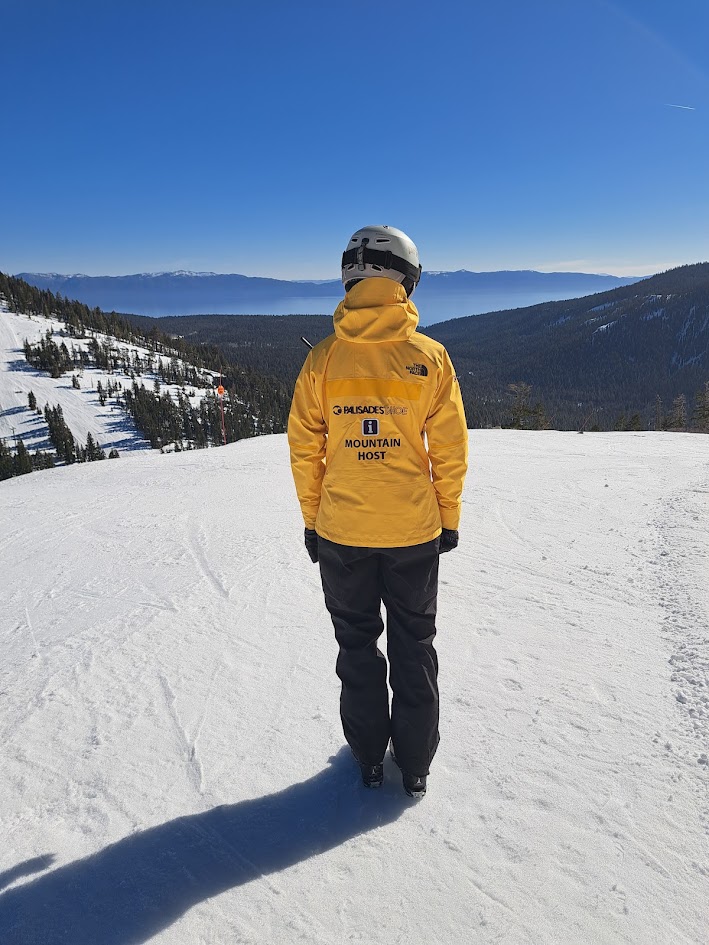
The Niece was actually an Alterra employee this season—getting paid to ski! Good for her!
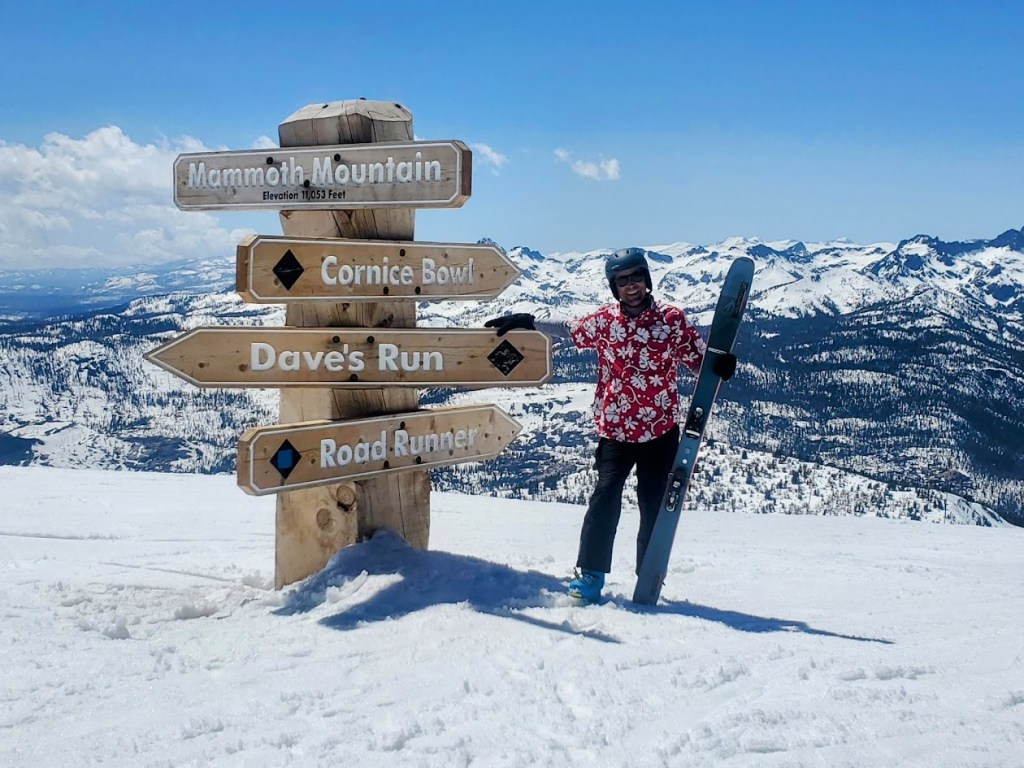
So there I was, skiing fresh snow in April, when I boarded the gondola for the summit on my last ski day of the season. The gondola contained a young man with women’s lingerie on his head and an apron that read “This dad needs a beer!” (He was not a dad, but he was drinking a beer.) There was a polite young woman who showed some mild concern about the terrain and her choice of skiing companion. There was a gentleman around my age who was getting in a little skiing before undergoing heart surgery next week. And there was Jim. Jim took me under his wing, and we headed for Dave’s Run. Appropriate!
Jim knows Mammoth, and he was very generous with his knowledge. He showed me some cool shortcuts and gave me a very useful tip for better engaging my outside edge.
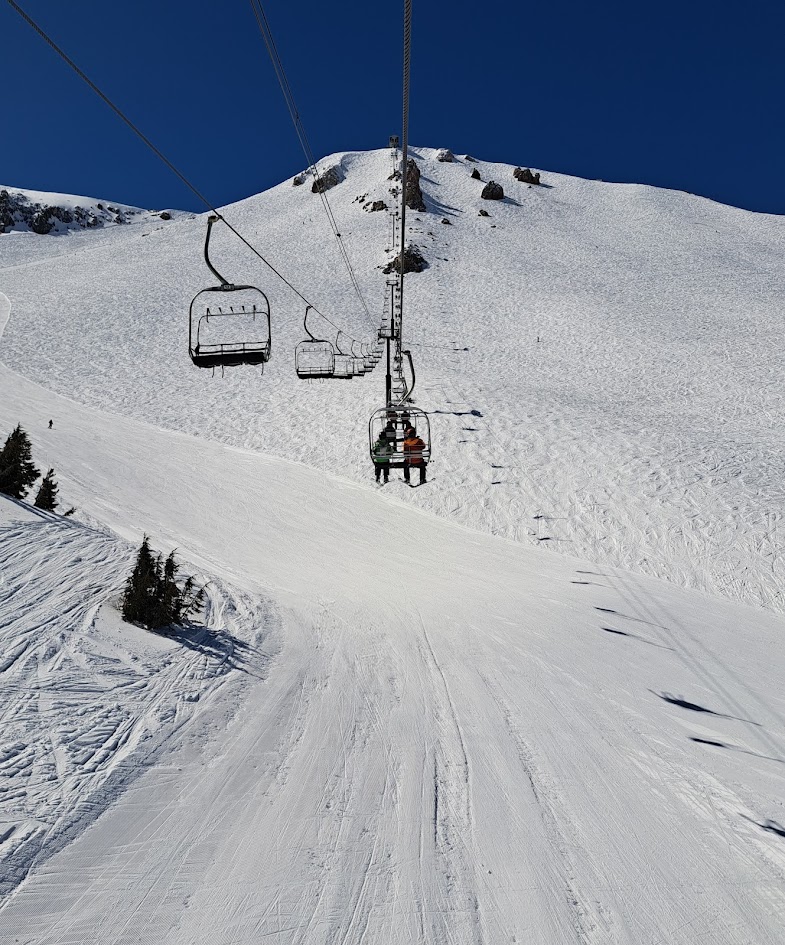
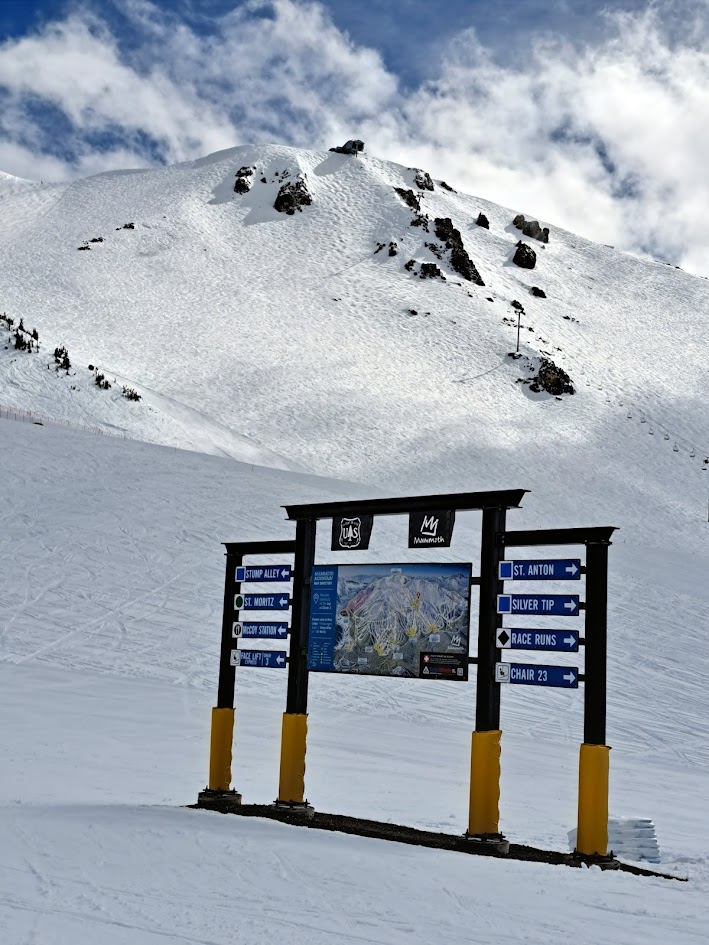
Near the end of our day, Jim was joined by his friend Bret. I trusted Jim not to get me killed. Bret was a different matter. I could tell that Jim’s friend Bret was a loose cannon. It was getting late, and we only had time for a few more runs. Bret wanted to do the Wipeout Chutes off of Chair 23. I have been studying and observing these chutes for a long time. On one occasion, I was ready to ski them when, as I ascended Chair 23, a skier below me “tomahawked” his way down the chutes for at least one hundred yards – literally cascading head over heels. I passed.
This day felt different, however. I knew I could follow Jim. Jim knew he could follow Bret. So up Chair 23 we rode, and down Wipeout Chute #1 we skied. I’m not bragging (actually, I think I am), but Wipeout Chute #1 is arguably one of the hardest named runs on Mammoth Mountain.
What a great way to end the season! And it wasn’t even hard. It was easy, and it was fun. It just looked scary. In some ways, steep slopes are easier to ski because the steeper the slope, the lighter you feel. For example, on a forty-five-degree slope, only half your weight is pressing down on the snow.
I will confess that I was scared, but once I committed to the idea, I stopped being scared. When Jim announced to me, “Dave! This is a consequential ski run!” I just smiled and yelled, “YEWWW!” I had let this ski run loom so large in my head that it had become my nemesis. I was beginning to think that I would never ski it, or that if I tried, I would get hurt. The danger was real. The fear was real. Trusting in my skill set, experience, and abilities was also real.
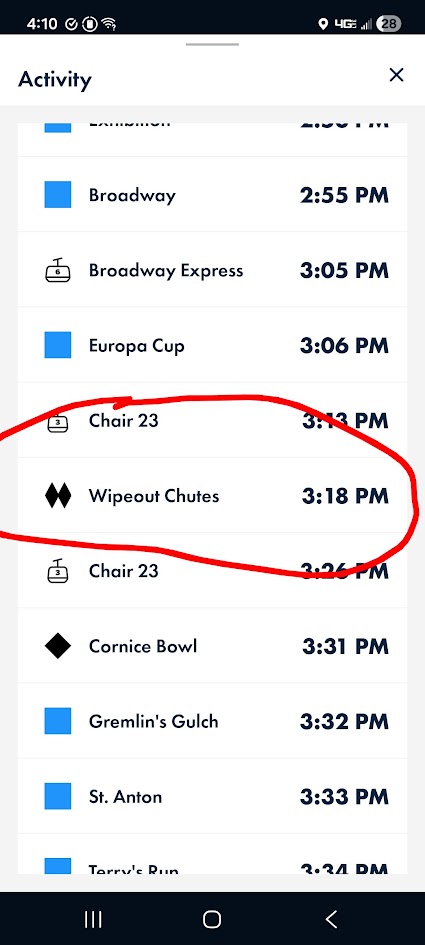
I kept my form, linked my turns, and skied it top to bottom—as is my rule.
Yewww indeed!

 "Trail Reports"
One thought on “Ski Trail Report: Wipeout Shoot #1”