During the 1800s, much of California was a patchwork of large cattle ranches.
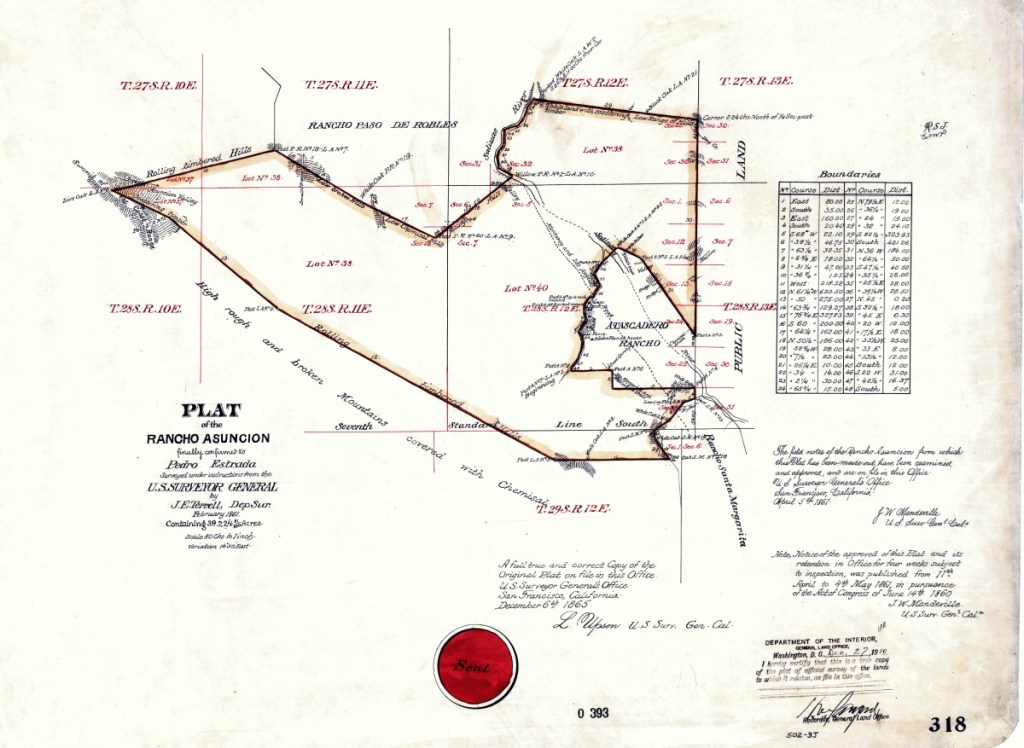
A short but hilly bike ride from my home in Atascadero leads to what remains of one of these ranches, Rancho Asuncion. The rancho was carved from Mission San Miguel lands and granted to a single individual under Spanish rule, when land was often awarded to encourage settlement of remote areas and to reward loyal and influential people. Before that, the land belonged to the Salinan Tribe.
The ranchos of California remained intact through Mexican rule, but this changed after statehood. Under U.S. governance, the California Land Act of 1851 required owners of ranchos and land grants to prove their claims. The process was costly and cumbersome. Many ranchos were broken up and sold to cover legal fees.
Patrick Washington Murphy (1840–1941) eventually gained control of Rancho Atascadero, Rancho Asuncion, and Rancho Santa Margarita—about 60,000 acres in total. The largest remaining portion is the Santa Margarita Ranch (14,000 acres), where many historic buildings still stand. Rancho Asuncion now encompasses roughly 3,600 acres, divided into eighteen ranchettes. Rancho Atascadero has long since been subdivided.
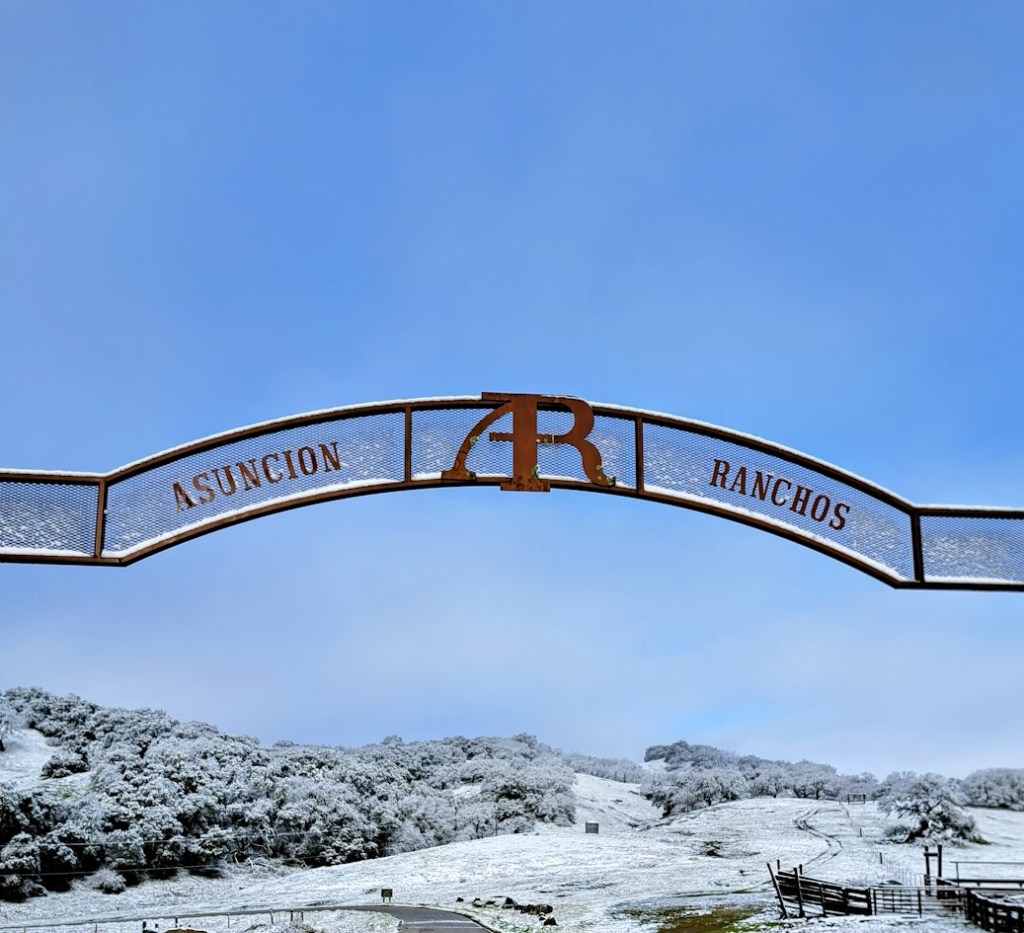
High on a ridge at the end of the Rancho Asuncion road lives a kind and generous couple who purchased three ranchettes, totaling about 1,000 acres. For more than twenty years, they have been gentle stewards of the land. Native plants thrive. Hawks and eagles are common. Large carnivores—bobcats, coyotes, mountain lions, and even bears—still roam there.
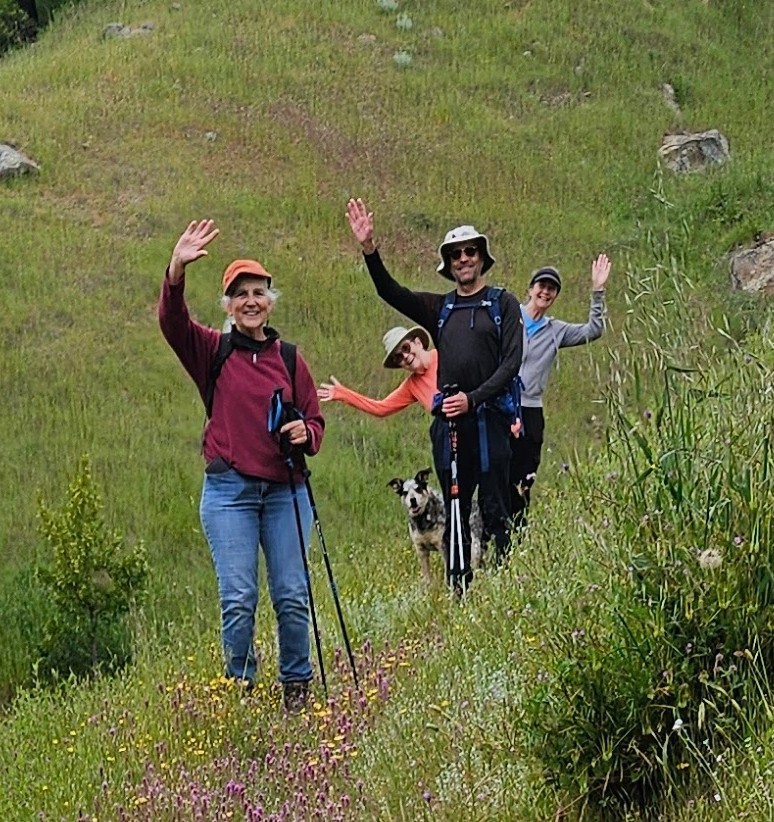
The owners maintain a network of hand-built hiking trails. A few years ago, Karen and I were invited to join a Thursday hiking group whose simple mission is to keep the trails open by walking them. The long-term goal for the land is preservation in perpetuity.
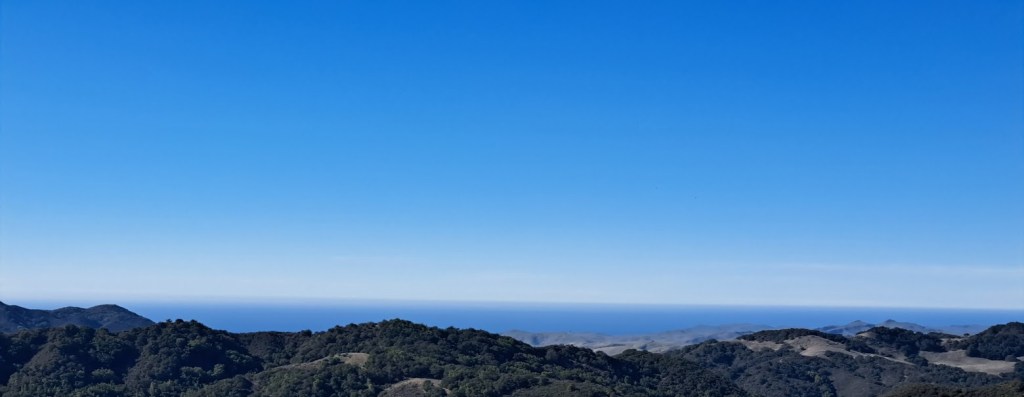
It is a special place, and a moody one. Some days it is windswept and foggy; others are still and quiet. From the ridge, the Pacific Ocean stretches to the horizon. How far can we see? Ten miles? Twenty? It feels infinite.
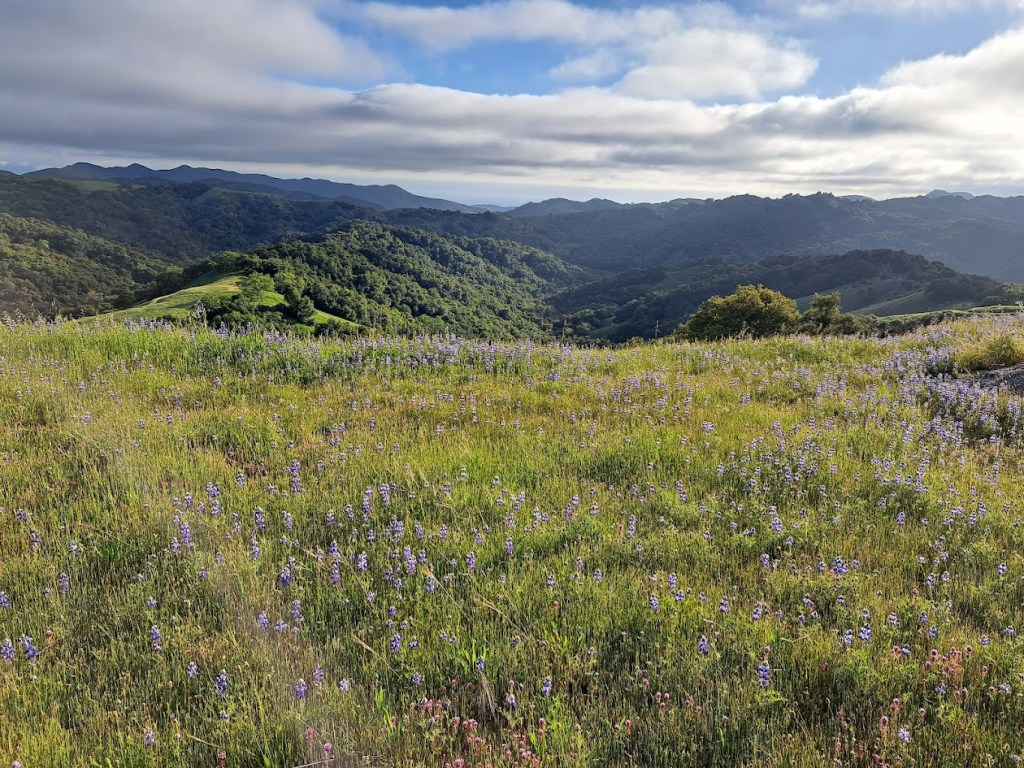
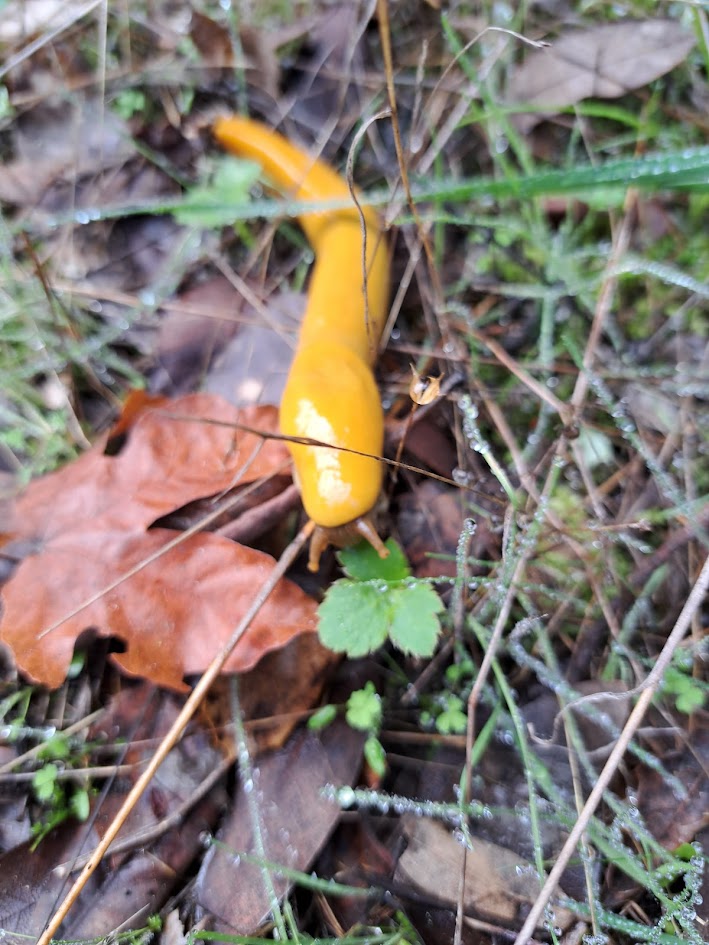
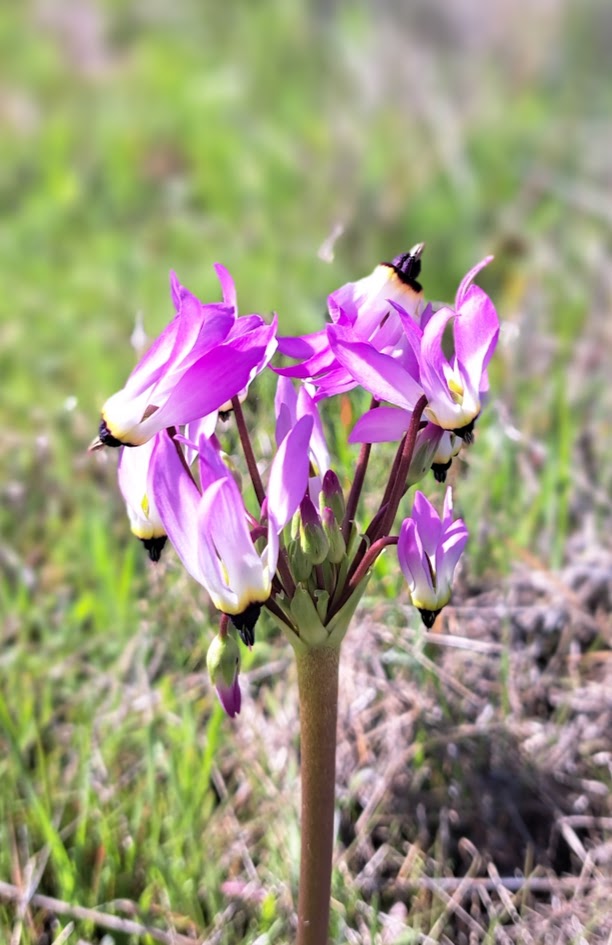
Most Thursdays, our small group wanders the trail network—about eight miles if you cover every spur. We talk. We observe. We study plants and trees. We watch raptors soar. We celebrate new mushrooms, California newts, and banana slugs. In spring, the wildflowers are spectacular. Our dog Poppy sometimes comes along.
The owners don’t truly think of the land as theirs. It is destined for some form of conservancy—a gift to future generations. They protect it fiercely, yet generously share it. So when I noticed a pile of old cinder blocks near their house, they didn’t object when I suggested arranging them into a scale model of Stonehenge. With the Winter Solstice approaching, I had to work quickly. I dove into my research.
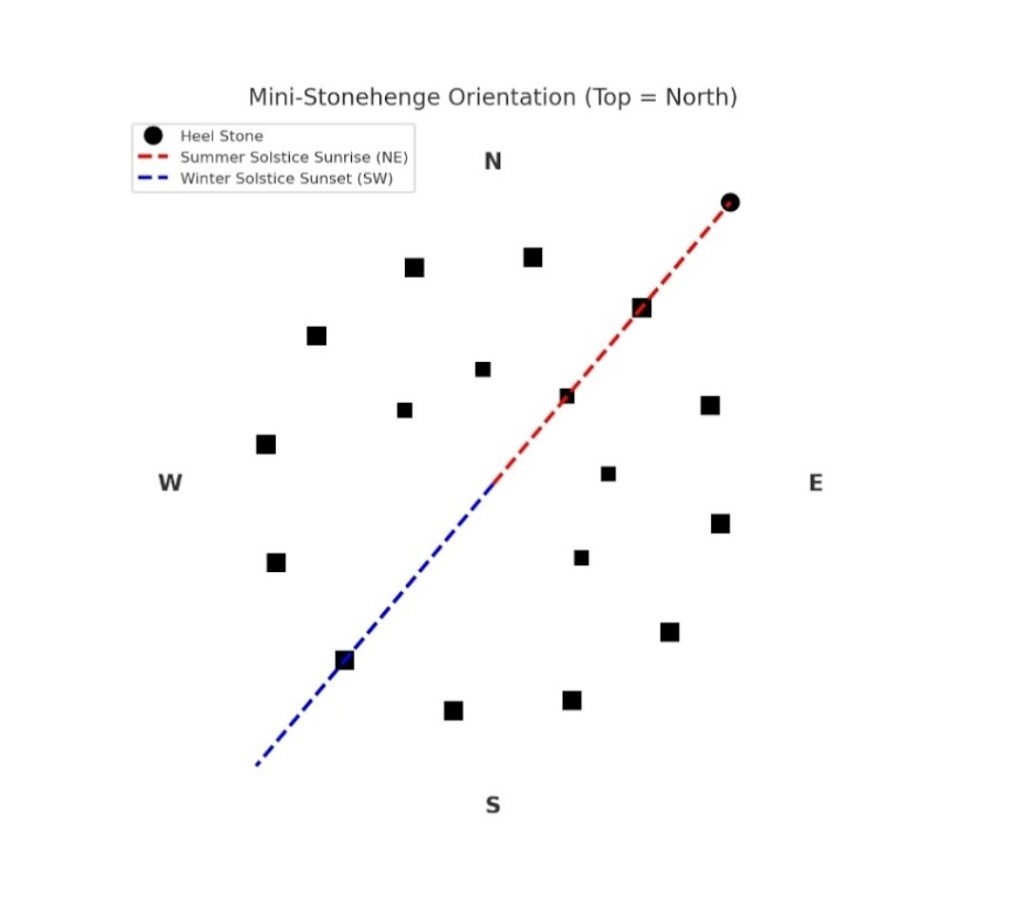
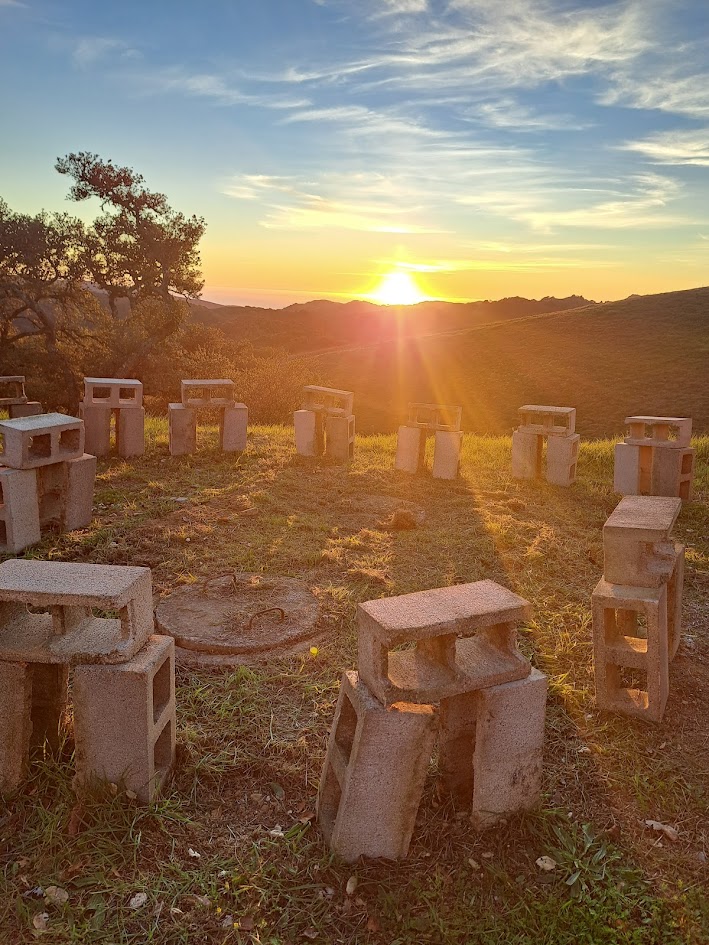
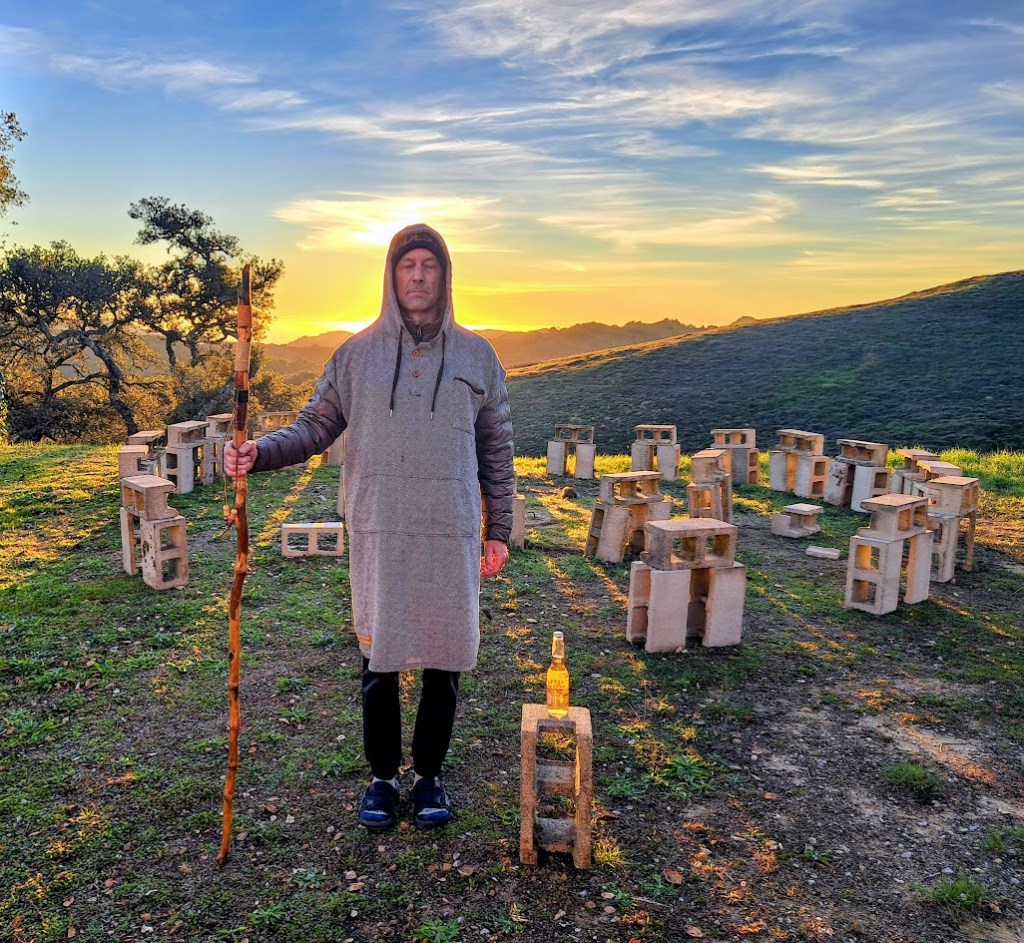
Stonehenge is composed of structures called trilithons. By stacking one cinder block horizontally atop two vertical blocks, I could make a trilithon. At this scale, the circle would have a radius of ten feet. The trilithons form a compass circle, with a horseshoe of five trilithons inside. Outside the circle stands the heel stone. The apex of the horseshoe aligns with it.
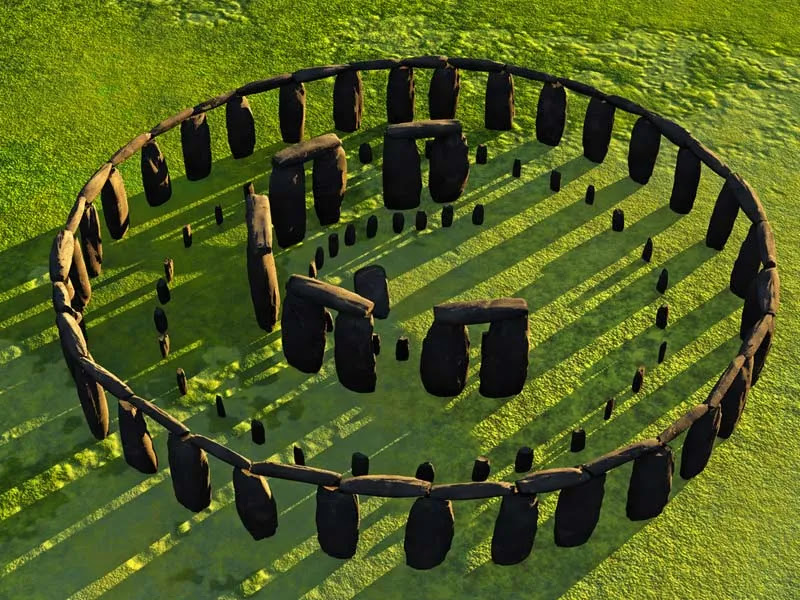
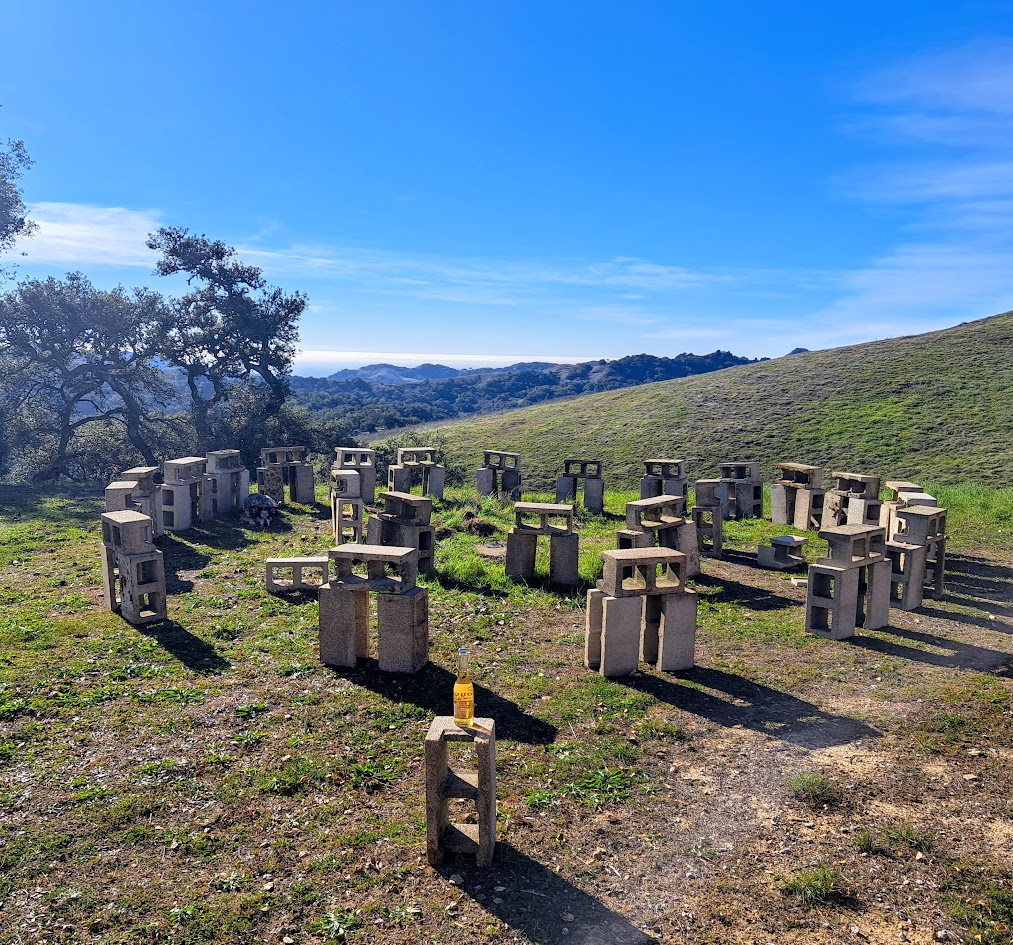
At Stonehenge, the heel stone marks the sunrise on the Summer Solstice; directly opposite it is the sunset on the Winter Solstice. For our heel stone, I chose a single cinder block topped with an unopened bottle of Corona beer. Corona means crown in Spanish, and the corona is also the sun’s outermost layer—visible only during an eclipse. It is the sun’s crown.
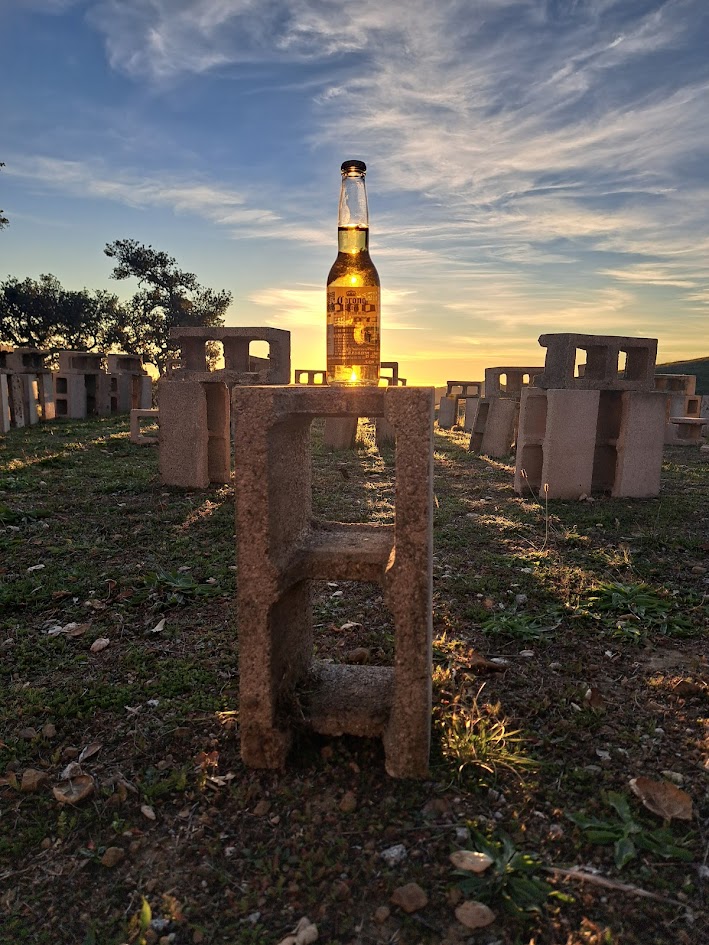
Our mini-Stonehenge is aligned on an axis running from sixty degrees (northeast) to 240 degrees (southwest). Two days each year, the bottle of Corona should be perfectly illuminated: once during sunrise on the Summer Solstice and once during sunset on the Winter Solstice.
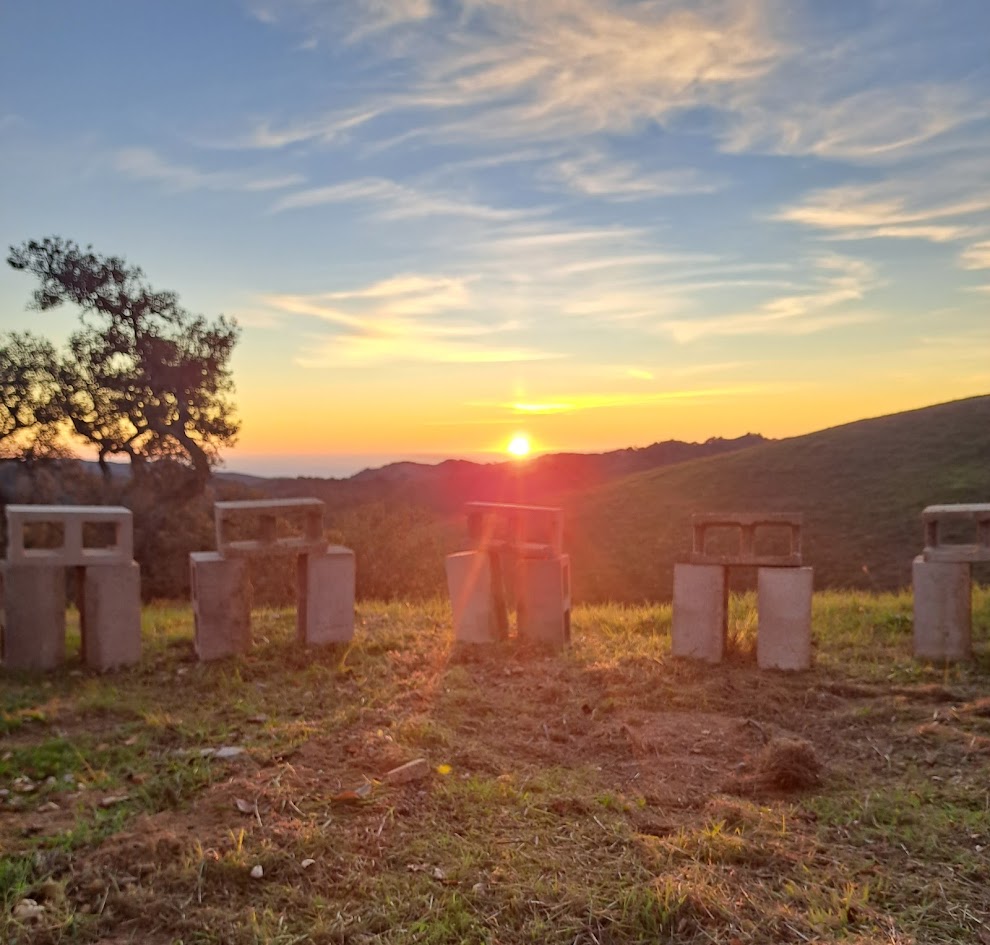
December 18 promised to be the last clear day on the Central Coast for a while, so we decided to dedicate our Stonehenge a few days early, ahead of the Winter Solstice on December 21.
All we needed was a name. As it happens, our construction site sits directly atop the septic tank—one with perhaps the finest view of any septic tank in California. Appropriately, Karen named the structure Stench Henge. (Full disclosure: it does not smell.)
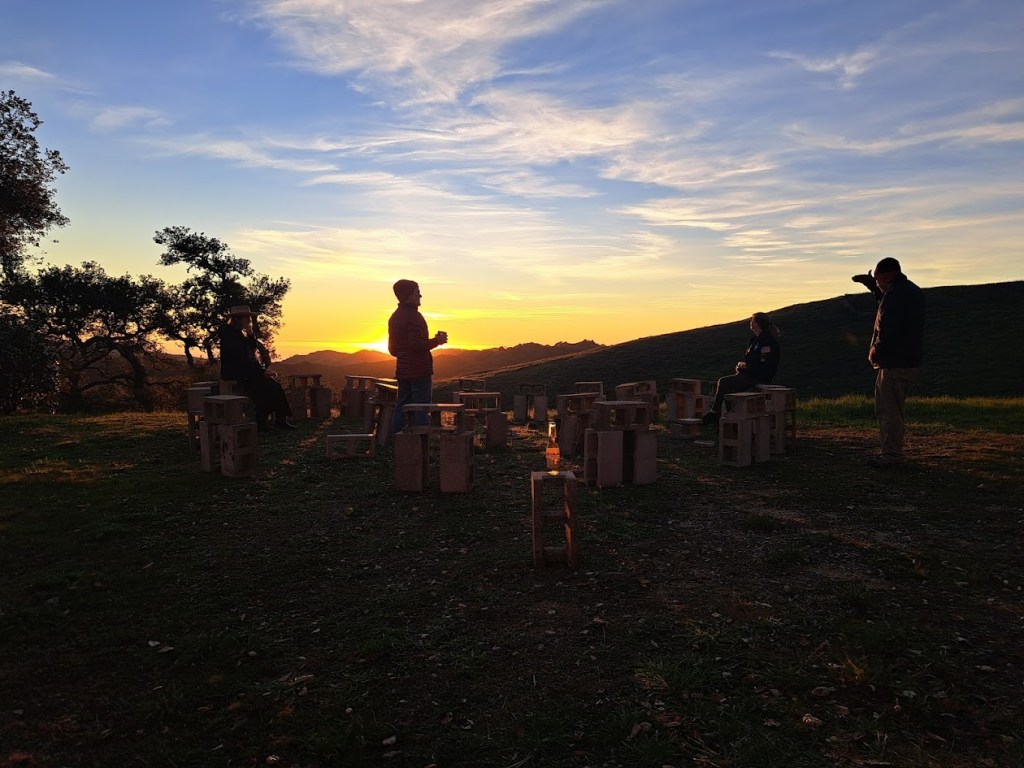
After Thursday’s hike, I rearranged the cinder blocks, fulfilling a lifelong dream of building a scale model of Stonehenge. That evening at sunset, we gathered to sanctify the structure with an incantation and naming ceremony. Corona beer was splashed around the circle.
At sunset we gather, stones awake!
The Sun returns!
From longest night to newborn light!
The Sun returns!
We hail the ring, the glowing crown!
The Sun returns!
By stone and song, the year turns on!
The Sun returns!
So stands Stench Henge!
Standing by a small stone circle on a quiet ridge, it’s hard not to think about the big picture.
Over eight billion people ride this Earth as it spins on its tilted axis at about 1,000 miles per hour, while orbiting the sun at roughly 67,000 miles per hour. These motions give us our days, our seasons, and our year. Our solar system itself orbits the center of the Milky Way at about 514,000 miles per hour, completing one galactic year every 230 million years.
Beyond our local group of galaxies, the universe is expanding. Distant galaxies are receding from us faster than the speed of light—not because they are breaking cosmic speed limits, but because space itself is stretching. Even so, our local group moves through space at roughly 1.3 to 1.4 million miles per hour.
This cosmic dance has been unfolding for about 14 billion years, with stars like our sun winking in and out of existence like fireflies. Modern humans have occupied only about 0.006% of Earth’s history, while Earth itself represents just 30% of the universe’s history. I’m not sure whether that makes us incredibly significant or incredibly insignificant.
We’ve all wrestled with the existential questions. What is the point of living if the world will one day end—as will our own lives, much sooner?
We are the result of the Big Bang. That never ceases to amaze me. The frosting on the cake is that we are sentient enough to know this. I never tire of observing our planet—its rocks, its life forms. I don’t want that to end any time soon.
I often flip-flop between two views of the universe.
One is the clockwork universe, where the initial conditions at the universe’s origin determined everything that followed, including you and me. That alone is remarkable. We are part of the universe and along for the ride, with no choice but to see it through to the end. Repeat the experiment, and odds are the universe turns out very differently—one without us.
The other view allows for free will. If free will exists, then we are not merely passengers but participants. Our passage through the universe leaves ripples, which affect other agents, which leave ripples of their own.
I’ve believed since a young age in the existence of right and wrong, so it follows that those ripples can be positive or negative. It falls on us, therefore, to try to leave behind positive ones.
The universe and its outcome will be different because we passed through it. That’s not something to take lightly.
One thing is certain: the universe is a wonderful, awesome, and sometimes terrifying place in which to live out our brief lives. Have courage. Be brave. Live your life.
In the end, Stench Henge doesn’t unlock the secrets of the cosmos. It doesn’t predict the future, bend spacetime, or even smell particularly interesting. It simply marks a moment—one turning of the Earth, one returning of the sun, and one small group of people raising a bottle of Corona to the light on a quiet ridge. The universe keeps expanding, the Sun keeps returning, and somewhere above a very scenic septic tank, we remind ourselves that wonder doesn’t require perfection—just a few stones, good friends, and decent timing.
May your Solstice be an auspicious one.

 "Trail Reports"