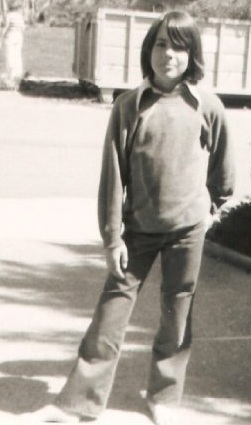
This Trail Report is dedicated to “Corn Boy”.
I hope you don’t mind an occasional and gentle reminder to act regarding issues that affect Americans’ access to trails and the outdoors. Many of you responded in support of keeping our public lands public and rehiring laid off National Park Rangers. For that, I thank you!
In this Trail Report, I would like to talk to you about the Roadless Area Conservation Rule, or “Roadless Rule”. I’ve concluded with a good story about a road that was never built. I’ve been saving this story in hopes of visiting the locale (Summit Meadow) where the road was never built, however as the current administration now wants to build more roads through the forest – the time is nigh. I won’t be able to visit Summit Meadow before a decision regarding the Roadless Rule is finalized.
The Roadless Rule may seem like a trivial matter when compared with the sheer enormity of distress faced by our nation (and world) today. During these difficult times, I find it healthy to pick an issue that is near and dear, and focus on it. For me that issue is our public lands. Not only is it an issue that is near and dear to me, but I also suspect that it is an issue that can unite us.
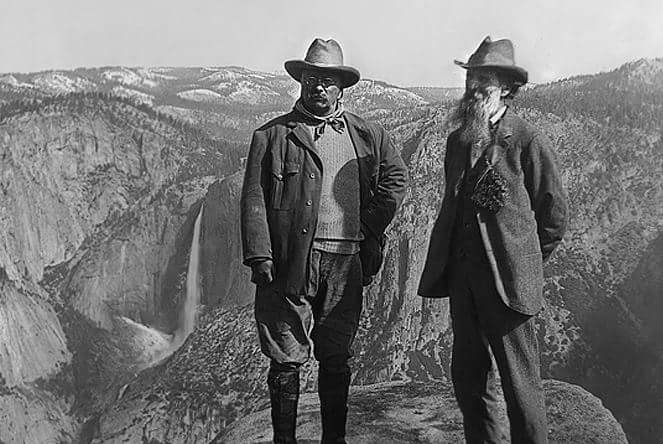
The current administration has proposed rescinding the Roadless Rule. It is by the Roadless Rule that we are able to preserve our nation’s heritage. I do feel confident that what unites us as Americans is American land. In May of 1903, John Muir and Theodore Roosevelt spent three nights camping together in Yosemite. During that camping trip they found much in common. Waking up next to your camping partner at Glacier Point, covered in five inches of snow will strengthen a relationship, especially if you can celebrate the moment and find joy and wonder in it. John Muir and his mountains had an enormous influence on Teddy Roosevelt , who would go on to become our greatest conservation president, and a Republican at that. John Muir would go on to become the first president of the Sierra Club. They are two American icons.
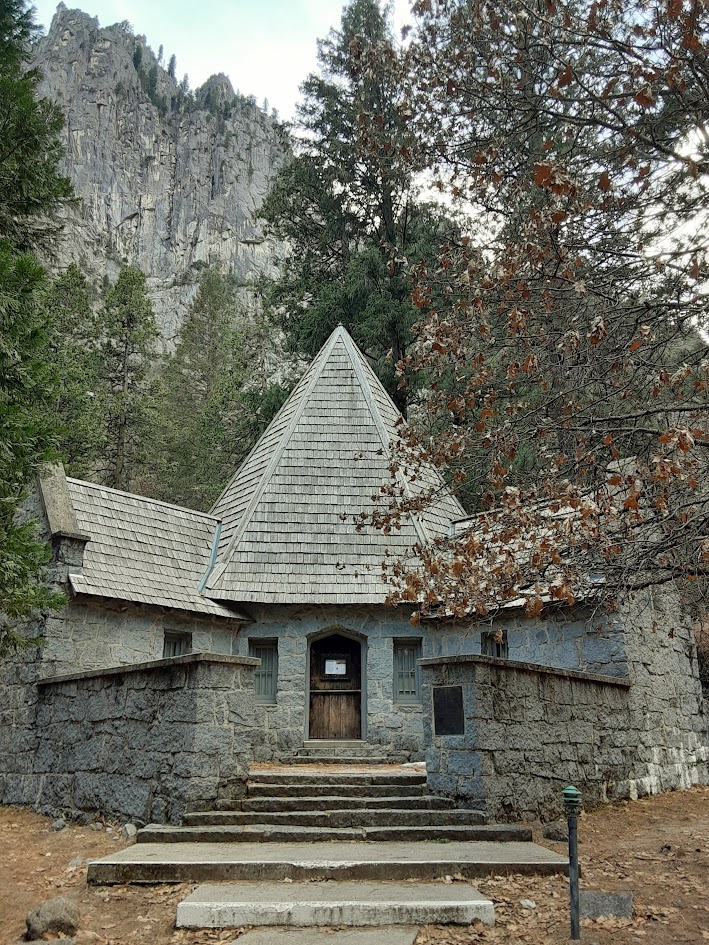
In 1904, the Sierra Club built Yosemite’s first visitor center. The building now functions as a library and information center. It is still run by the Sierra Club. During operational hours it is manned by volunteers. Today it is called the Yosemite Conservation Heritage Center. One of its early caretakers was Ansel Adams.
I know of one volunteer who has taken her time at the Yosemite Conservation Heritage Center very seriously. For the past two summers, The Volunteer has spent a week each summer in Yosemite Valley working at the center. She sleeps in her own tent at a shared campsite with other volunteers. In her spare time she hikes and meets new people, making new friends. She spends time alone on a boardwalk in the nearby meadow, sometimes at night to look at stars and listen to the river. She comes home from these trips with stories and newfound confidence and optimism. She has special admiration for the head curator of the center who is a young, smart, adventurous woman from Georgia. It is important work to follow in the steps of John Muir and Ansel Adams. It is also a lot of fun. For this summer’s week of volunteering in Yosemite she was to be accompanied by one of her neighborhood friends, who also wanted to grow from similar experiences. It is one of the best things The Volunteer has ever done and she loves it. (And I love her.)
As I was finishing up this writing The Volunteer received notification that her upcoming week of volunteer work in Yosemite was being cancelled. The Yosemite Conservation Heritage Center would be shutting its doors due to an increase in threats of violence levelled at the Sierra Club, its staff, its supporters and its events. The Volunteer has no intention of giving up. The center will reopen. She will return. People of all persuasions will walk through its doors. Conversations will be had. And people will sit and read about John Muir, Ansel Adams, Theodore Roosevelt and the roadless wilderness areas they worked so hard to preserve.
I will confess to a strong bias against road building. When I was four years old I attended Happy Valley Children’s Ranch located in Arvada, Colorado. To this day, their stated mission is to “teach children about the importance of respecting themselves, others, animals and the environment.” Just days before my graduation from Happy Valley (yes, there was a graduation ceremony complete with cap and gown) it was announced that Happy Valley would be moving due to the construction of a freeway. I have a memory of a mound of dirt and a cement off ramp looming over the school. The lyrics to the song that we all sang on graduation day (to the melody of “Climb Every Mountain”) are as follows:
They built a freeway
Outside our door
We’ll move Happy Valley
Out where the air is pure
So what exactly is the Roadless Rule? The Roadless Rule is a U.S. federal regulation established in 2001 that protects nearly sixty million acres of national forest land by prohibiting road construction. As such, it preserves land for recreation and wildlife. It ensures healthy watersheds, viewsheds and soundscapes. It prevents resource extraction. And many of these roadless areas surround our national parks giving them a necessary buffer of added protection. Finally, only roadless areas can be designated as federally protected wilderness areas.
It has been said that the National Park System was America’s best idea, but I would argue that the National Wilderness Preservation System was a pretty good idea as well. (I will use Wilderness with a capital ‘W’ to refer to federally designated wilderness.)
When I was two years old (1964), The Wilderness Act was passed. There are now over 800 federally designated Wilderness areas in the United States, totaling more than 111 million acres. These areas are given the highest level of protection for federal lands. The most crucial criterion for consideration as Wilderness is the absence of roads.
One way to guarantee that a large chunk of public land never becomes a Wilderness is to put a road through it.
We can not have enough Wilderness. Future generations must inherit that wealth. We need Wilderness in order to exist in a natural human state. As Wallace Stegner famously said, “We simply need that wild country available to us, even if we never do more than drive to its edge and look in. For it can be a part of the geography of hope.” Aside from the philosophical, Wilderness areas ensure that we maintain biodiversity. They also facilitate carbon sequestration.
Much of the world favors protecting 30% of the world’s land and water for nature by 2030.
And by the way, roadless areas are not more prone to wildfire.
Fun Fact: 95% of Yosemite National Park is roadless Wilderness!
If you have made it this far, I thank you for your diligent consideration. Now for your reward: a story with a happy ending.
Once upon a time…
…there was a big meadow high up in the mountains that some people wanted to build a road through. The meadow was Summit Meadow. Here is a map showing how to get there:
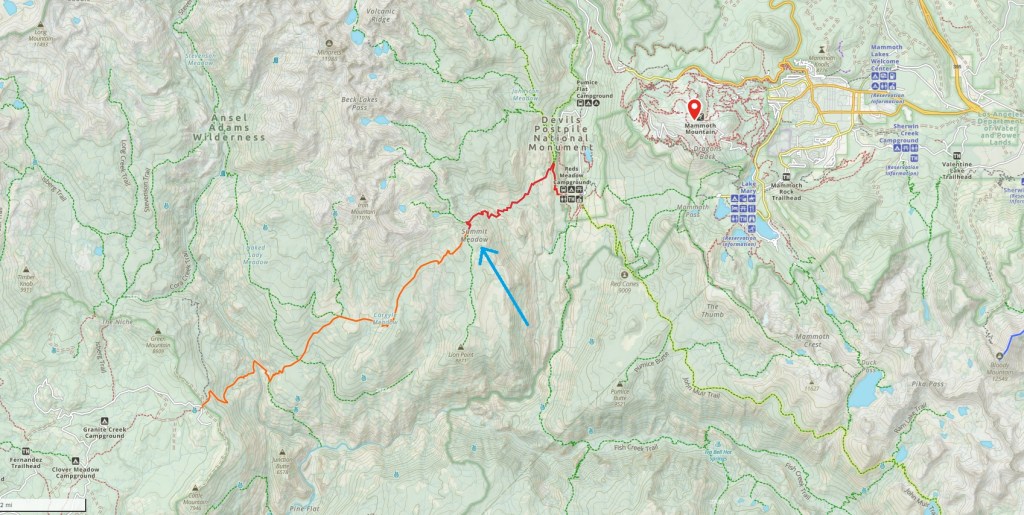
The proposed road would have crossed the center portion of the Sierra. If you park on the eastern side of the Sierra, it is a six mile hike to Summit Meadow. If you park on the western side it is a ten mile hike.
Who wanted the road? Mainly the foothill counties of the western slope of the Sierra. Who was opposed? Many Mammoth locals and the governor.
As I was growing up with the Wilderness Act in the 1960s and 1970s, Ronald Reagan was still a vigorous fifty-something. He spent some time in the Sierra near Mammoth and he liked it. He liked it a lot. As governor he had an interesting choice for Resource Secretary: Ike Livermore. Ike was a staunch environmentalist and the only member of Governor Reagan’s cabinet to serve during the full eight years of his administration. Ike was Ronald Reagan’s John Muir.
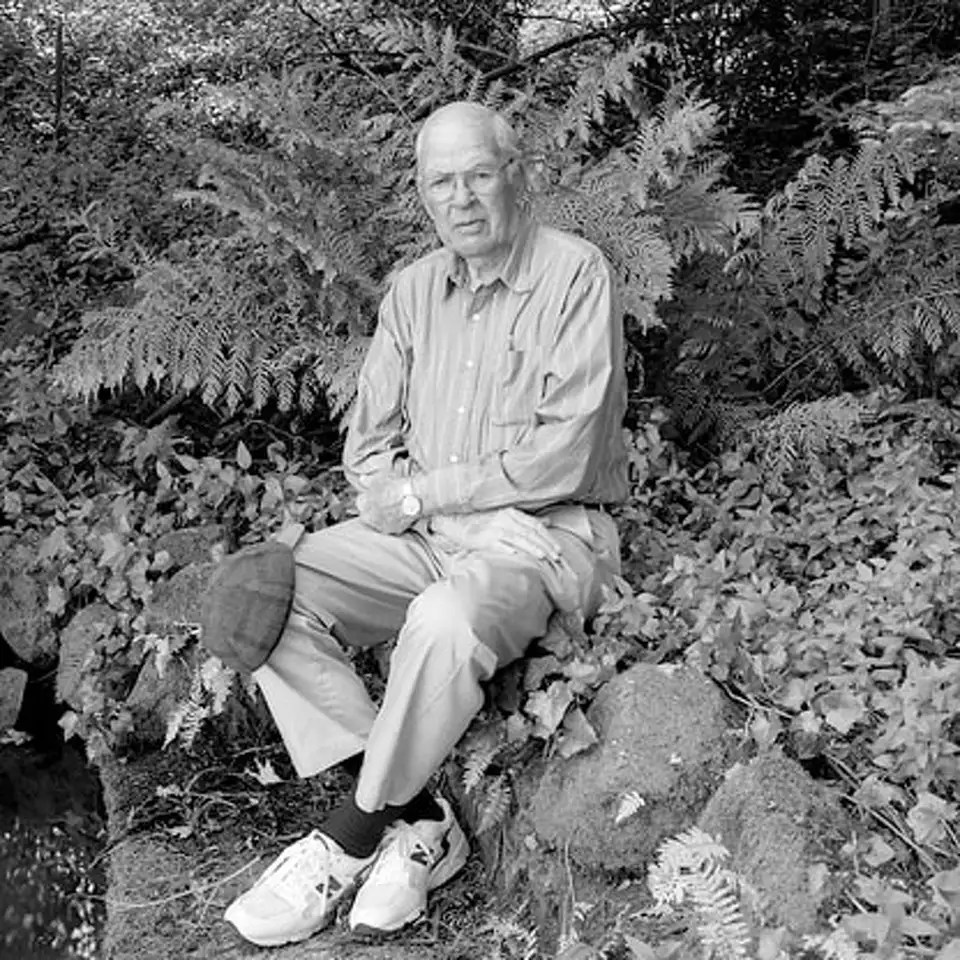
The Mammoth locals were led by Genny Smith.
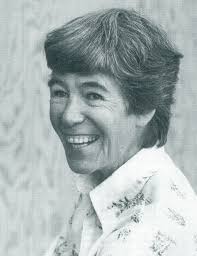
The locals’ battle lasted for decades. One other local activist was Bob Schotz. Bob Schotz passed away in 2019 in of all places San Luis Obispo. During my last visit to the eastern Sierra I met Stan “The Unusual Man” Schotz by my favorite beaver dam. He is Bob’s son.
Just when it looked like the battle might be lost, Governor Reagan called a press conference. The year was 1972. It would be no ordinary press conference. The press conference would be held at a remote location in the Sierra west of Mammoth: Summit Meadow. There would be one hundred attendees including the press. There would be barbecue. There would be whiskey. There would be camping. All participants would have to ride in on horseback. All the local pack train companies were enlisted. The best pack train in the area took care of the governor. They made sure he was on the best horse.
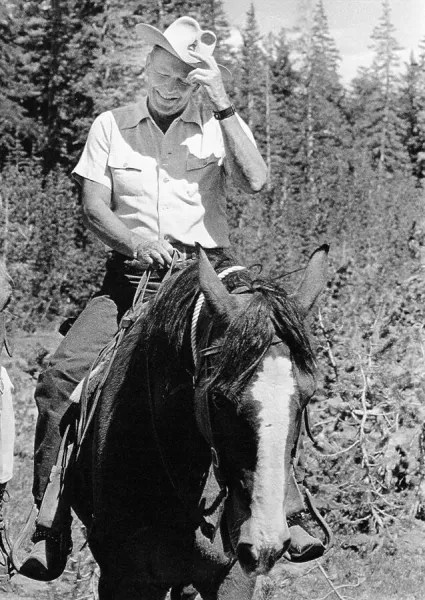
Reagan’s plan all along was to kill the road, also known as the Trans Sierra Highway. As the road would be built on federal land with federal dollars, he alone could not stop it. He needed the president’s blessing. President Nixon and Governor Reagan were rivals. Reagan planned on running against Nixon in the upcoming Republican primary. Yet somehow Reagan talked Nixon into axing the road. Nixon sent Reagan a personal telegram condemning the road and congratulating Reagan on its defeat. The telegram was a big surprise to those gathered. Reagan sat on his beautiful horse wearing a white hat and pulled out the telegram and read it out loud. Without state support and without federal support, the road was effectively dead.
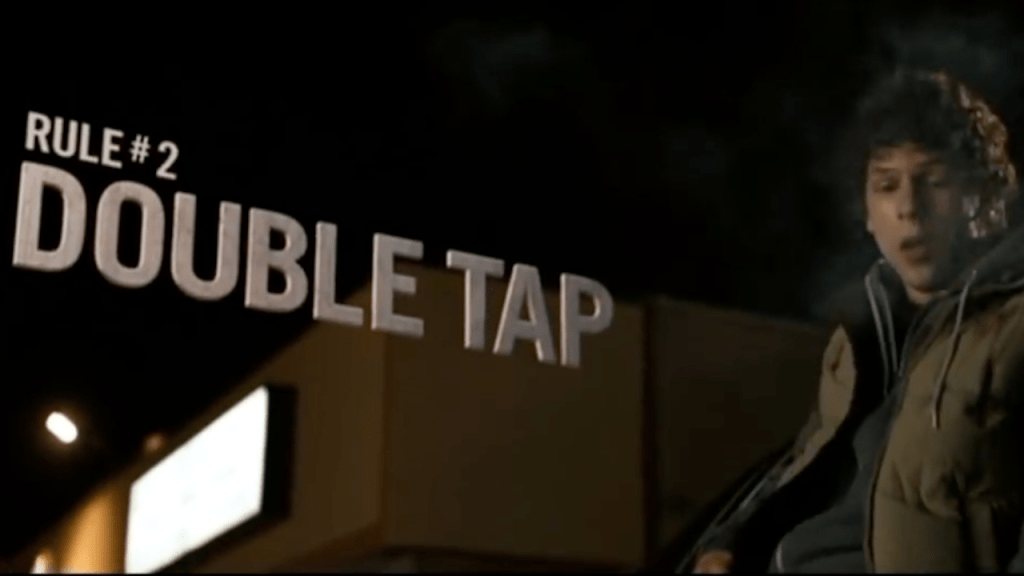
Yet the idea of a Trans Sierra Highway had a way of re-emerging just when you thought it was dead. It was a Zombie road, and I hope you are all familiar with rule #2 from the delightful movie “Zombieland”. Rule #2 is known as “Double Tap”. It instructs survivors to always “tap” a fallen zombie in the head a second time to ensure it is truly dead and will not reanimate. (A shotgun or baseball bat is typically used.)
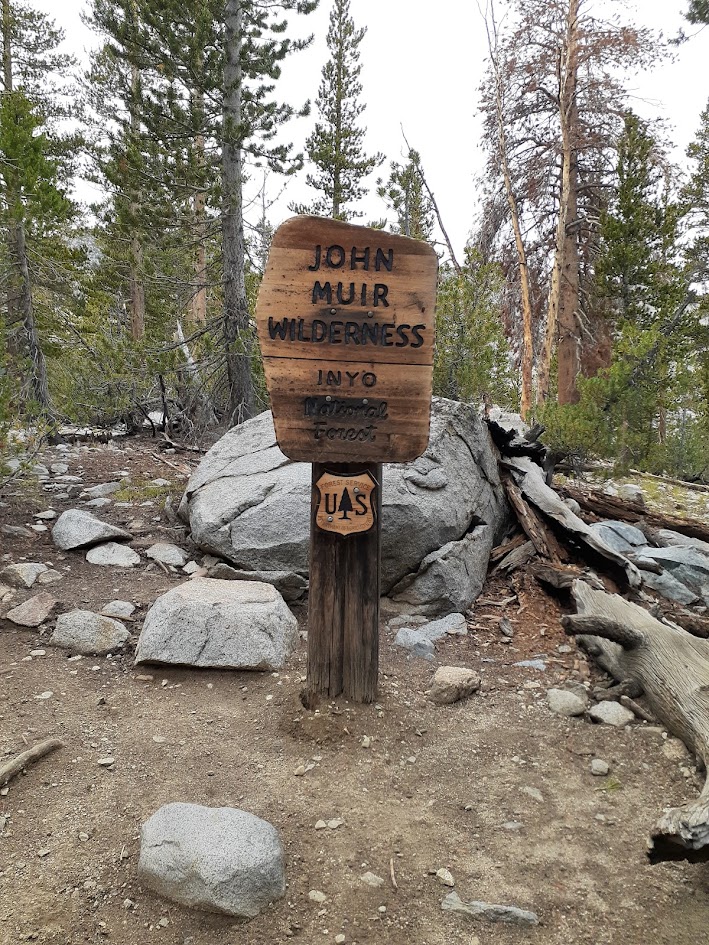
There was only one way to make sure a road was never built across that part of the Sierra. The federal land where the road could potentially be built must be designated as federally protected Wilderness. So in 1984 the Minarets Wilderness was expanded south to become contiguous with the John Muir Wilderness. It was renamed the Ansel Adams Wilderness. President Reagan signed the bill.
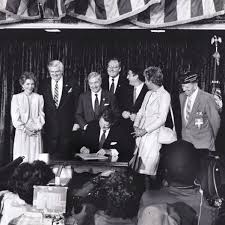
And you can’t build roads in the Wilderness!
The end.
Theodore Roosevelt had John Muir. Ronald Reagan had Ike Livermore. You have me?
They say that nostalgia isn’t what it used to be. That may be true. But in my memory those were good years. Sure, I was only ten. I was busy “writing” monthly research reports for my fifth grade teacher Mrs. Dalara. Those projects mainly involved copying information from the World Book Encyclopedia . Atari had just released “Pong” and I was learning how to play the flute. One more thing: In 1972 the top marginal federal income tax rate was 70%. Ah, the good old days! But I am grateful for those who set aside the Wilderness for me, as an inheritance of great wealth and spirit. I intend to do the same for my children and their children. I am not sure I could survive in today’s world without Wilderness.
Thank you so much for reading.
Whether or not you agree with my sentiments, please submit your comments before September 19th.
Interestingly, our national forests are managed by the Department of Agriculture. The Department of the Interior also plans on eliminating a similar rule that guides the Bureau of Land Management. It is called the “Public Lands Rule”.
The comment period for this rule change closes on November 10, 2025.
Footnote: Reagan’s environmental legacy as governor is worth noting. He established the California Air Resources Board, helped slow development around Lake Tahoe, signed legislation protecting California’s redwood forests, established the California Coastal Commission and opposed dams on the Eel and Feather Rivers. It must also be mentioned that Reagan supported the development of Mineral King. (Minus one thousand points, Mr. Reagan!) As president, Ronald Reagan’s record on the environment was very different from his time as governor. It was far less favorable. However, as president he did champion the Montreal Protocol.
You can read about Mineral King here: https://daveboicourt.com/2022/08/05/cuento-del-camino-disneyland-in-the-sky/
Here are Ronald Reagan’s most quoted statements regarding the environment…
From a speech given March 12, 1966 to the Western Wood Products Association in San Francisco, when Reagan was a candidate for governor of California:
“I think, too, that we’ve got to recognize that where the preservation of a natural resource like the redwoods is concerned, that there is a common sense limit. I mean, if you’ve looked at a hundred thousand acres or so of trees — you know, a tree is a tree, how many more do you need to look at?”
Difficult to confirm. Spring, 1980:
“Trees cause more pollution than automobiles do.”
(He was referring to the fact that trees and other vegetation release volatile organic compounds, which can contribute to smog formation when they interact with nitrogen oxides under sunlight.)
1980 Republican National Convention:
“For those without job opportunities, we’ll stimulate new opportunities, particularly in the inner cities where they live. For those who’ve abandoned hope, we’ll restore hope and we’ll welcome them into a great national crusade to make America great again”.
Reagan’s campaign officially used the slogan, “Let’s Make America Great Again” on posters and buttons. His use of the phrase was a direct response to the economic stagnation of the 1970s..
Finally, I’ll leave you with a sweet one:
“To sit beneath a tree or beside a stream is to find a peace the world cannot give.” (He was likely conflating the Bible and John Muir.)
How would a 70 year old (more conservative) Reagan fit into today’s political climate? Would he go the way of Mitt Romney, Liz Cheney and Adam Kinzinger?
What would Reagan think of politics today? Would he be appalled?
Some things to consider:
Reagan was relentlessly optimistic, genial, and unifying in his rhetoric.
Reagan signed the 1986 Immigration Reform and Control Act, granting amnesty to nearly 3 million undocumented immigrants, which he framed as both compassionate and practical.
Reagan strongly supported NATO, free trade, and international partnerships.
Reagan frequently emphasized civility, bipartisanship, and respect for institutions.
Reagan governed as a mainstream conservative who was willing to compromise.
Reagan would almost certainly be dismayed by today’s strand of American politics that expresses sympathy or admiration for Putin. He viewed Russian autocracy as the enemy of freedom, not a partner.
Reagan would almost certainly be a vocal and forceful supporter of Ukraine, presenting the conflict as a defining moral struggle and urging the U.S. and allies to resist Russian aggression with strength, resolve, and unity.
Regarding the Middle East, Reagan had a peace plan. The plan’s stated goals were to “reconcile Israel’s legitimate security concerns with the legitimate rights of the Palestinians.” It proposed a five-year transition period, during which Palestinians in the West Bank and Gaza would obtain full autonomy.
The most objective historical ranking of presidents is the C-SPAN Presidential Historians Survey based on ratings of 142 presidential scholars across 10 equal-weight leadership categories: public persuasion, crisis leadership, economic management, moral authority, international relations, administrative skills, relations with Congress, vision/agenda setting, pursuit of equal justice for all, and “performance within the context of his times.”
Teddy Roosevelt: Fourth Place with a score of 785
Ron Reagan: Ninth Place with a score of 681
Dick Nixon: 31st with a score of 464
Click here for the complete list: https://www.c-span.org/presidentsurvey2021/?page=overall
For public opinion rankings of recent presidents:
| Dates in office | Average approval rating | |
|---|---|---|
| % | ||
| Harry Truman | April 1945-January 1953 | 45.4 |
| Dwight Eisenhower | January 1953-January 1961 | 65.0 |
| John Kennedy | January 1961-November 1963 | 70.1 |
| Lyndon Johnson | November 1963-January 1969 | 55.1 |
| Richard Nixon | January 1969-August 1974 | 49.0 |
| Gerald Ford | August 1974-January 1977 | 47.2 |
| Jimmy Carter | January 1977-January 1981 | 45.5 |
| Ronald Reagan | January 1981-January 1989 | 52.8 |
| George H.W. Bush | January 1989-January 1993 | 60.9 |
| Bill Clinton | January 1993-January 2001 | 55.1 |
| George W. Bush | January 2001-January 2009 | 49.4 |
| Barack Obama | January 2009-January 2017 | 47.9 |
| Donald Trump | January 2017-January 2021 | 41.1 |
| Joe Biden | January 2021-January 2025 | 42.2 |

 "Trail Reports"
This was a very sweet story about Happy Valley. I remember that song. I didn’t realize Reagan had done those good things for the environment while govenor. I remember mom and dad really disliked him claiming he said “if you’ve seen one redwood you’ve seen them all” which I guess sums up the quote you have. I remember that they had a button of Reagan that said with a sneer on his face “Had enough?” I left my comment for the roadless area. Thanks for sending the link. It’s so quick and easy to do. I wonder what the freeway in Denver looks like now and our neighborhood Applewood Knolls.
LikeLike
This looks like the swimming pool by our house. According to one Google reviewer, it’s been around since the ’60s.
https://applewoodknolls.org/
Mark says: Joined this club in the summer of 1966 when my parents moved to Wheatridge. I had many fond memories spending summers here as a teenager. “I’ll have a Big Hunk and a Pepsi please !”
LikeLike
Looking at the map, Routt Circle sounds familiar. I remember we could walk to the pool.
LikeLike
I just googled the neighborhood. The median home price is $900,000. Growing up I never realized how privileged we were. Mom and Dad always found beautiful neighborhoods for raising a family. I wonder how much Happy Valley would cost now..
LikeLike
https://happyvalleyps.com/
LikeLiked by 1 person
Happy Valley Preschool is still there! I googled the tuition. A full day is $1800/month!
LikeLike
Worth every penny! They still have goats. I remember the goats – goats always trying to eat my shirt.
LikeLiked by 1 person
Bam! Public comments submitted, amigo. We do what we can to help preserve what we have, for the benefit of all of us.
LikeLike
Thank you, Doctor!
LikeLike