….or “ taking a little hike off the beaten path and into the weeds of our federal budget.”
My favorite federal employee was Jock Whitworth, a Park Ranger at Theodore Roosevelt National Park. During the summer of 1986 Ranger Jock was my boss. He did not supervise me, but instead mentored me. He was the most important mentor in my life after my father. In one short summer, he gave me the skills and confidence to go forward with my life and become a happy, productive individual.
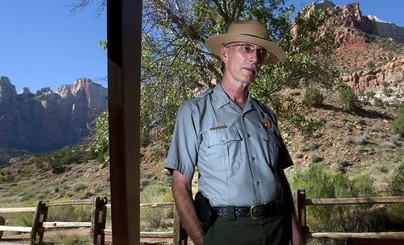
There were many others like Jock at Theodore Roosevelt National Park, professionals who worked very hard and were compensated with a small paycheck – less than what a public school teacher could make. They shared a common mission: “To preserve unimpaired the natural and cultural resources and values of the National Park System for the enjoyment, education, and inspiration of this and future generations”. Jock would go on to become superintendent of Zion National Park, one of the “crown jewels” of the National Park System.
Recent efforts to reduce spending at the federal level have resulted in noble professionals like Jock being placed in danger of severance from their mission.
A National Park Ranger who devotes their career to the service can expect to make an average of around $75,000 a year.
Let’s see how much money is saved when firing one National Park Ranger by taking a little hike off the beaten path and into the weeds of our federal budget.
The United States federal budget for fiscal year 2024 totaled approximately seven trillion dollars. That’s a big pie! It’s bigger than the universe (which is only about 90 billion light years across.)
Let’s slice up that pie so that everyone gets a piece.
First we have to pay the interest we owe on our national debt. That slice makes up roughly ten percent of the pie.
Next, we are obligated to pay out benefits to those hard working Americans who have been paying into the system during their working years. Called “Mandatory Spending”, this includes Social Security, Medicare and Medicaid and amounts to about 70 percent of total federal expenditures. What is left is called “discretionary spending” and this is what we always quibble about. It amounts to about 20 percent of total expenditures.
We almost always spend more than we take in, so these spending levels contribute to a budget deficit of close to two trillion dollars (per year) resulting in a total accumulated national debt of around 36 trillion dollars (and growing). As of April 10, 2025 we have already borrowed 1.3 trillion dollars and we are only half way through fiscal year 2025. For fiscal year 2026 the republicans are hoping to erase any “savings” with a budget bill for the record books: increased spending for deportations (an additional 175 billion dollars) and increased spending for the military (another 175 billion dollars). In order to achieve this they propose raising the debt limit or “ceiling” from 36 trillion dollars to 40 trillion dollars (or higher), all while lowering taxes for corporations and the wealthy.
These are very general, ballpark figures to ease the reader into grasping the enormity of the budget, as I have been trying to do these past few weeks. These figures also highlight how a significant portion of the federal budget is allocated to mandatory programs as well as the growing impact of interest payments on the national debt.
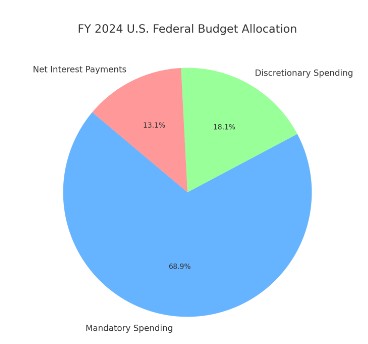
After we pay off our interest and meet our mandatory spending obligations, only twenty percent of our original total remains. Half of that money goes to defense, leaving about one trillion dollars for “everything else”.
“Everything else” is managed by the federal government’s fifteen departments. Here are the departments along with approximately how much money they received in fiscal year 2024.
- Department of Agriculture (USDA): 200 billion
- Department of Commerce: 10 billion
- Department of Defense: 800 billion (as we already discussed)
- Department of Education: 250 billion
- Department of Energy (DOE): 60 billion
- Department of Health and Human Services (HHS): “mandatory spending”
- Department of Homeland Security (DHS): 90 billion
- Department of Housing and Urban Development (HUD): 70 billion
- Department of the Interior (DOI): 40 billion
- Department of Justice (DOJ): 40 billion
- Department of Labor: 50 billion
- Department of State: 20 billion
- Department of Transportation (DOT): 150 billion
- Department of the Treasury: 5 billion
- Department of Veteran Affairs: 300 billion
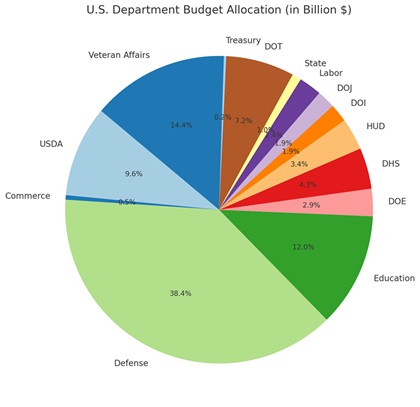
Which brings us to my favorite federal department, The Department of the Interior. Its emblem is a bison. It doesn’t get better than that! A bison!

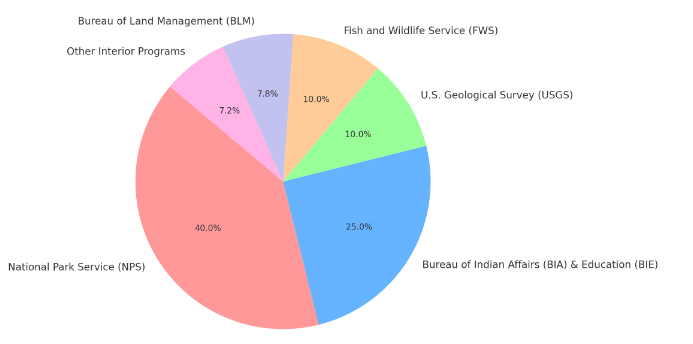
The DOI is responsible for managing federal lands, natural resources, wildlife conservation, and Native American affairs. Within this department is the National Park Service which typically receives around five billion dollars – sometimes a little more, sometimes a little less. The Forest Service, an agency that also manages many miles of wilderness trail is also on the chopping block. It resides within the Department of Agriculture.
Firing one National Park Service employee reduces the federal budget by: 0.0000010714 percent. That’s 75,000 divided by 7 trillion times 100.
How many rangers would we have to fire in order to balance the federal budget? Roughly 27 million. That’s two trillion divided by 75,000. Canada has a population of 40 million. Imagine if most of them were rangers.

How many rangers work for the service? Around 10,000.
If I were king, I could fire every single federal employee and only reduce the federal budget by four percent.
If I wanted to save some money, I could ask each department to reduce their discretionary spending by five percent resulting in a savings of around one or two hundred billion dollars. I would leave that work up to the knowledgeable professionals within each department.
If I wanted to further trim some fat, I could take a hard look at Department of Defense contracts and ask for a ten percent reduction in spending resulting in another one hundred billion dollars of savings.
I would not gut the IRS, as we need that department to make sure everyone, including wealthy individuals and corporations pay their fair share of taxes. For example, there are around 800 billionaires in the United States with a combined wealth of around seven trillion dollars. A ten percent billionaire tax would generate 700 billion dollars. Outlaw billionaires? No, but once you cross that line from $999,999,999 to 1,000,000,000 you need to start sharing the wealth my brother.
The federal government does have a spending problem, but it also has a revenue problem. The gap can only be closed by ensuring that everyone pays their fair share of taxes. (Thank you Warren Buffet for paying your taxes.) If we don’t reduce our deficit spending and pay down our debt, no one’s American dollars will be of much value down the road, and I prefer the good old American dollar to bitcoin.
What does become apparent from this exercise is that it is impossible to balance the budget without both raising taxes AND reducing spending from the largest slice of the pie (so called “mandatory spending”).
Here is a fun Fact: In 2025, the Social Security tax limit (or wage cap) is $176,100, meaning you’ll pay no more than $10,918.20 in Social Security taxes (6.2% of $176,100) for the year, regardless of how much you earn above that amount.
Eliminating the Social Security wage cap could generate an estimated $3.2 trillion in additional revenue over 10 years. This would be roughly 53% of the 75-year funding gap, according to the Social Security Trustees. (While we’re at it, consideration should be given to the idea of an eligibility requirement for receiving Social Security. Does a person with a net worth of $100,000,000 really need to collect Social Security?)
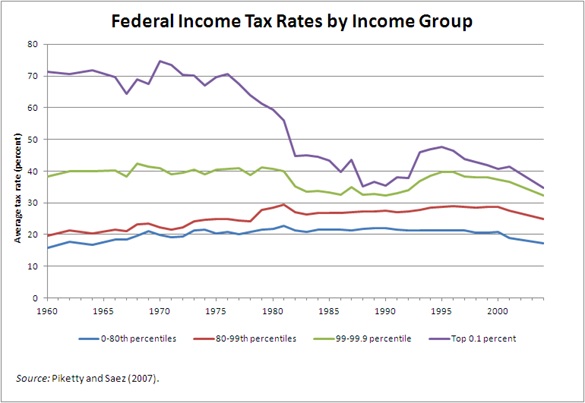
When I was ten (the year was 1972) my mom explained the “graduated income tax” to me. At that time the top rate for earners making over 1.5 million (adjusted for inflation) was around 70%, while those in the lowest tax bracket paid 14%. I was a big fan of Robin Hood back then, so I thought that was brilliant. I still do.
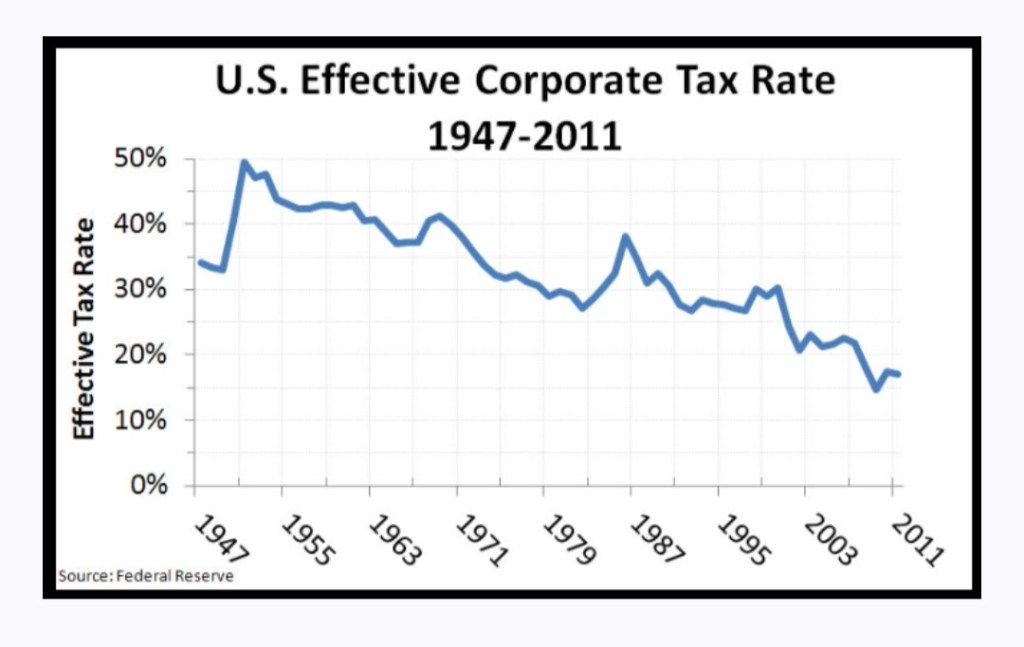
Beginning in the 1980s tax rates (both income tax and corporate tax) began to fall precipitously, at least for the rich.
We can’t have our cake and eat it too.
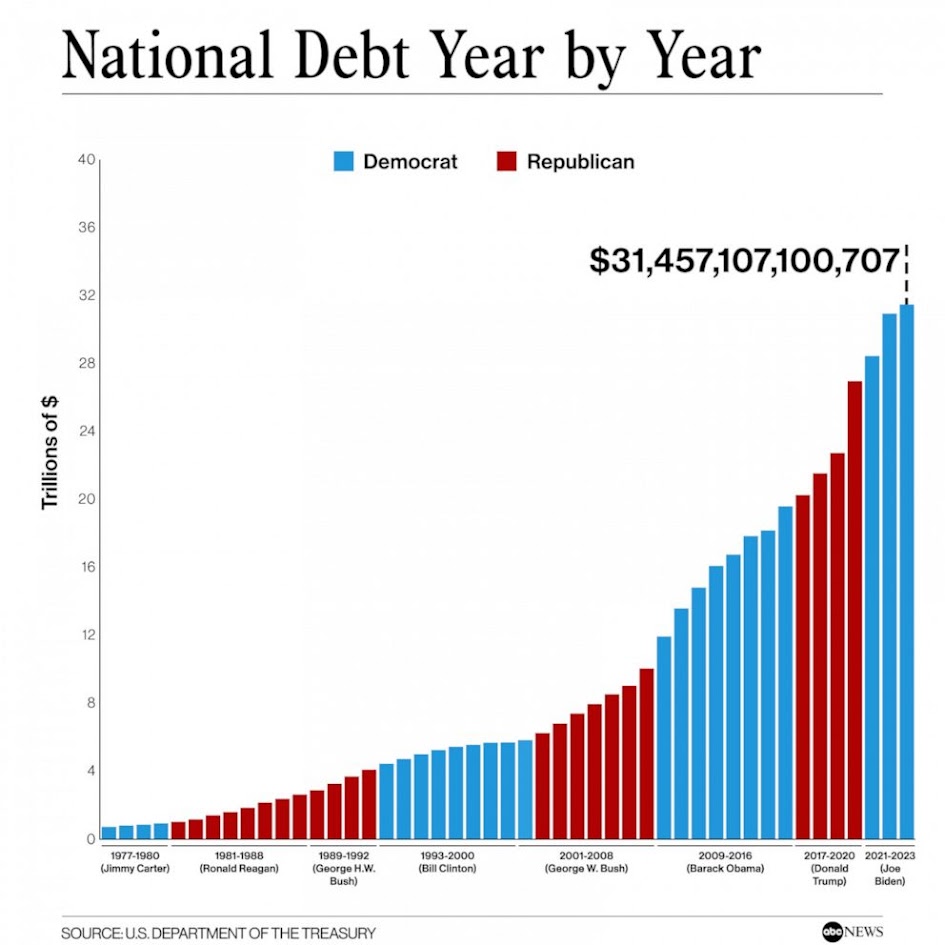
We can’t have a great America without a steady stream of revenue. That revenue comes from taxes.
Federal spending supports communities and can stimulate the local economy. Tariffs are an indiscriminate tax and stifle commerce as well as contribute to inflation. They may also lead us into a recession.
I propose a top bracket of 50% (currently 37%) on earnings over one million dollars per year and a corporate tax rate of 35% (currently 21%.) We don’t need to “eat the rich”, but we do need to tax them.
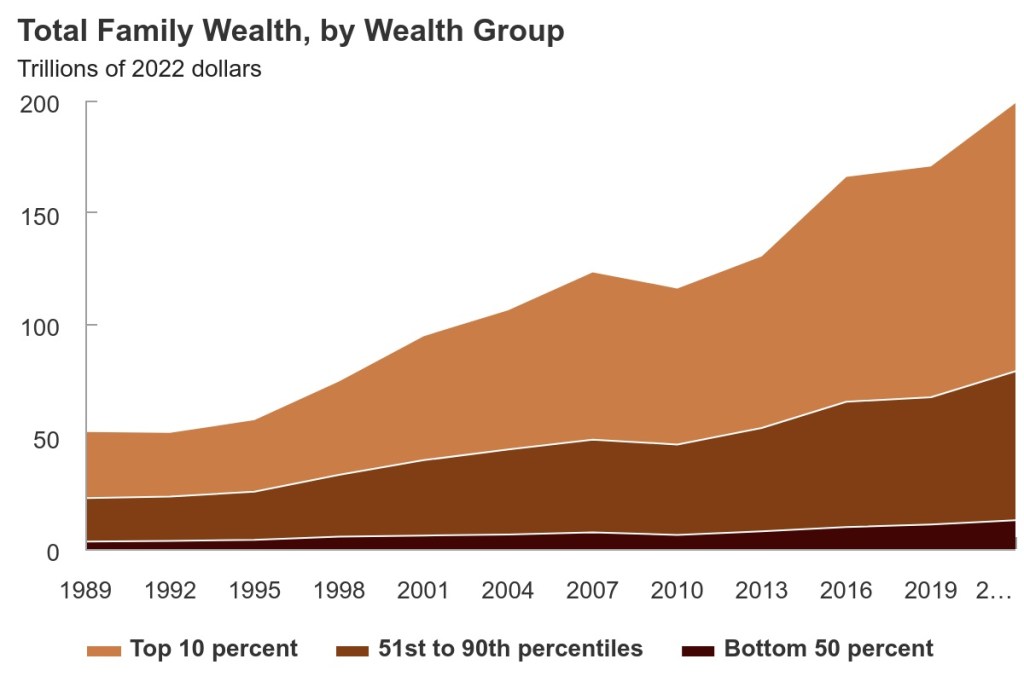
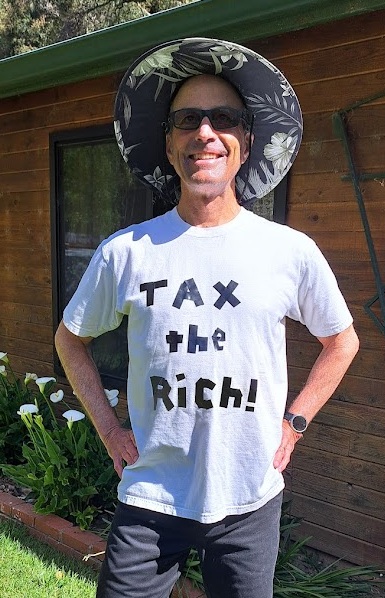
Most of the attention grabbing headlines today are designed to appease certain voters and distract us from the ultimate goal of this administration: to further concentrate wealth and power in a few hands, rather than distribute it. Privatization is the goal, not public good: a government of the billionaires, by the billionaires and for the billionaires. That does not mean the process of defunding the federal government isn’t enormously damaging. It just means the motivation is not efficiency, but greed.
Defunding the federal government also allows this generation to cash in on the stored wealth from natural resources at an enormous cost to future generations.
Another familiar narrative is that if the federal government stops funding the National Parks to the point where the bathrooms don’t get cleaned, then the public might get fed up enough to consider turning our crown jewels over to the private sector.
Now is not the time to be firing National Park rangers in order to provide tax breaks for the rich.
Rangers believe in many things, such as wonder and awe. But of paramount importance to the Park Ranger are science and education. What is this rock? What is that tree? Why do the stars shine?
I myself have built my entire life on these two things. For thirty years I taught science using Ranger Jock Whitworth as my role model. Every lecture was nothing more than an indoor campfire talk, without the fire of course. (Well, actually – to be honest – there were occasionally fires, but no one got hurt.)
Both science and education are ways of pursuing truth. Truth is very much an obstacle to the current administration’s plans.
The president’s efficiency expert believes that we should become an interplanetary species, so that we can have a back-up planet for the day when this one is no longer inhabitable. I agree. He should be the first to go. Maybe he can take his boss with him. They can become the first “Martians”, which would be a suitable title for them as they lack many human qualities. Perhaps they could also figure out a way to reproduce and start a new race of “little orange men”. They’ll have plenty of time to figure that out on the long, lonely journey to Mars.
I for one wish to remain here. Even on a bad day, Earth is far superior to Mars.
I understand the desire to “make America great again”. If I was king, I would turn back the clocks to a time when North America was truly great. That would be ten to twenty thousand years ago, to a time when no humans inhabited our continent and mammoths, mastodons, giant ground sloths, and saber-toothed cats roamed free and wild. Ever since the discovery of fire many thousands of years ago, we “cavemen” have been engaged in the combustion of carbon based materials to meet our energy needs. We have not yet evolved to fully utilize cleaner sources of energy. The current administration has no interest in continuing the journey, but wishes to continue living like cavemen.
What is there to do?
I don’t think the solution is to eliminate our most respected, uniformed federal professionals who reside near the bottom of the federal pay scale.
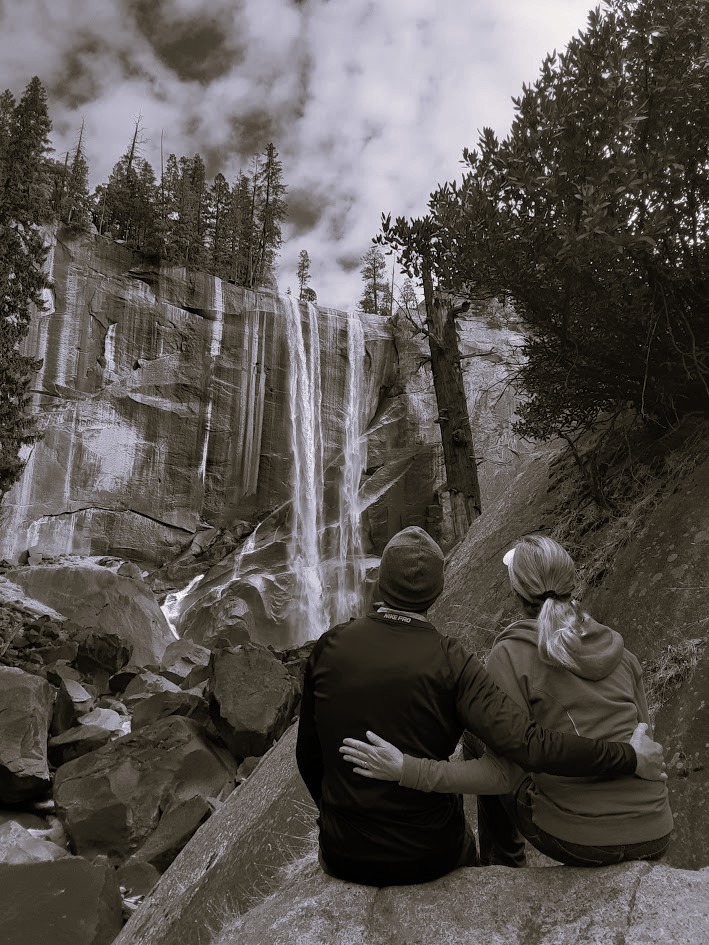
What we can do is go visit a national park and talk to a ranger, if you can find one – they themselves have become an endangered species. While you are there, talk to your fellow Americans. I’ve found that National Parks are good place to make friends with strangers.
Just a few weeks ago it appeared that Yosemite National Park would lose rangers while at the same time have its reservation system eliminated resulting in more people visiting the park with fewer staff to keep both the park and the people safe. Because of several court decisions and pressure from the public, it looks like Yosemite will keep a reservations system and most of its staff. Yosemite might survive one more summer of being “loved to death”.
Although some of the one thousand National Park Rangers that had their positions eliminated have been reinstated, many support personnel such as wildlife biologists have not. Our most cherished national assets (such as our public lands, our institutions of science, and our institutions of education, our air and our water) are also being compromised. Is nothing sacred? Is Yosemite not sacred? Because people are speaking up and speaking out, decision makers in Washington have momentarily stepped back from the brink and decided that maybe a place like Yosemite is worth protecting. Even so, saving Yosemite will come down to the community of people that live and work there. Regardless of what happens in Washington they will do their best to protect Yosemite for us.
During that summer of 1986 I worked hard. It felt good. I was up early every day. I showed up to work on time in a crisply ironed uniform. My favorite part of the morning was running the flag up the flagpole, which I could do alone without letting it touch the ground. At the end of the day, I would need help properly folding the flag, so I would elicit the help of a park visitor.
Those were sacred moments. What do you consider sacred? What is important to you? Let others know. Speak up. Speak out.
“National parks are the best idea we ever had. Absolutely American, absolutely democratic, they reflect us at our best rather than our worst.” (Wallace Stegner)

 "Trail Reports"