Dates: July 16 to July 20, 2024
Trailhead: Cottonwood Pass (Golden Trout Wilderness, Inyo National Forest)
Nearest Town: Lone Pine, California
Distance Hiked: 28.5 miles (5,787 feet of elevation gain)
Native Land Territories Visited: Newe (Western Shoshone), Tübatulabal
Hello and welcome to another Trail Report! I am glad you could join me!
Here we have a thirty mile meandering loop through the southern portion of the Sierra Nevada mountains, beginning at the Cottonwood Pass trailhead and ending at the Cottonwood Lakes trailhead. The two trailheads are about one mile apart. I did not see any Cottonwood trees at either trailhead.
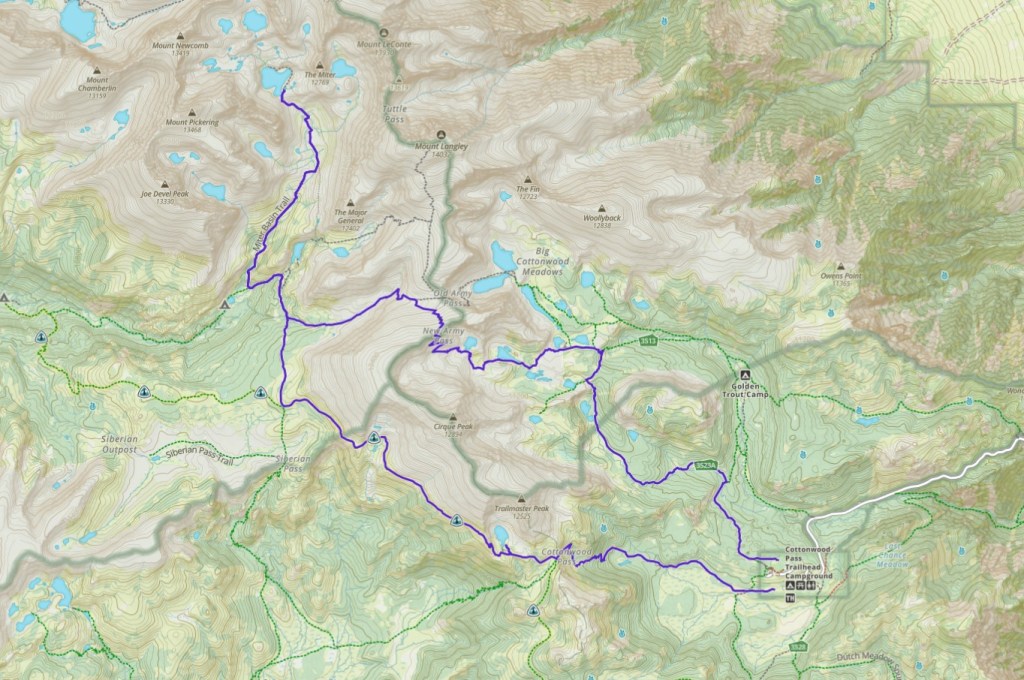
My original plan was to access The Sierra from the western side of the range, but the mosquitoes are still very active on that side. Compared to the eastern side of the Sierra Nevada mountains, the western side is more gently sloping, wetter, warmer and lower in elevation. The eastern side is not a slope at all but a “fault scarp” – very steep. The trailheads are higher and it is colder and drier. Mosquitoes prefer the western slope, so I headed for one of the closer trailheads on the eastern side of the range for my hike, which is the Horseshoe Meadows area containing several trailheads, including Cottonwood Pass and Cottonwood Lakes.
My reading companions on this trip were Great Circle, by Maggie Shipstead (which I read on the trail) and In My Time of Dying, by Sebastian Junger (which was listened to on the drive home.) Shipstead’s book is about how an Emma Stone type of character gets to know an Amelia Earhart type of character across the expanse of time. Junger’s book is about a near death experience. Both are very good, so far.


I also had human companions on this hike. The Neighbor joined me as well as The Neighbor’s brother “The Enthusiast”. The Enthusiast is enthusiastic about life in general, however he is specifically enthusiastic about all things Italian, good food, native plants and surprisingly my stories! Collectively they are known as the Baldi Brothers and are perhaps most fondly remembered for their Esther Williams inspired water ski routine performed on Boca Reservoir around the year 1990.

I have now hiked several hundred miles with The Neighbor and look forward to many more miles with him and his older sibling in tow.
On Tuesday (7/16) we woke early and drove to the trailhead, then hiked five miles out to Chicken Spring Lake. Although I did not see any Chickens, it is a beautiful lake.
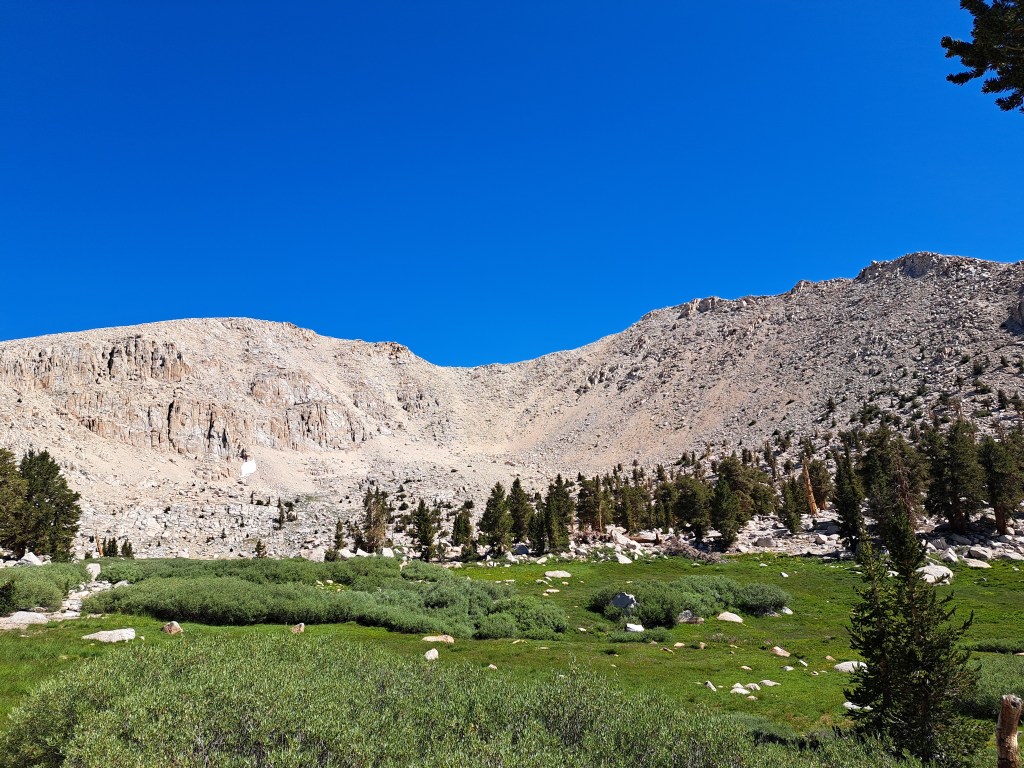
The next day we left “Chicken Little Lake” (as I dubbed it) and the Golden Trout Wilderness (named for California’s official state freshwater fish) and entered Sequoia Kings Canyon National Park (SEKI) on our way to Rock Creek Meadow. I wonder how many “Rock Creeks” there are in California? There is a ranger cabin located above Rock Creek Meadow up on a prominent outcropping. As evening shifted to night, a large pack train approached the ranger cabin. A woman wearing a broad brimmed hat stood on the rock above the meadow and started hootin’ an’ hollerin’! I imagine if you spend the summer in the wilderness, the pack train is a welcome sight – just like the Wells Fargo wagon in the movie The Music Man. Who can forget that great song The Wells Fargo Wagon, not to mention other great songs like Seventy-Six Trombones, Marian the Librarian, Lida Rose and Gary Indiana (sung by an eight year old Ron Howard)? It goes without saying, that in today’s world a womanizing huckster like Harold Hill (aka “The Music Man”) would be held accountable for his actions.
Whenever a pack train ambles by, the hiker is immediately taken back a few hundred years by a powerful time warp. People on horses are a historical part of the western wilderness, so they continue to be allowed in the backcountry. I never tire of seeing them.
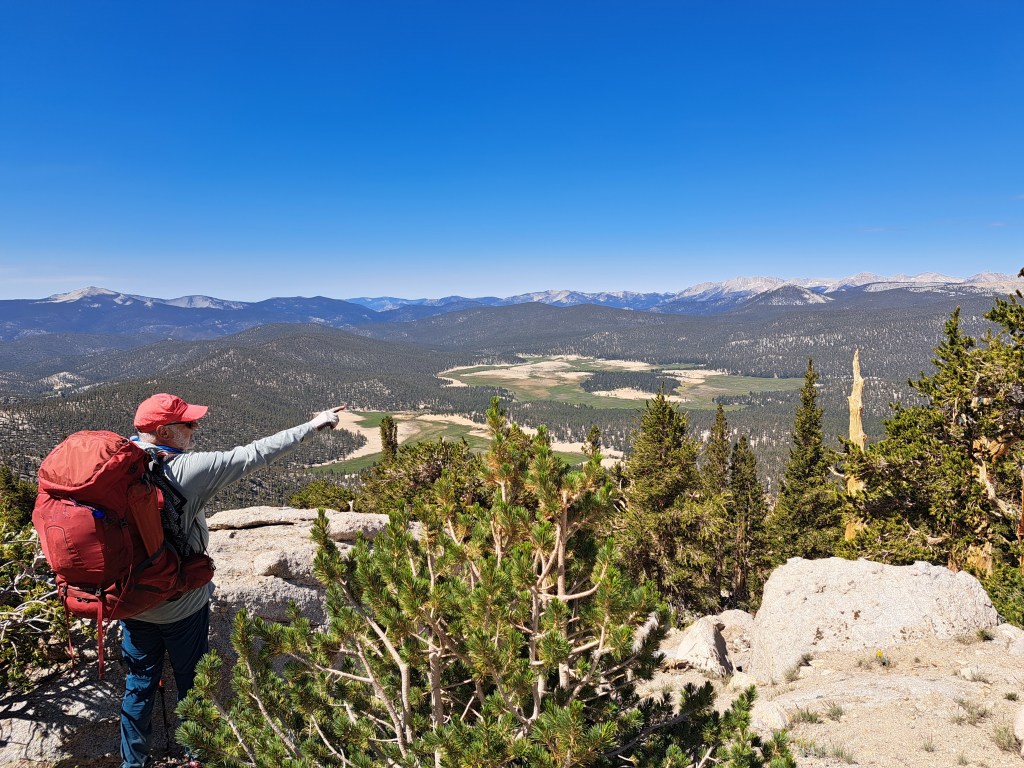
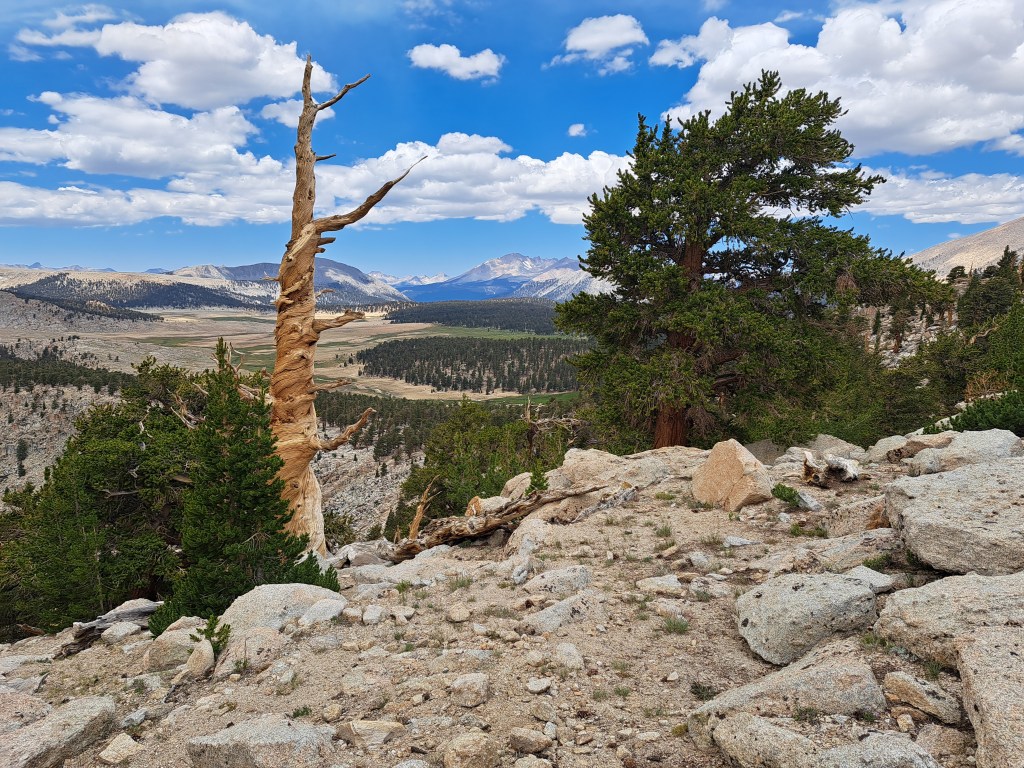
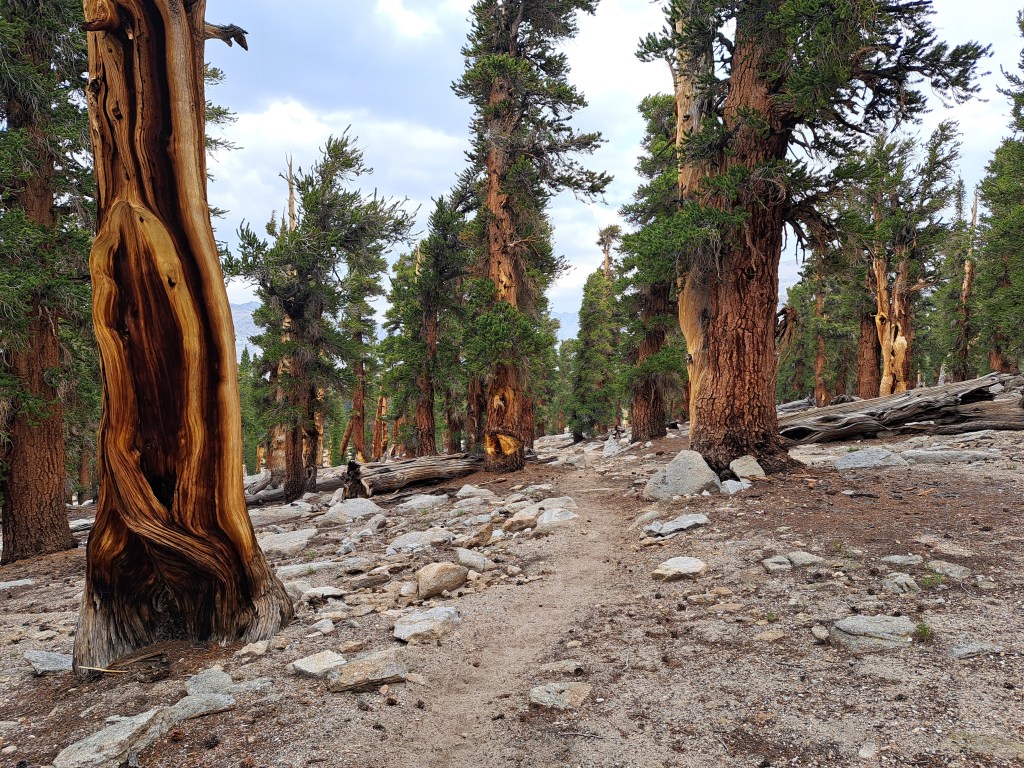
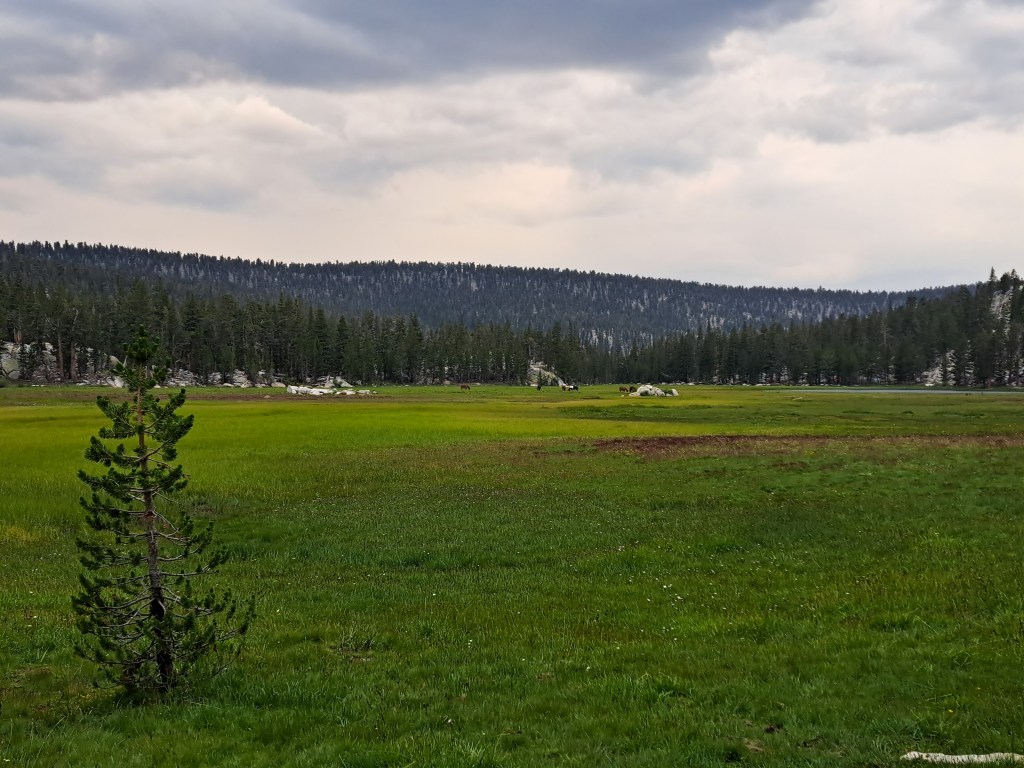
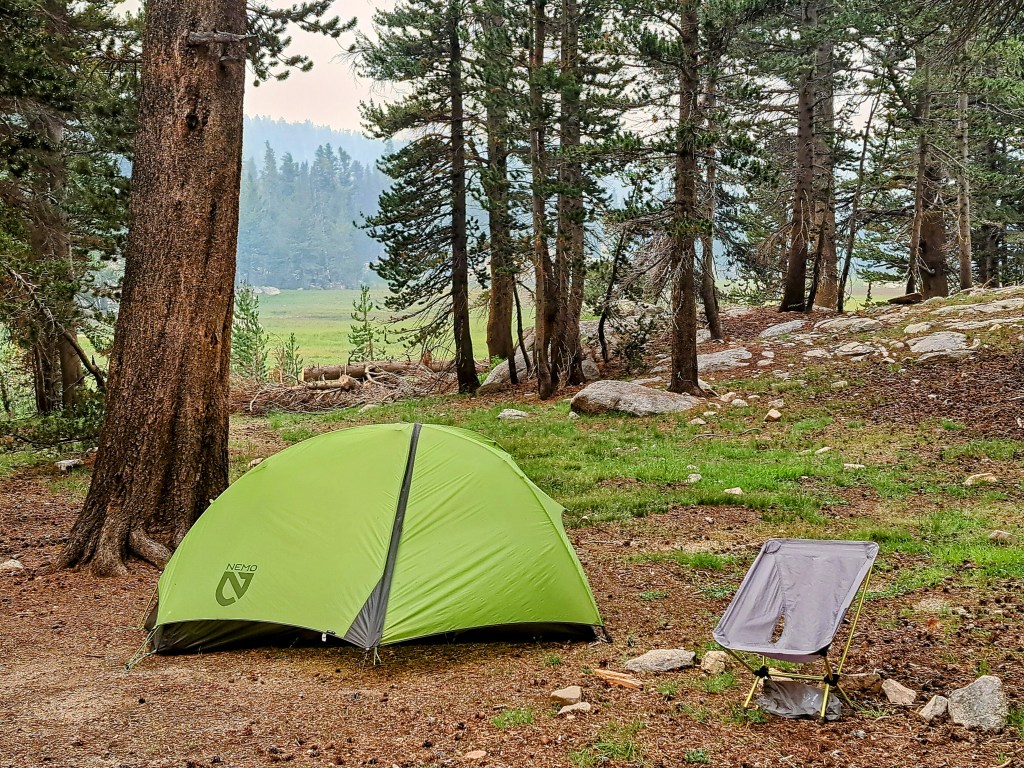
We spent two nights at the head of Rock Creek Meadow so that we could take a day hike into the Miter Basin and up to Sky Blue Lake. The weather was cool and cloudy, with a little rain. The pack train stock grazed peacefully in the meadow.
The Miter Basin has been a goal of The Neighbor ever since he read The High Sierra: A Love Story by Kim Stanley Robinson. The Miter Basin also came highly recommended by a young solo hiker who had just returned from there. Upon passing us on his way out, he was zealous in his insistence that we go there – a good sign.
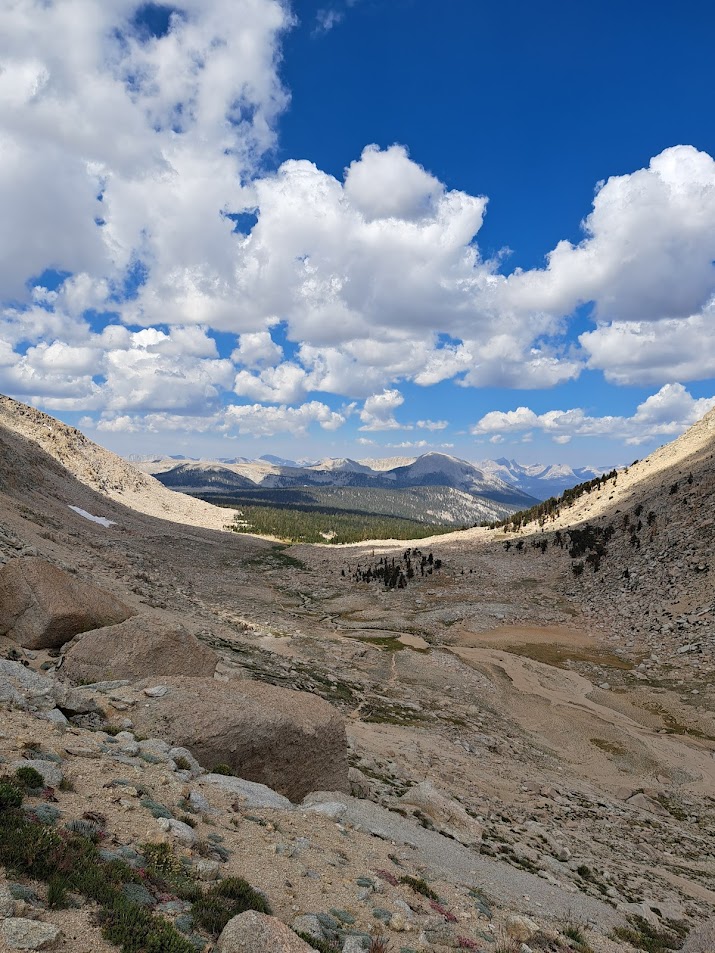
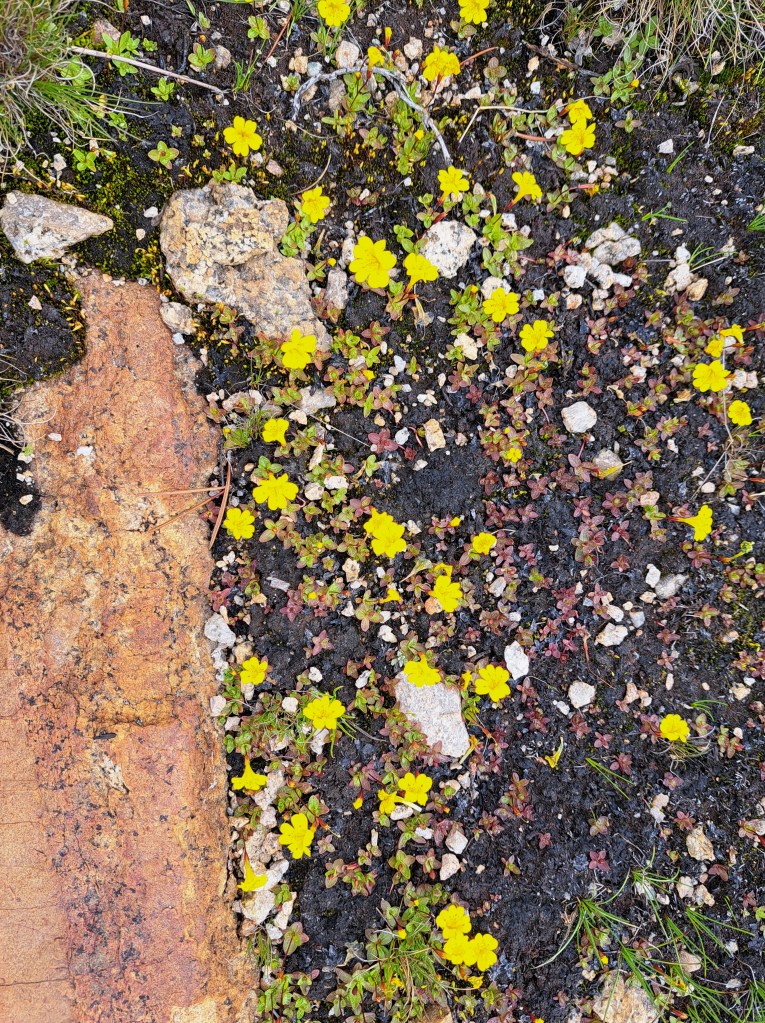
The Miter Basin did not disappoint. The entrance to this Shangri-La is mysteriously obscured. The trail is faint and unmarked. As you proceed uphill through a dense forest next to a rushing stream the landscape begins to open up into meadows and steep cliffs. Eventually, the forest thins out and then disappears altogether. Beneath your feet is a beautiful array of dwarf wildflowers. Above you is the sky, clouds and jagged peaks. The mountains vary in elevation from twelve to fourteen thousand feet.
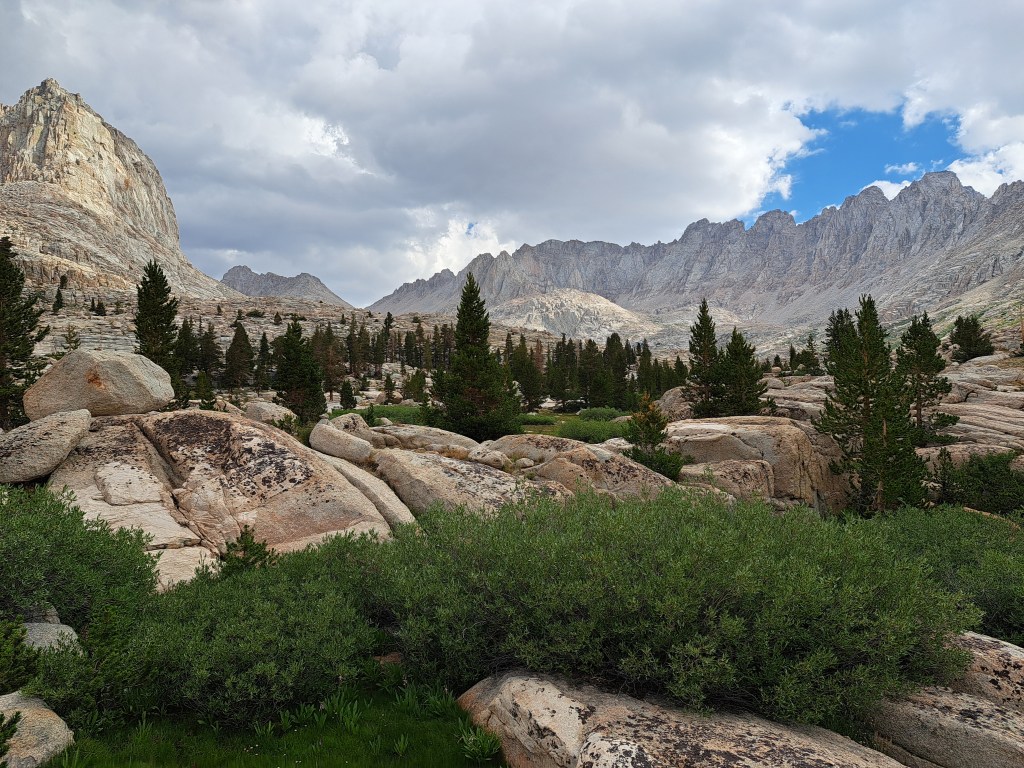
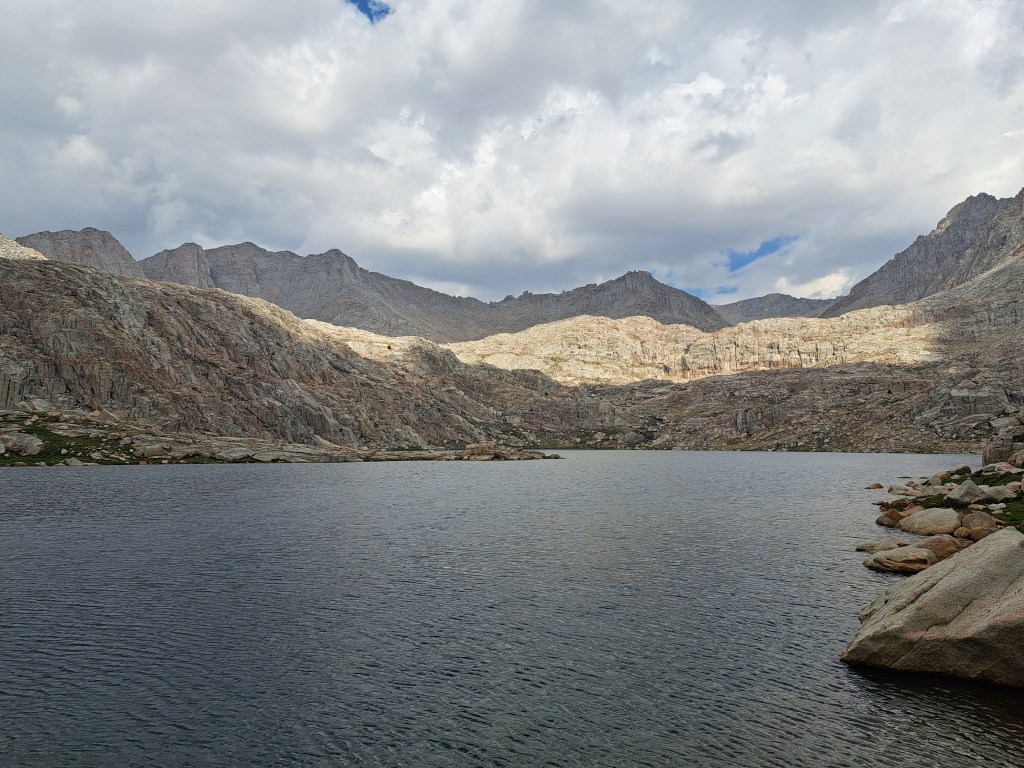
After a dip in the refreshing water of Sky Blue Lake (great name), we headed back to camp. Sky Blue Lake was our destination, but of course it is always about the journey. It was a gray, cloudy day, so our dip was in a cold, slate gray lake. Fortunately, the sun did emerge to warm us afterwards.
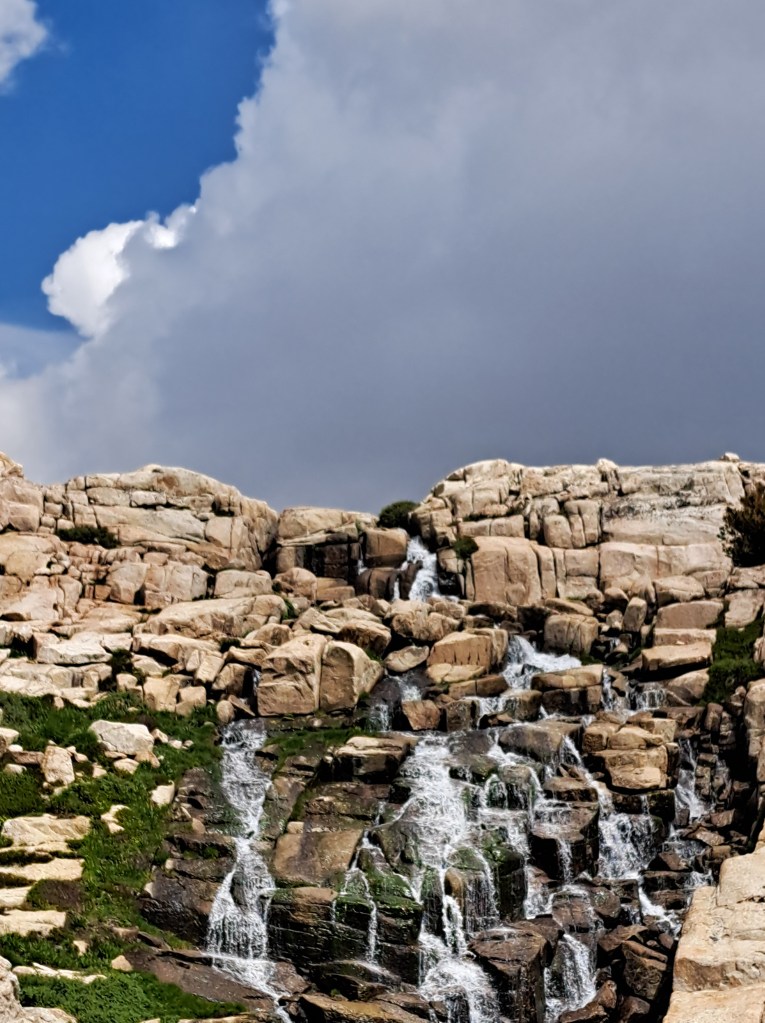
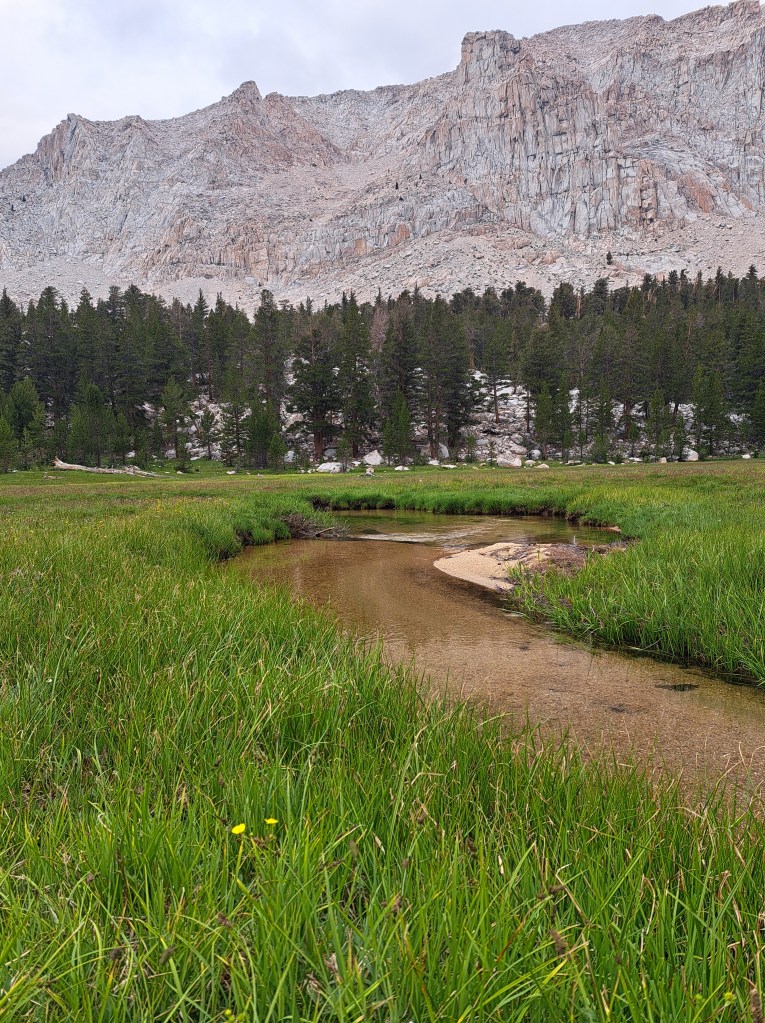
That evening we soaked our feet in the stream while watching the Golden Trout meander their way back and forth from bank to bank, occasionally dining on a mosquito (the fish, that is.)
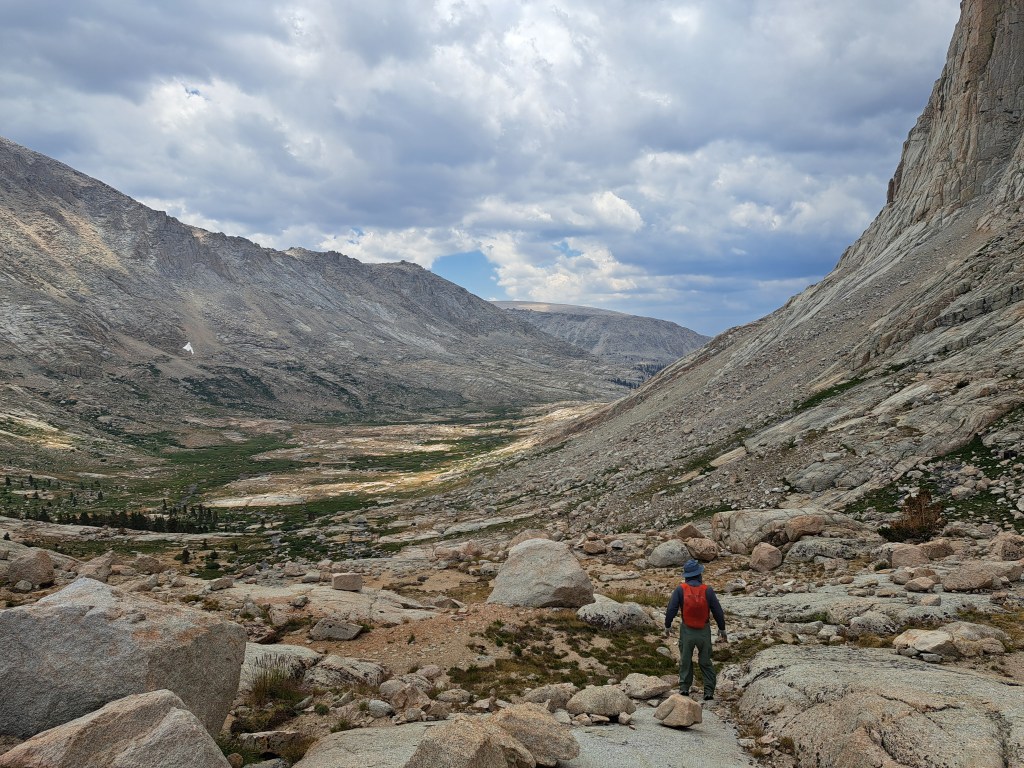
Friday was a big day as we had to climb over 12,300 foot New Army Pass. This pass would be the highest elevation The Enthusiast had ever hiked to. He was less than enthusiastic about the idea, but excelled nonetheless.
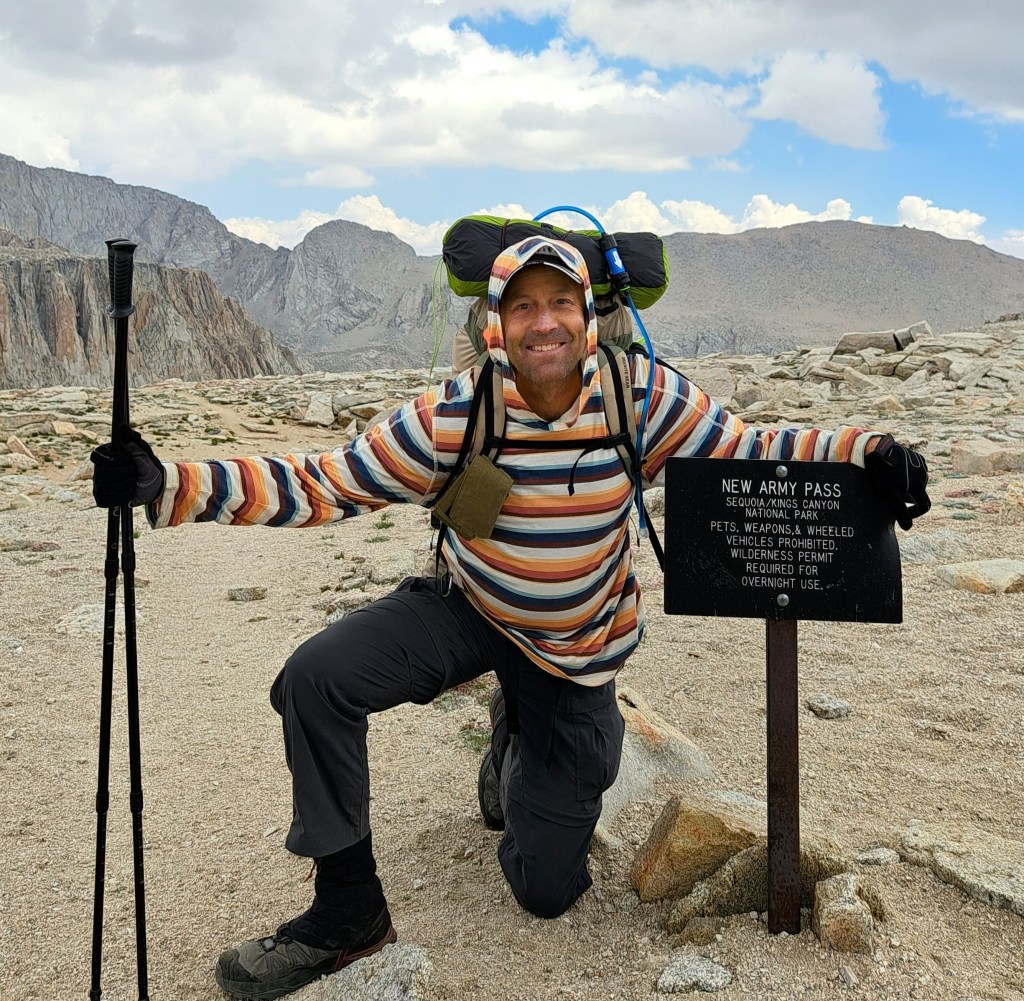
On the hike out toward New Army Pass, we encountered a trail maintenance crew composed of young men and women who get to spend the whole summer camped out in The Sierra. By the way, you won’t see them using any power tools.
New Army Pass was constructed to provide a safer route into The Sierra than the traditional Old Army Pass. New Army Pass is typically clear of snow earlier in the season than Old Army Pass. Both are still used today.
Not surprisingly, Old Army Pass was built by the army. “The Buffalo Soldiers”, African American regiments in the U.S. Army, were instrumental in its construction. These soldiers were part of the 9th Cavalry Regiment, one of the all-black units that served in the American West after the Civil War.
The Buffalo Soldiers (an honorific supposedly bestowed upon them by Native Americans) are considered to be some of the very first park rangers in the United States. Serving in national parks like Sequoia and Yosemite in the early 1900s, they performed many duties that would later become standard responsibilities of park rangers. Their work in patrolling the parks, building infrastructure, fighting fires, maintaining order, and educating visitors laid the foundation for the modern National Park Service.
If you now have songs from The Music Man stuck in your head, then try Buffalo Soldier by Bob Marley and The Wailers. A nice palate cleanser, it is available on the album Legend, which continues to be one of the best selling albums of all time.

Our final night was spent camped on the shore of Long Lake (which wasn’t really all that long) amongst the beautiful Foxtail Pines that had been keeping us company for the past four days. Long Lake was a bit warmer than Sky Blue Lake and was suitable for actually swimming in.
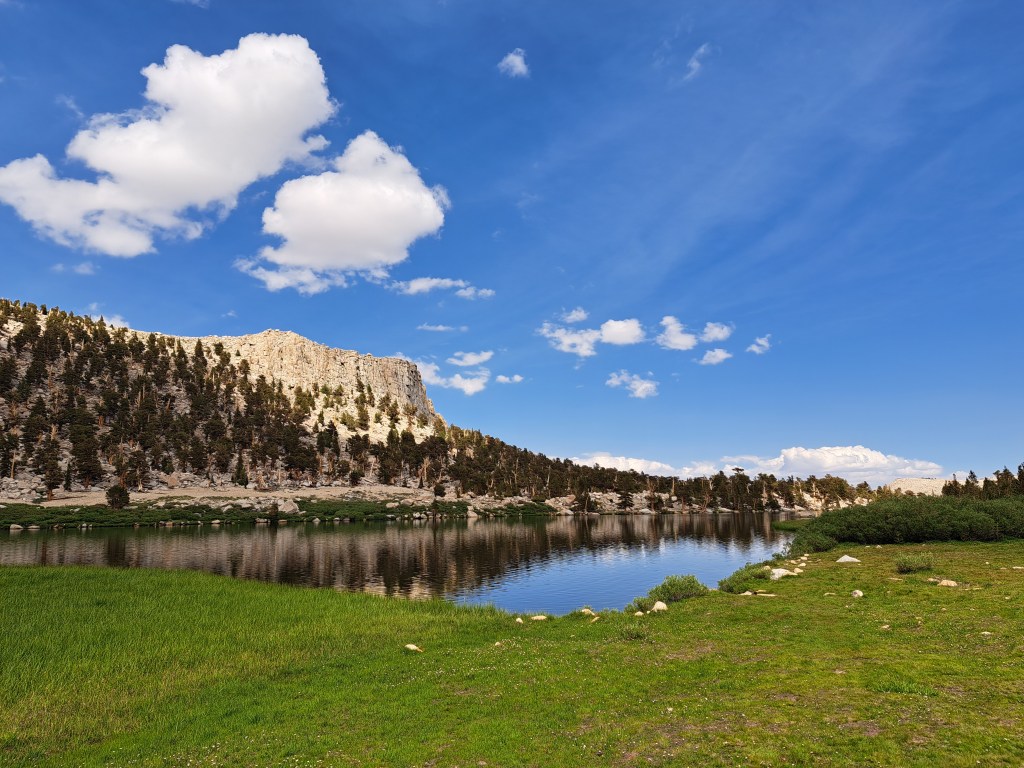
The hike back out to the car was perfect as we descended the quiet trail which followed a stream, then alternated between meadows and forests. We did not meet any other hikers until we were about a mile from the parking lot, but we did bump into some Pikas. I had all but given up on ever seeing a Pika again, as they are very sensitive to warming temperatures and have not been adapting well to climate change. It made me happy and hopeful to see them.
The American Pika, or “Whistling Hare” is a small, round, fury beast with short legs, no tail and round ears. It can tip the scales at eight ounces. It is not to be trifled with!

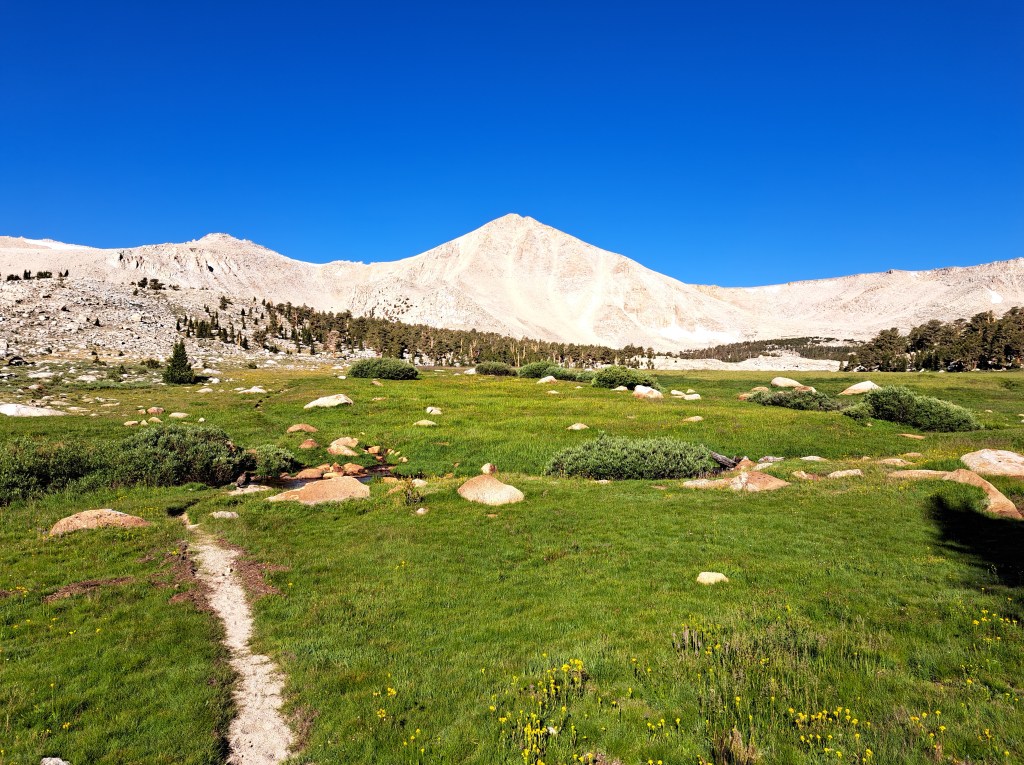
The highlights of this trip had to have been the sky blue lakes, the Pikas, the Foxtail Pines, Miter Basin and the abundant enthusiasm of The Neighbor and The Enthusiast.
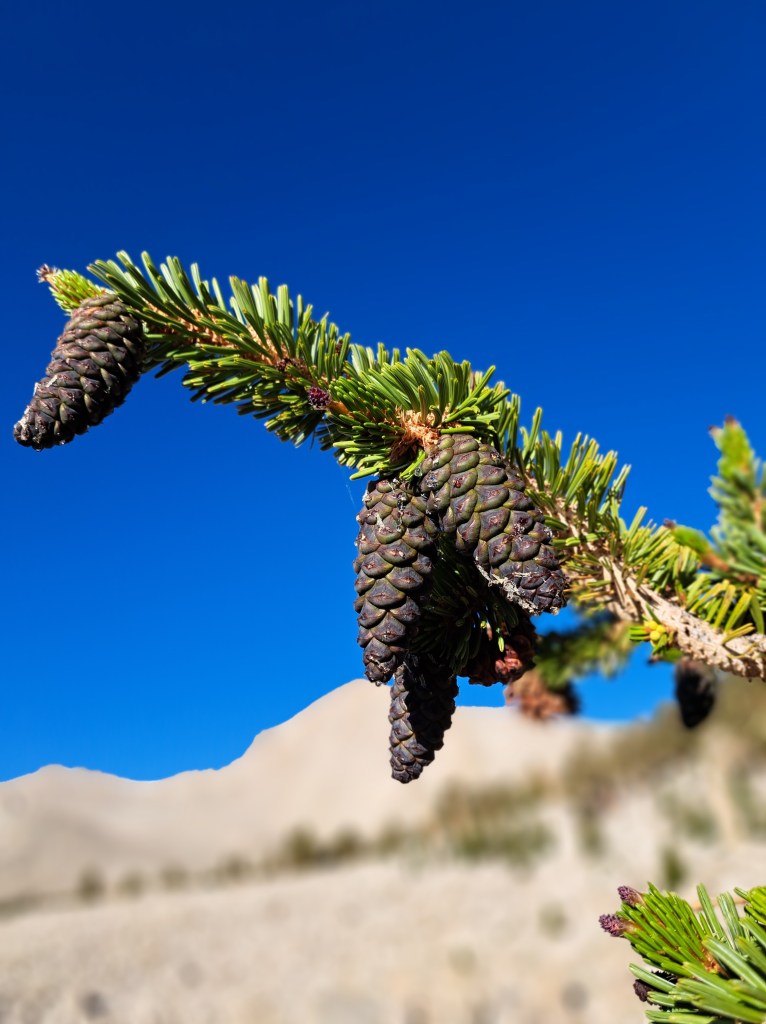
Take care, good reader, and thank you once again for joining me on a little adventure in the mountains!
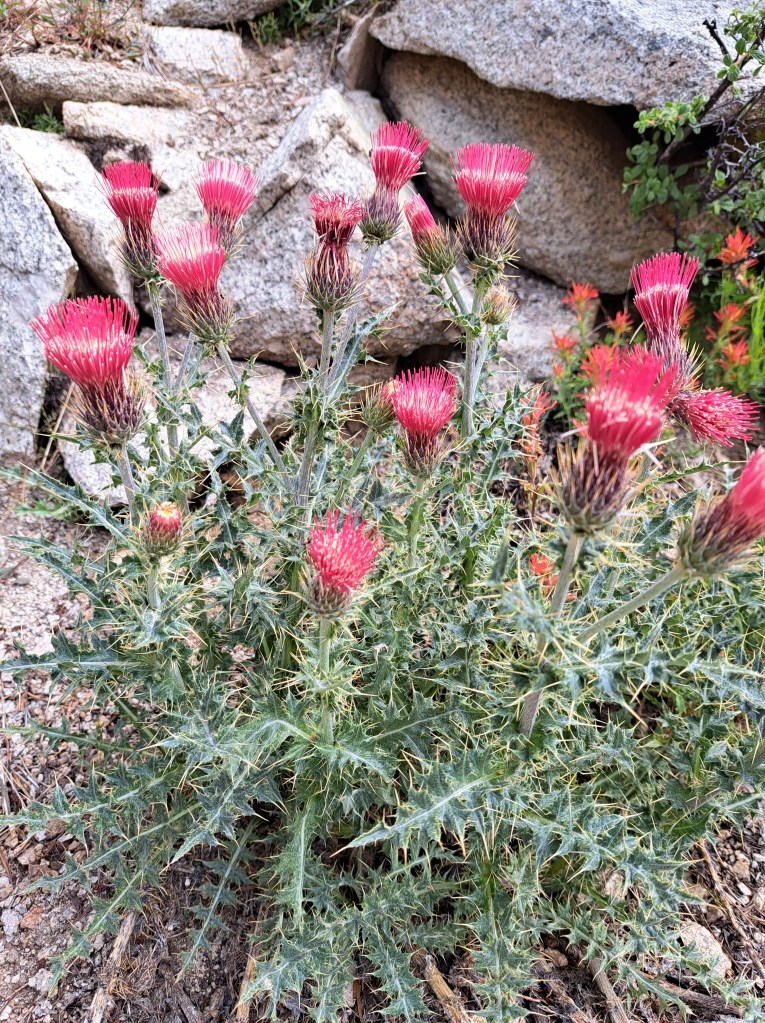
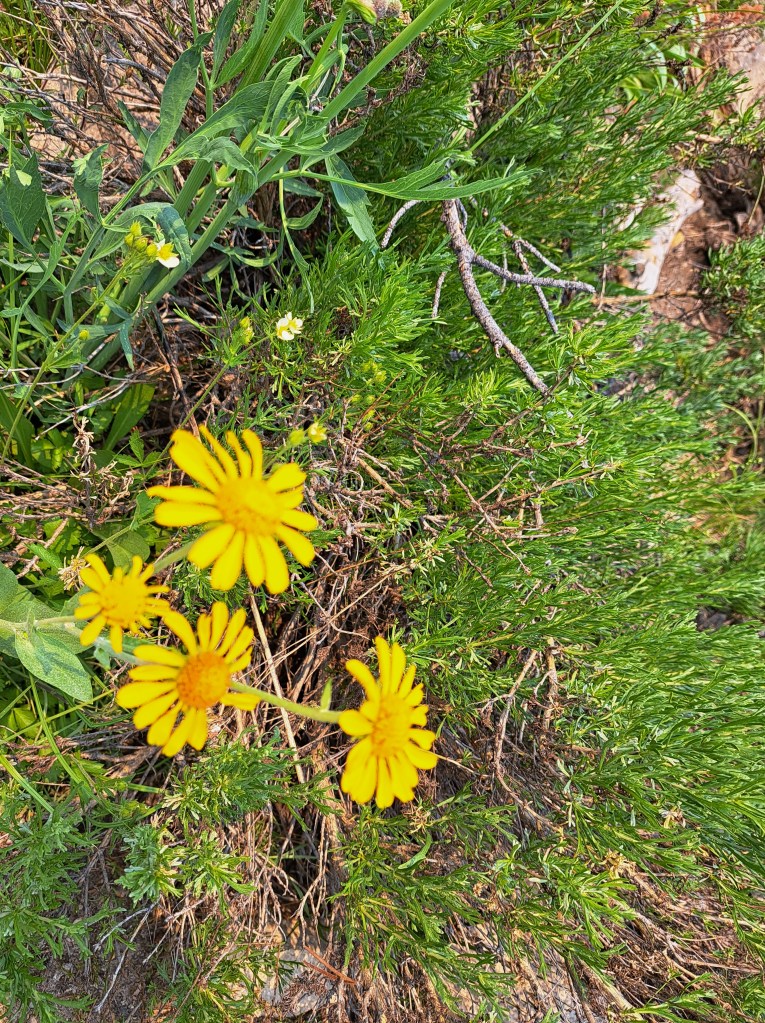
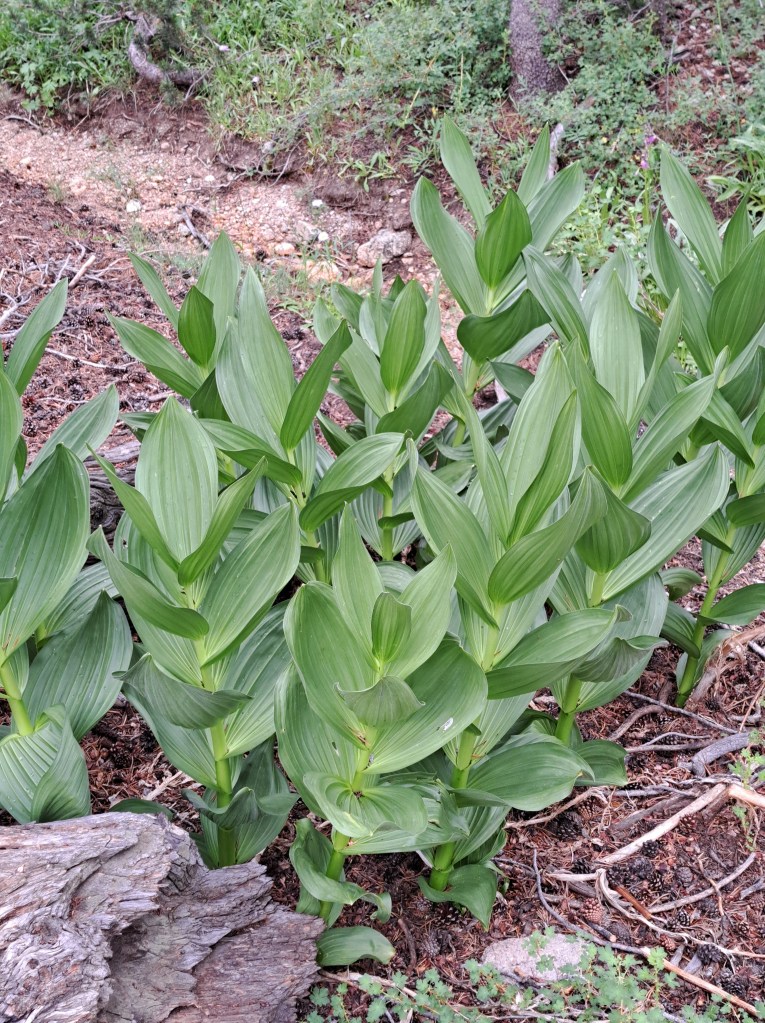
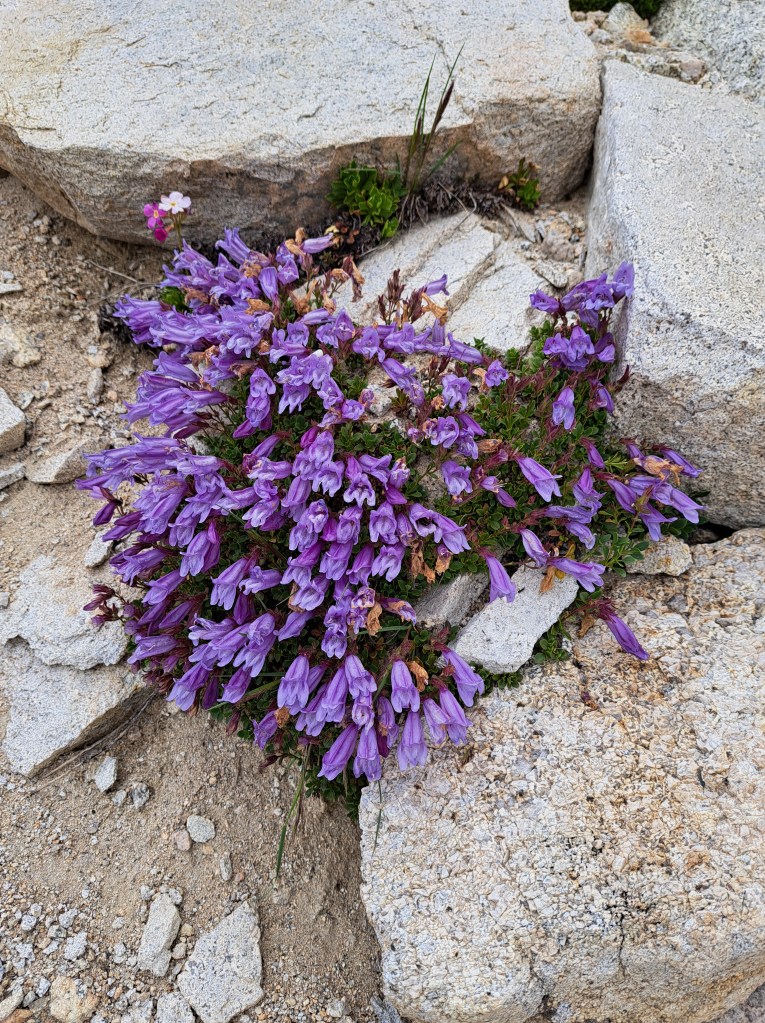
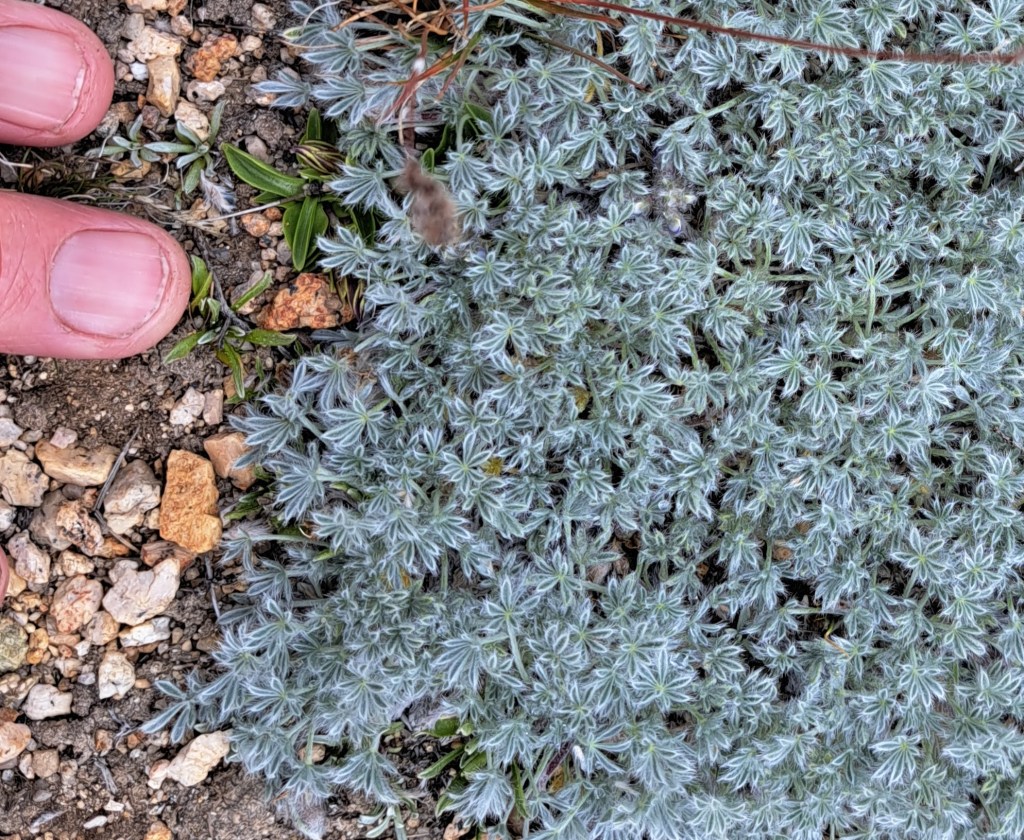
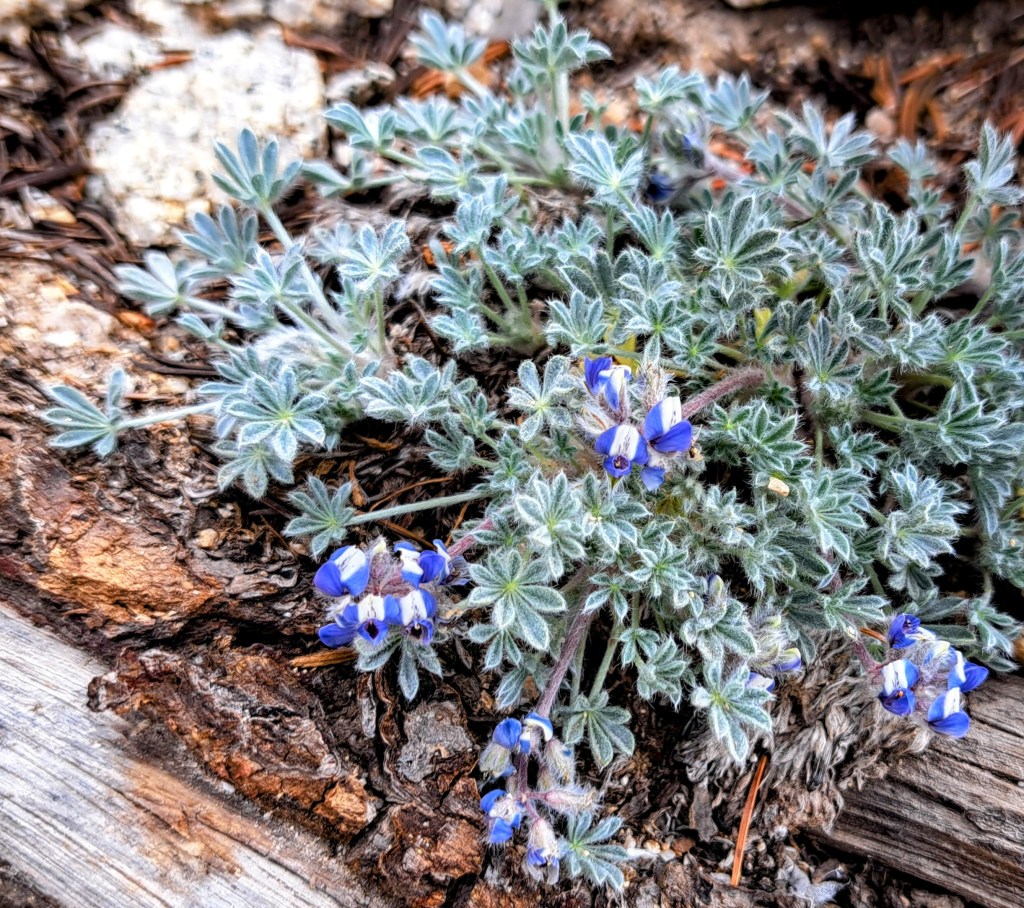
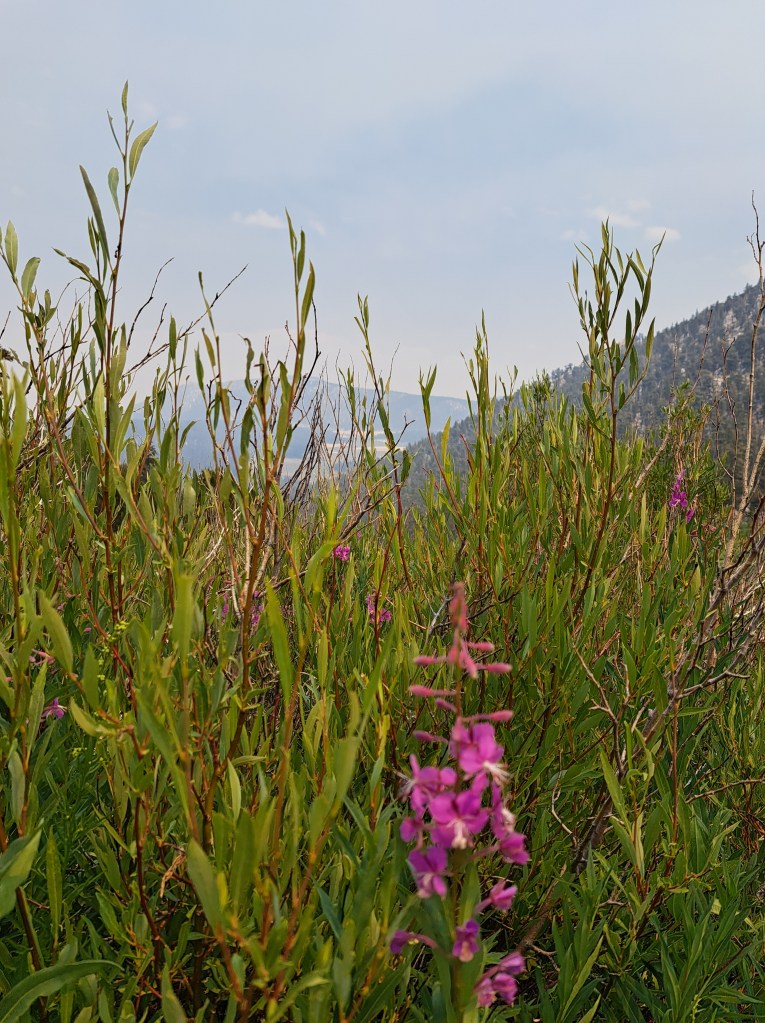
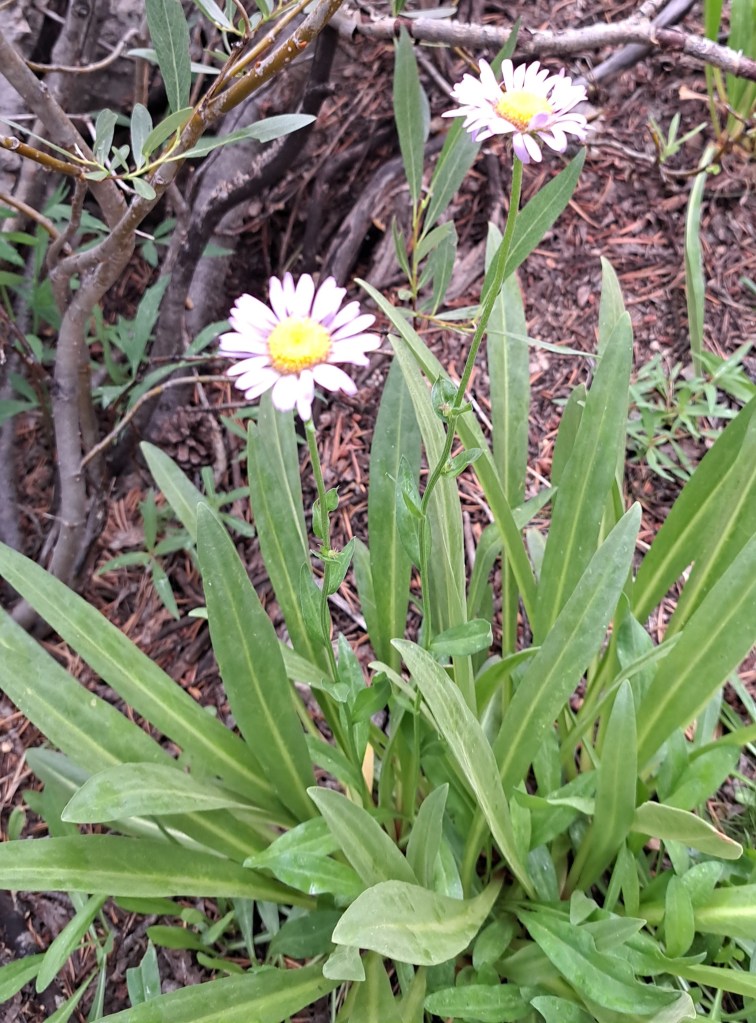
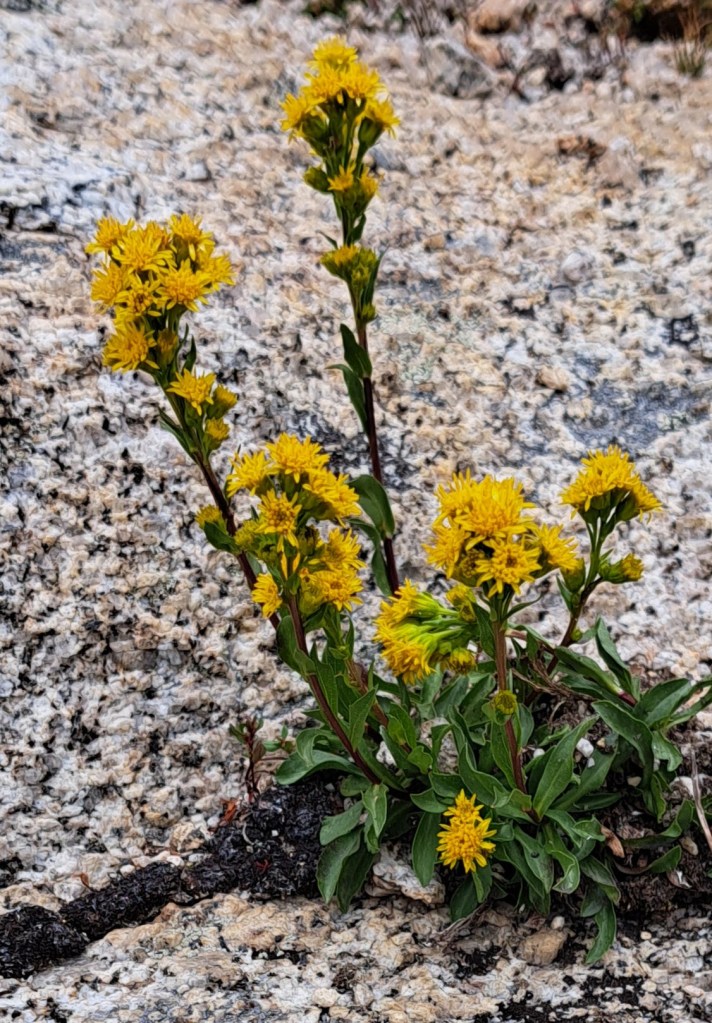
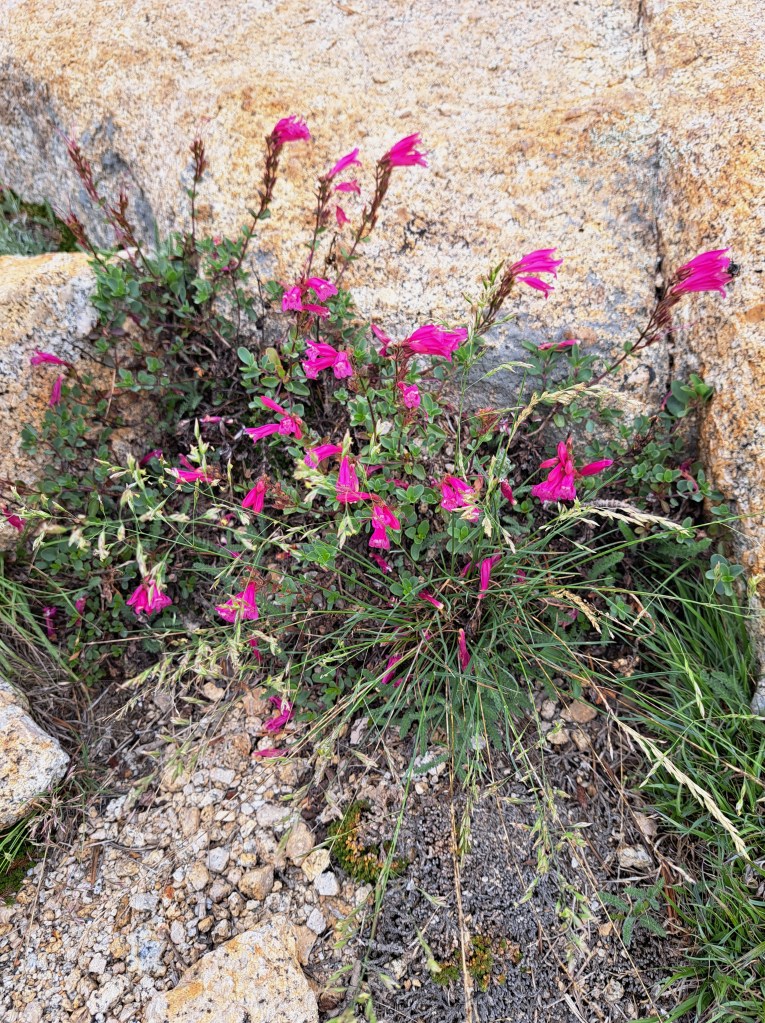
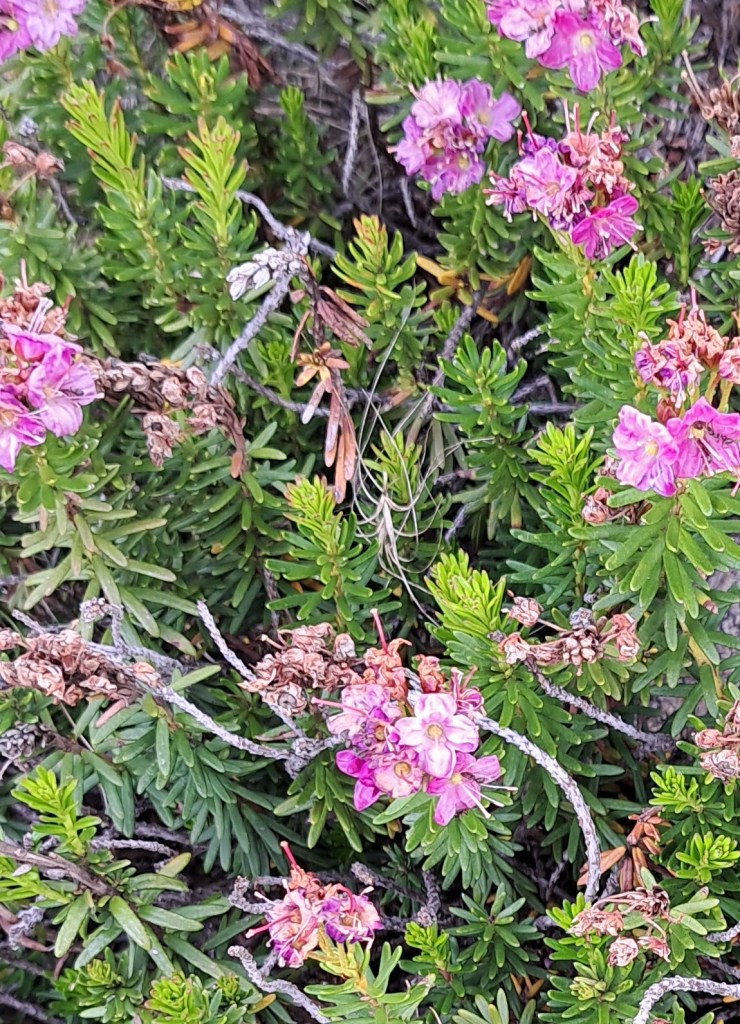
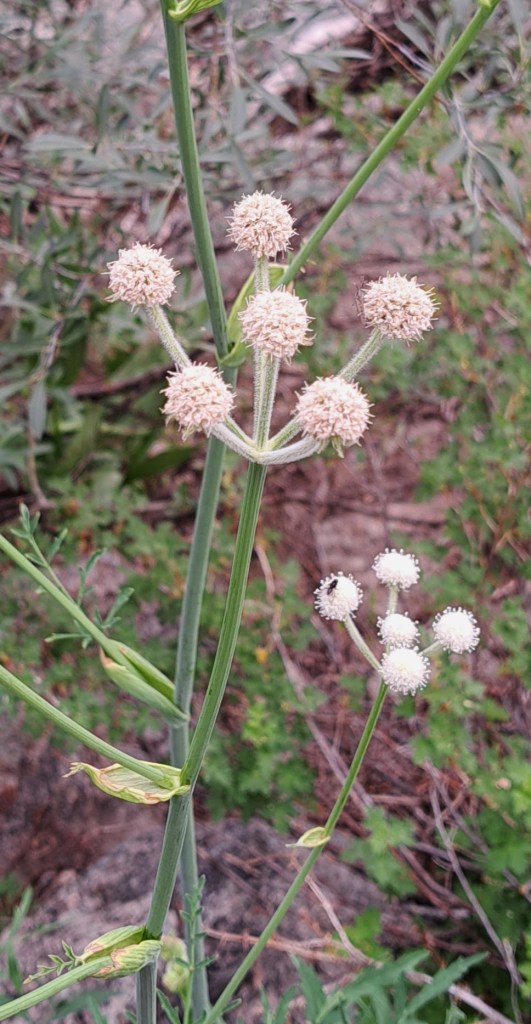
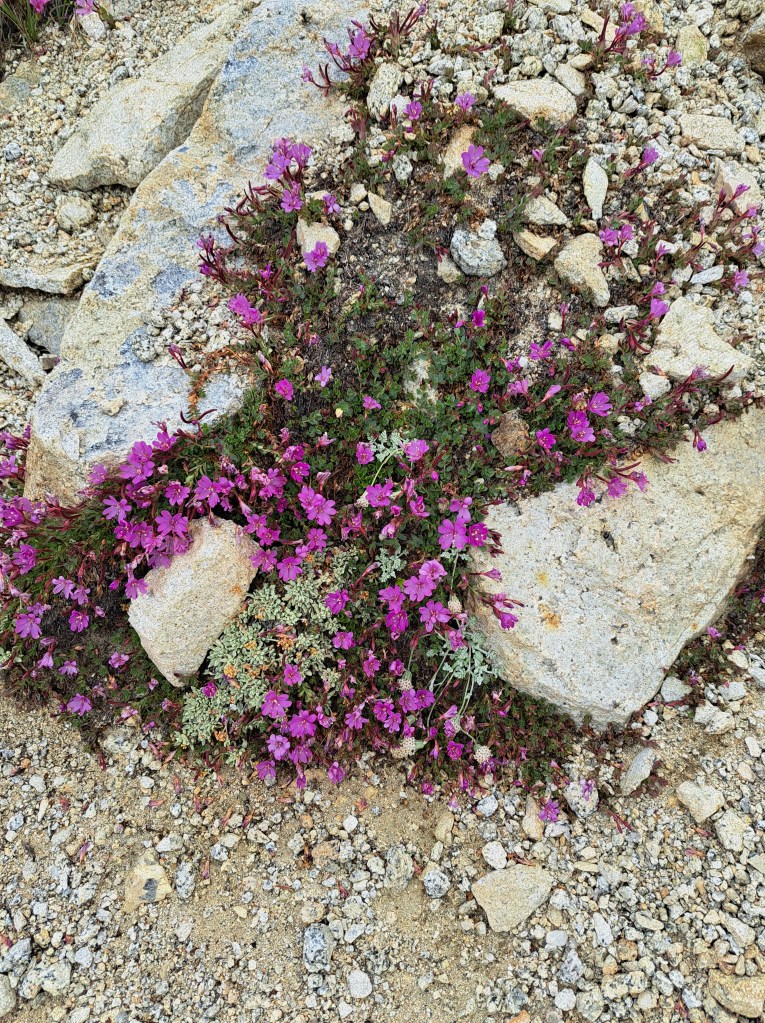
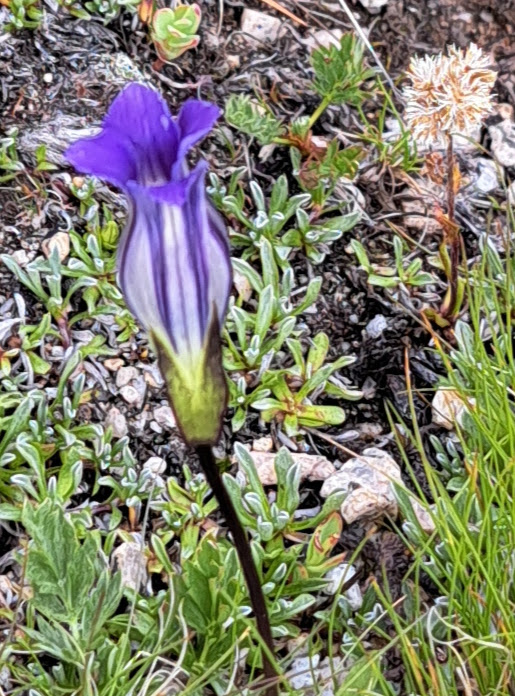
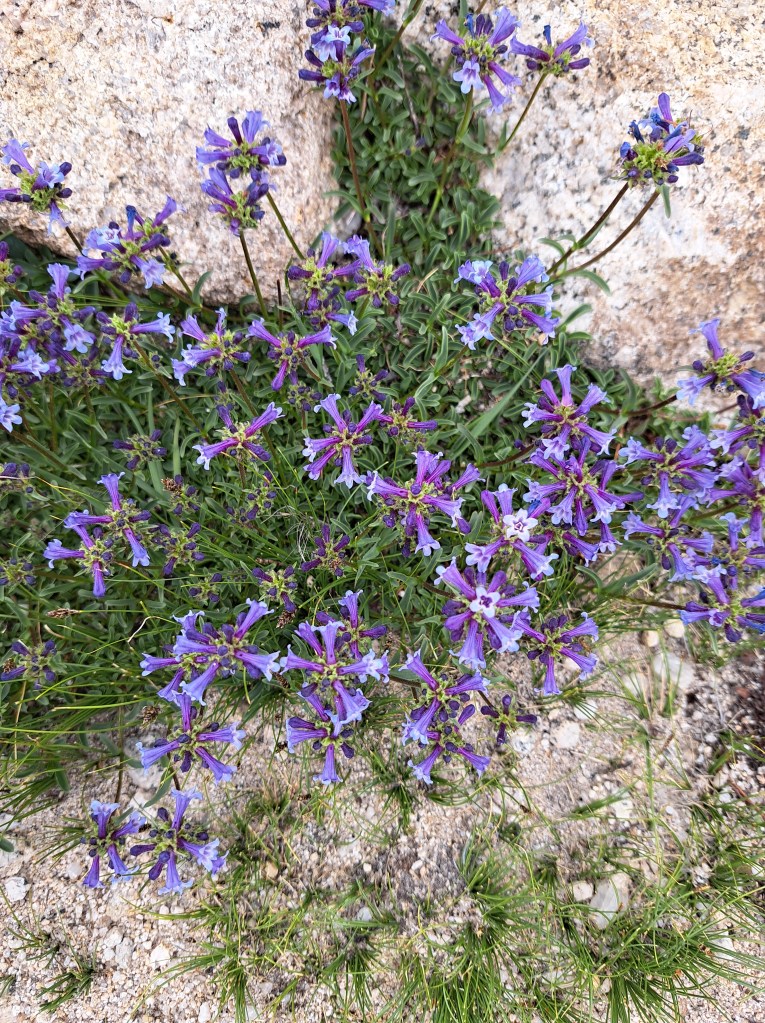
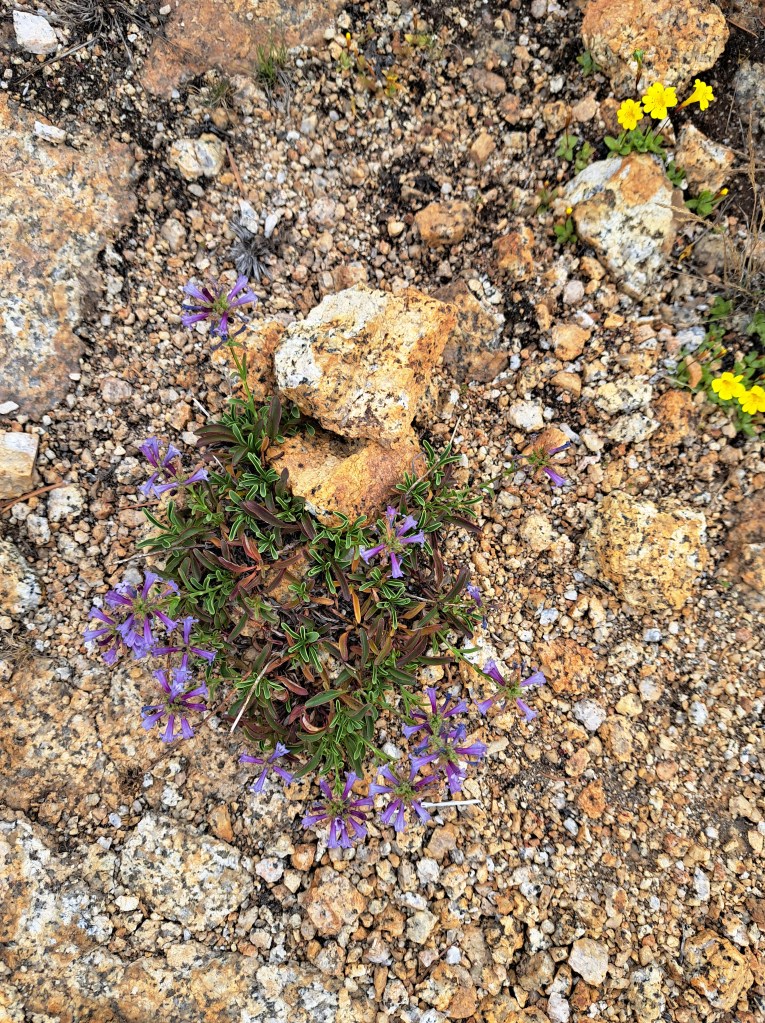
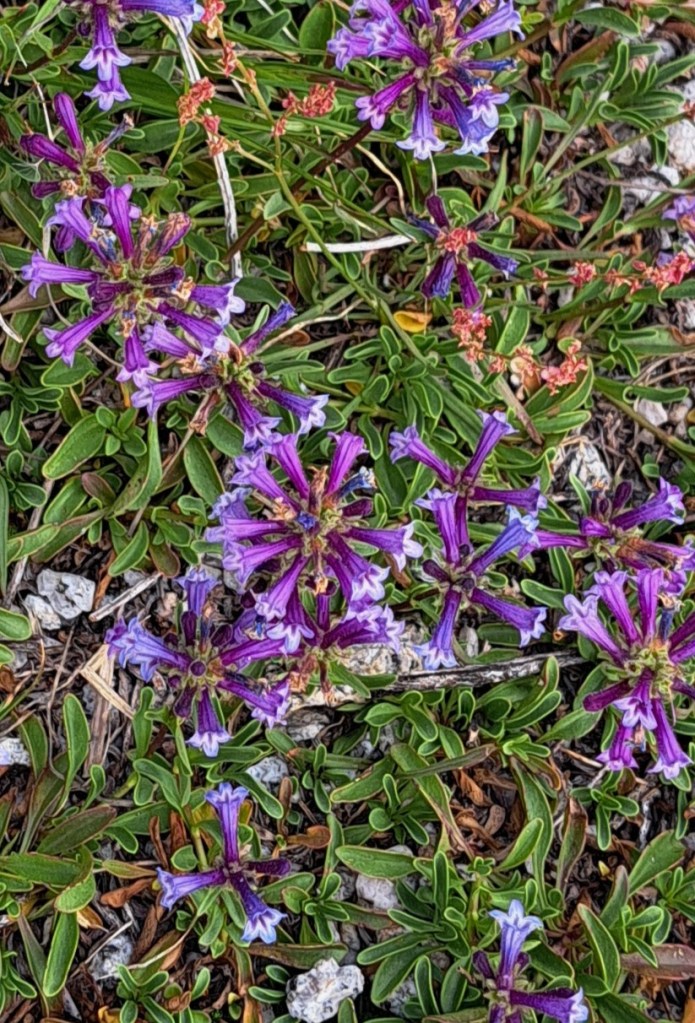
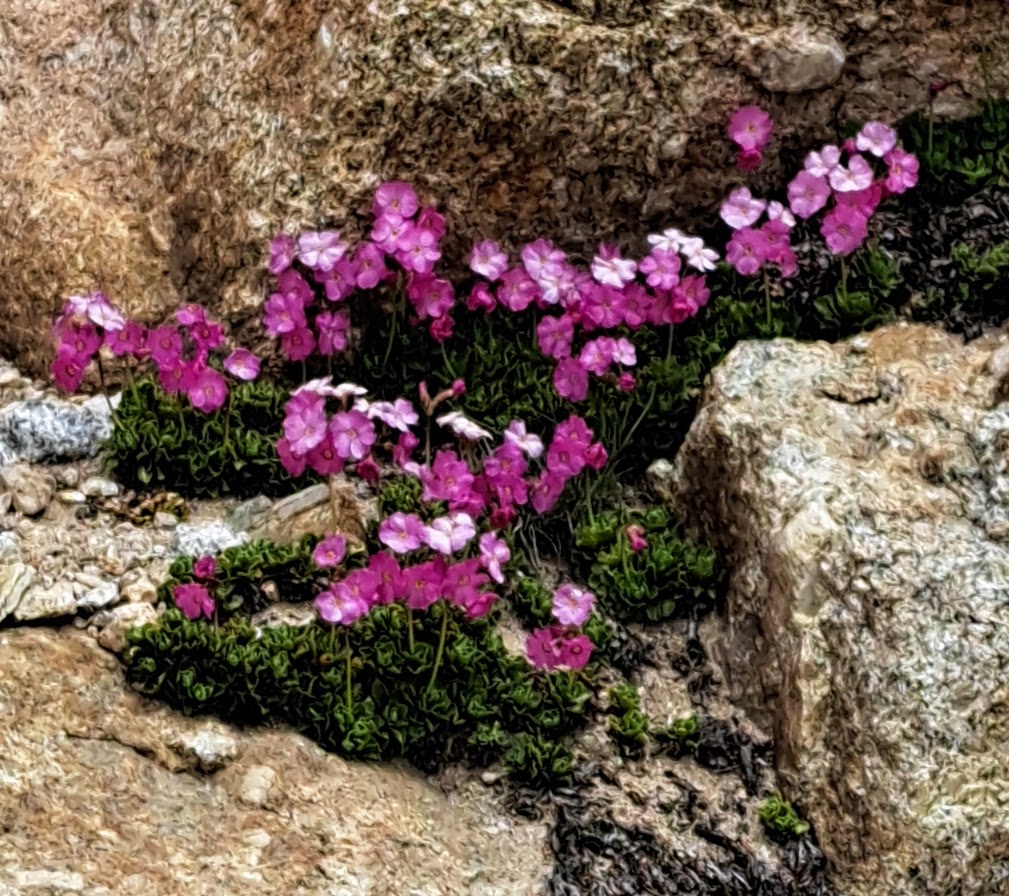
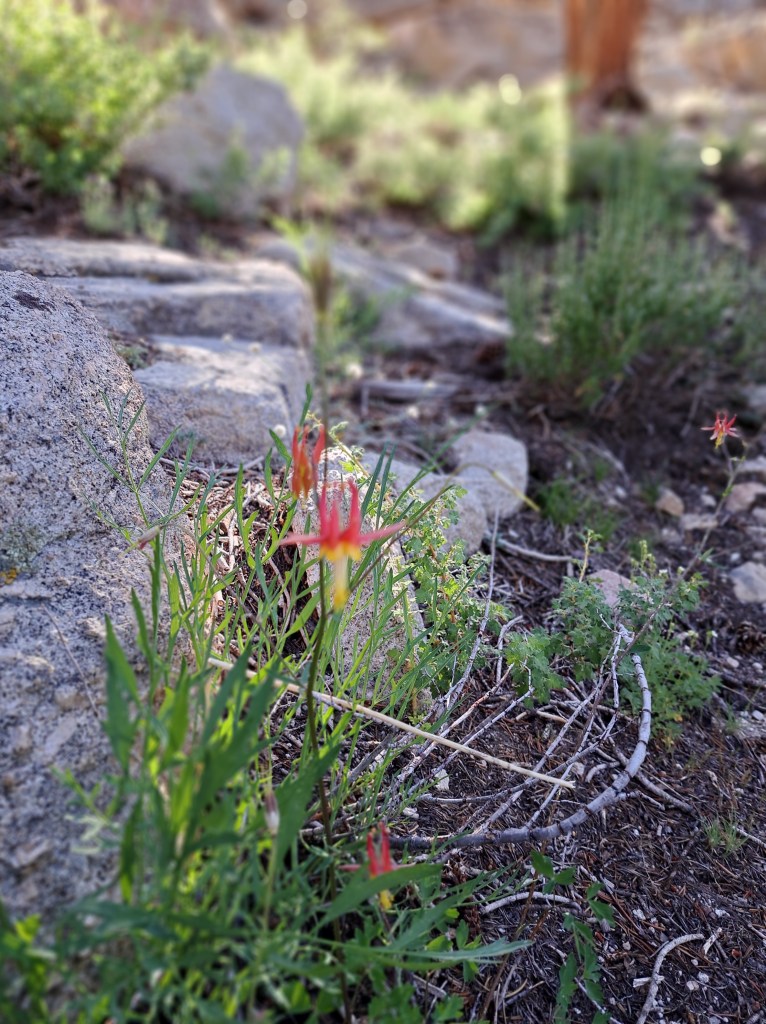
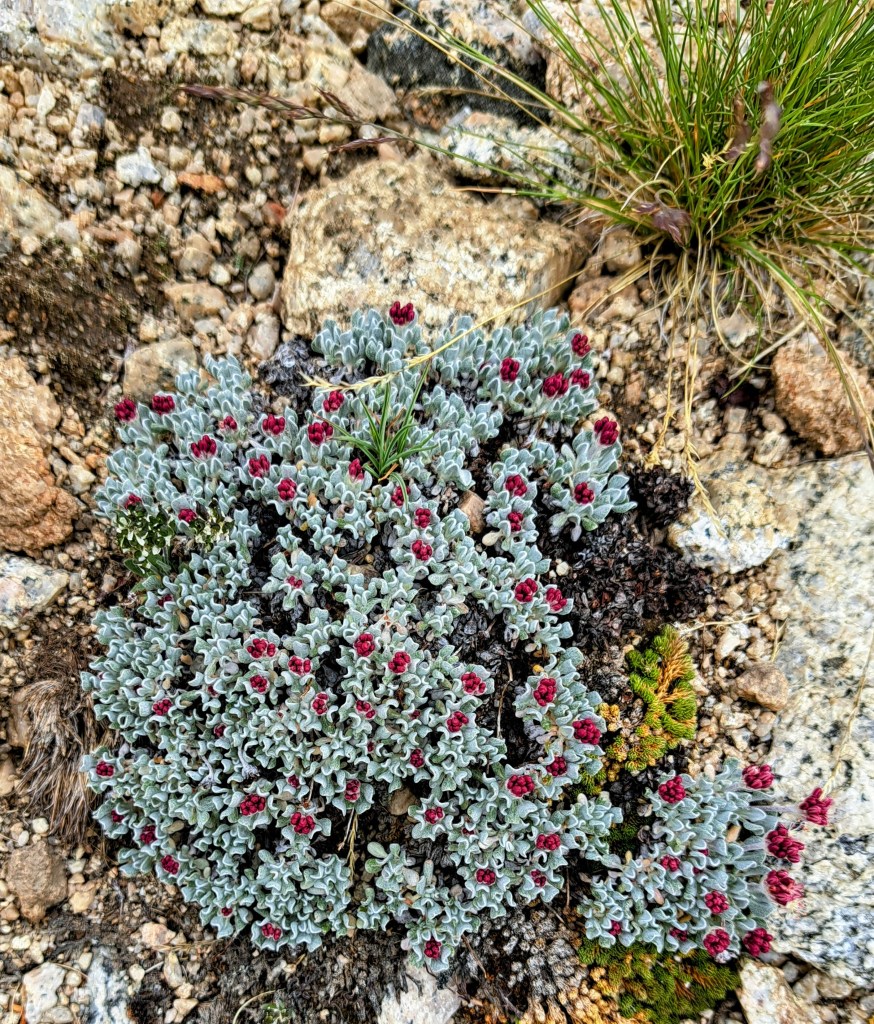
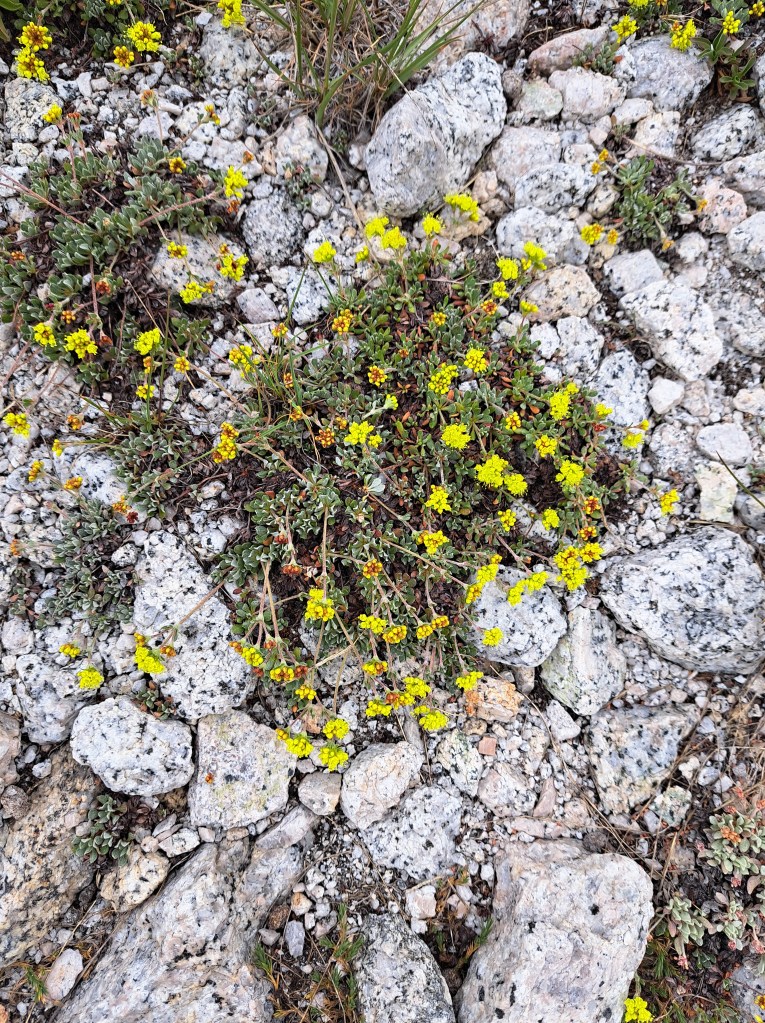
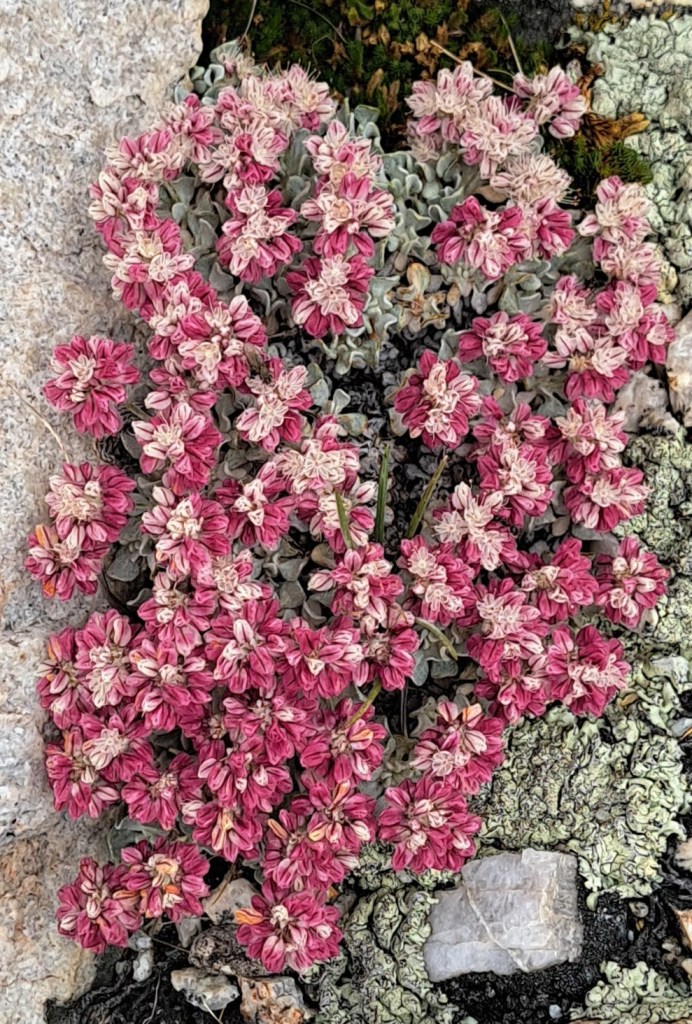
The following plant identifications are provided here as a courtesy to The Enthusiast:

 "Trail Reports"
once again you took me there and I am so glad to have taken the trip thank you
LikeLike
You are very welcome!
LikeLike
Dave, you gave me a very entertaining, insightful, and varied read early this morning with my coffee. I miss the Sierras as I used to hike a fair amount, but many years past. Thanks for reminding me how cleansing they are. John
LikeLike
It was my pleasure! Thanks for reading!
LikeLike
I will be thinking of what secrets the Foxtail Pines keep for a while now… they are so striking.
LikeLike
They do not easily give up their secrets. One must be patient.
LikeLike