Mitch was a boxer, geologist, businessman and philosopher. He was also my Dad’s best friend. When Mitch and Stan (my Dad) were together, Stan was more relaxed and more adventurous. Mitch had three sons, all older than me. They were much like their father. When our families got together, adventure ensued and adult supervision decreased. During these family gatherings, I felt like I was on top of the world.
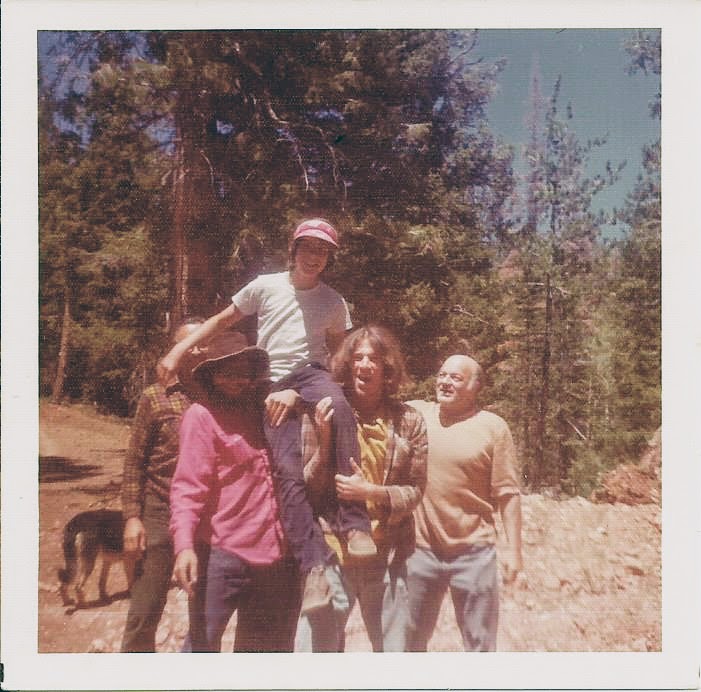
Stan and Mitch spent some time together in the jungles of South America and had a common interest in cigars and the Navajo Sandstone (a prominent geologic formation of southern Utah.)
For the summer of 1975, these two reprobates had hatched a particularly ambitious scheme: to descend from the upper reaches of the Virgin River watershed into Zion National Park (distance 24 miles.)
Even today, you will not find much information about this route on the internet. In 1975, there was none – just a blue line on a USGS topo map.
Google and I found one description of the route which is surprisingly accurate.
To summarize:
- Deep Creek offers a challenging route to a seldom visited canyon that ends by visiting the centerpiece of Zion National Park – The Narrows.
- Deep Creek is a major tributary of the North Fork of the Virgin River. Accessing The Narrows through Deep Creek will provide you with a chaste canyon and more solitude than the traditional route.
- Deep Creek is a canyoneering adventure that experienced hikers can complete in three days under good conditions.
- A hiking staff is required. Everything must be packed in dry bags.
- The hike requires numerous creek crossings, many miles of chest deep wading, short swims and five to ten foot waterfalls. There is no trail.
On the June morning of our departure from the Boicourt Cabin near Brian Head, Utah it snowed. The dirt road to the trailhead at Webster Flat was wet and slippery.
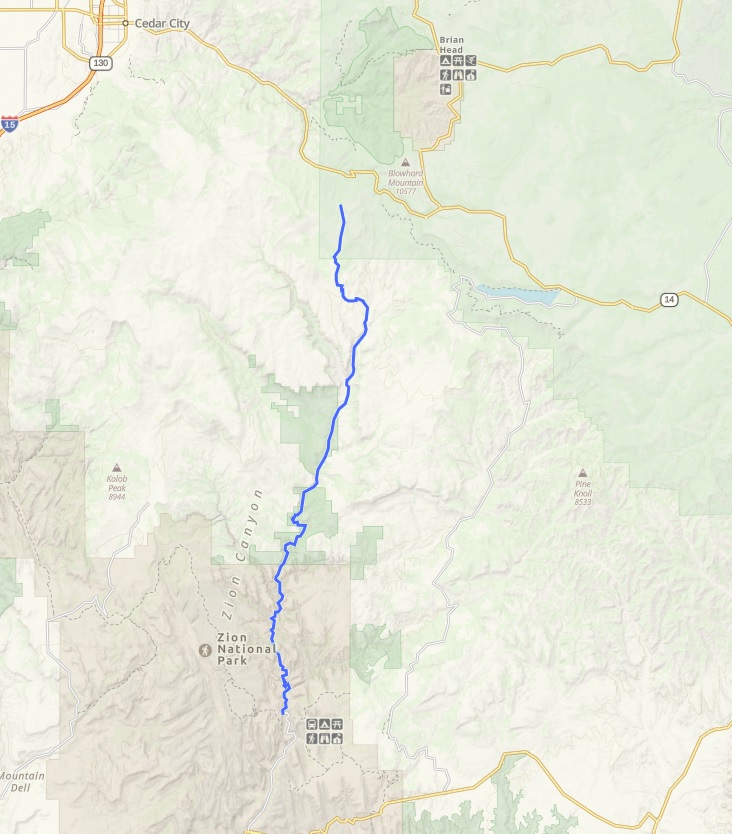
The beginning of the hike was quite gentle – even pastoral. However, by day two we were making numerous creek crossings. At this point Stan cut us all hiking staffs for crossing the the cold, swift river.
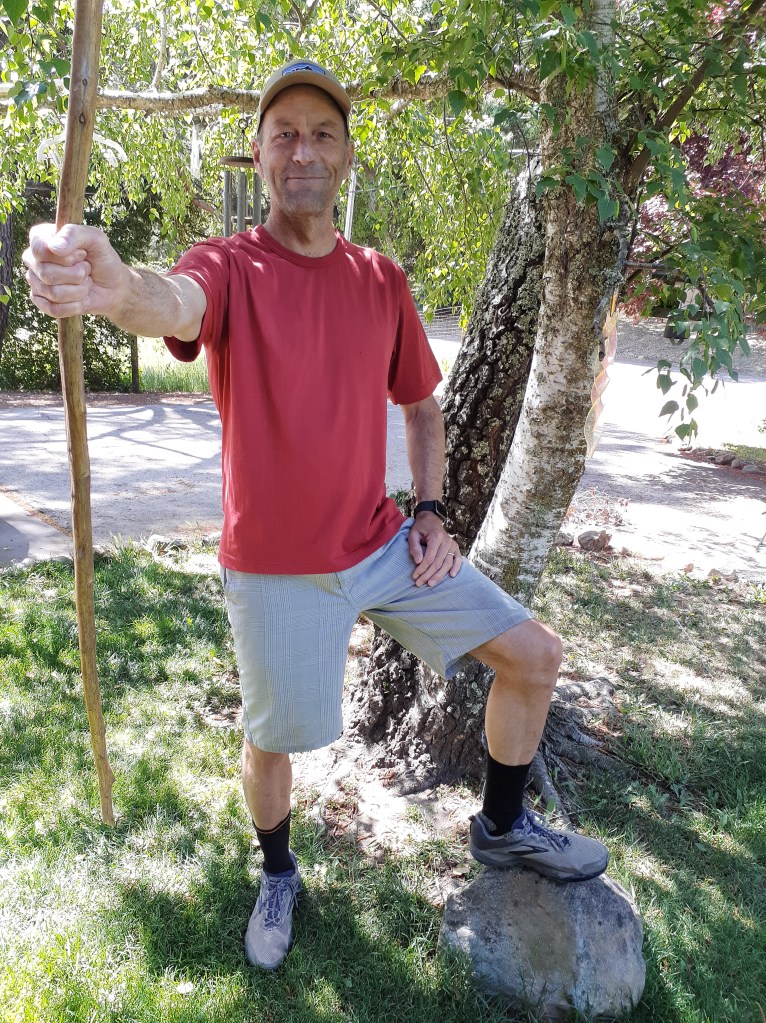
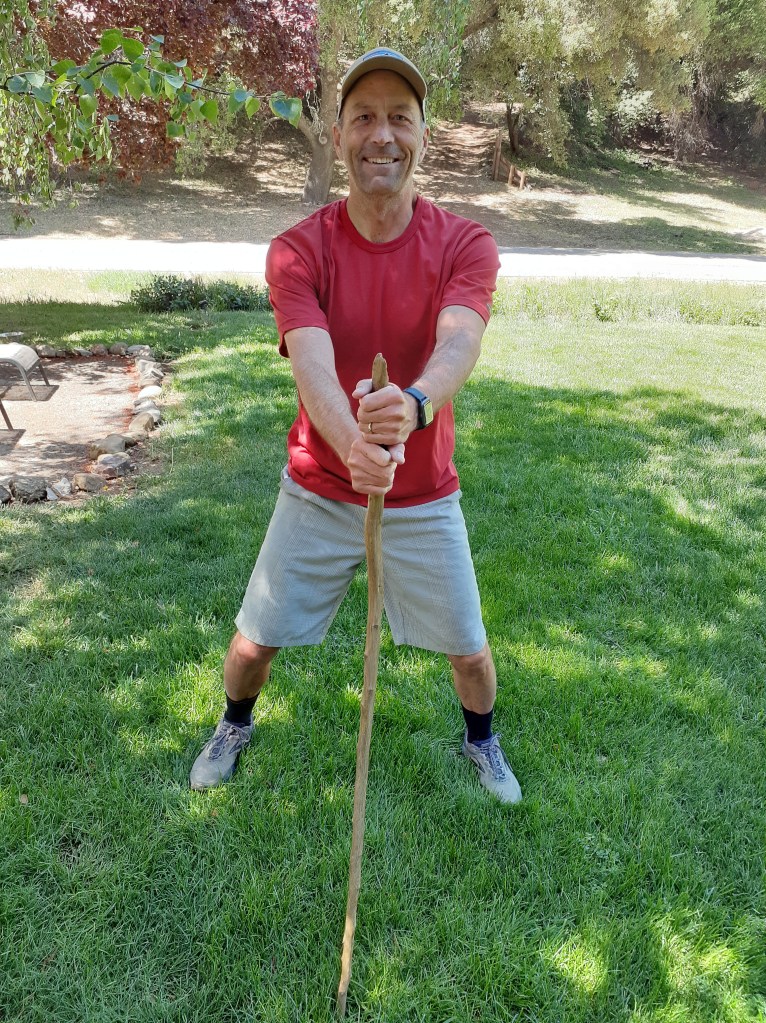
Stan would yell “Tripod! Tripod!” (a technique for remaining stable in a swift river current) from the shore, much like Peter Falk yelling “Serpentine! Serpentine!” (a technique for dodging bullets) in the movie “The In-Laws”.
By day three the canyon had narrowed substantially. As we passed Volcano Knoll, we saw an ominous lone horseman on a black horse looking down on us as we entered Deep Creek proper.
The next two days were spent in the water, in the canyon. There was no sunlight. The snow melt from the unseasonable storm in the high country was now cold water flowing down the creek. We were either wading or swimming the whole time. Every now and then we would come to a small waterfall that would spill into a pool. The drill was to toss in your pack, jump into the pool, then swim to the opposite shore pushing your pack. My mom would go first, then our German Sheppard Max, then my sister Lisa, me and then Stan.
By this point in the trip, the team was beginning to unravel. Some hikers had stopped shivering and were behaving irrationally and appeared lethargic. A cousin brought a girlfriend who brought a best friend who was a bit of a wild card. A triage mentality set in where the team was divided into a fast group (Mitch and the boys), a medium group (Stan and his family) and a slow group. Resources were evenly divided and we continued down the canyon.
At night, Stan would find some high ground and build the biggest “camp fire” I have ever seen. We would warm up and dry out our gear. It was a long, wet, cold, dark two days and two nights. I felt good, though. Earlier that summer I had spent a week at Boy Scout Camp where I earned a canoeing merit badge, so I felt prepared.
On our last night in the canyon, we camped at the confluence of the Virgin River and Orderville Canyon. We were almost out of food and it was no longer possible to completely dry out our sleeping bags. A family visiting the area had attempted to make a day hike of Orderville Canyon and had come up short. They joined us around one of Stan’s campfires. They had no food nor warm clothing – just wet t-shirts and shorts. They were in bad shape. We shared the last of our food with them, which was pancake batter on a stick.
In the morning we did not even try to shoulder our water logged packs, but instead just tossed them in the river and tried to keep up as they floated downstream. Eventually we all made it out of the canyon, including the packs. However, the packs got ahead of us and were presumably on their way to Lake Mead.
Upon returning to civilization, we quickly lost the chill of the canyon in the 90 degree warmth of Zion’s gateway town, Springdale. Here we checked into a motel and visited the local market. Stan said I could have whatever I wanted. I ate a box of ice cream sandwiches. We later heard that the friend of the girlfriend (the wildcard) had to be evacuated.
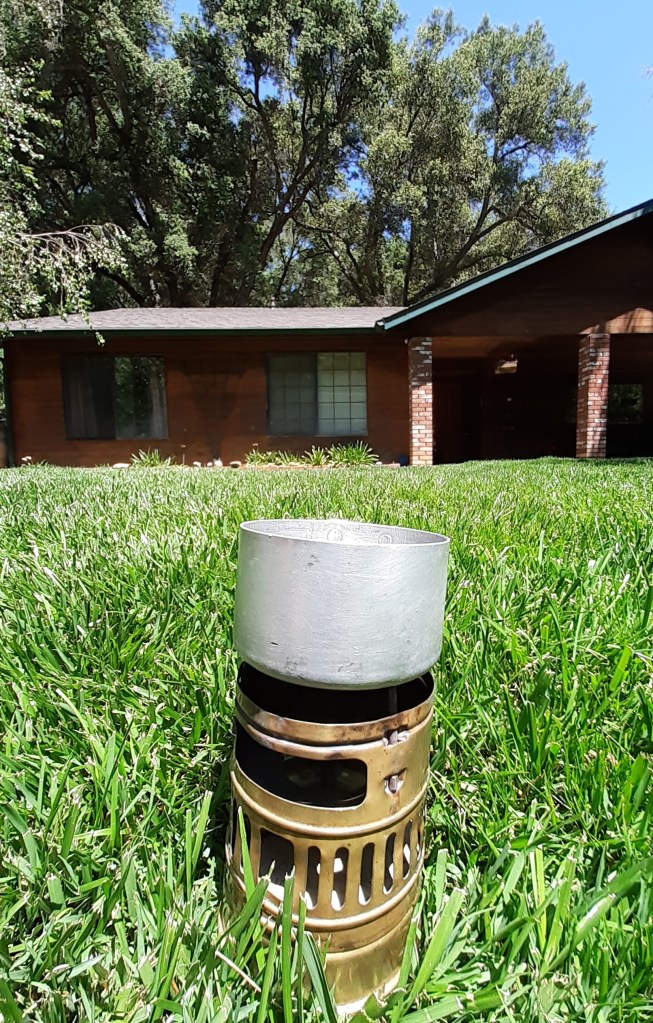
Because Stan had written our names and addresses in the backpacks, two of them were eventually returned to us. In one of those backpacks was Stan’s trusty camp stove: a Svea Optimus 123 camp stove, made in Sweden.
The next time you feel unstable in life, don’t forget the tripod. It is a very stable configuration. What are the three legs of your “life tripod”? In this story, mine were family, friends and optimism. Tripod! Tripod!

(Originally published on May 1, 2021)

 "Trail Reports"
First, thank you for teaching me the origen of the cry, “serpentine!” Coach Montalvo and Coach Jones would yell that every time football practice called for zigging or zagging. Also, you are a Champ for sending out this blog. It’s lots of fun.
LikeLike
Thank you so much! I’ll keep writing!
LikeLike
Actually, that Svea stove was mine, not Dad’s. Does it still work?
Renee
LikeLike
I didn’t know that! I will hang on to it for you. I imagine it still works. Hikers still use them. They still make the stove and replacement parts.
LikeLike
…and our wits!
LikeLike
The famous “Virgin Narrows hike that we all heard so much about – finally inscribed for posterity! Yeah David!
LikeLike
My work is done. Now I rest. 😉
LikeLike
Thanks for the story. Lynn and I also have a pair of hiking sticks that Stan gave us long ago but didn’t realize their significance. I really appreciate the “discussion “ about who owns the camp stove…. reminds me of grandpa’s (camp) box. Grandpa being old George W 1889 to 1987. He had this big heavy, wooden kitchen box that went on a heavy duty car or wagon. Seems like everyone (Stan, Gerald and Jerry) wanted the thing and said they should get it. Of course it weighed 150 pounds so no one took it… i don’t know what happened to it.
As a final comment: you really should write a book 📕.
LikeLike
Thank you for the kind words!
LikeLike
Thanks for the story. Lynn and I also have a pair of hiking sticks that Stan gave us long ago but didn’t realize their significance. I really appreciate the “discussion “ about who owns the camp stove…. reminds me of grandpa’s (camp) box. Grandpa being old George W 1889 to 1987. He had this big heavy, wooden kitchen box that went on a heavy duty car or wagon. Seems like everyone (Stan, Gerald and Jerry) wanted the thing and said they should get it. Of course it weighed 150 pounds so no one took it… i don’t know what happened to it.
As a final comment: you really should write a book 📕.
LikeLike
Thanks for sharing this story. I enjoyed really enjoyed it . I also liked reading about your previous adventure in the mountains behind Santa Barbara! Keep ’em coming!
LikeLike
Gracias, Roberto! Si – voy a seguir con los cuentos!
LikeLike
Wow! I cannot believe I missed this story! Very cool to bring this altogether. My dad and mom really loved your folks and family (as do my brothers and I). Thank you for doing this!
LikeLike
It was an honor!
LikeLike