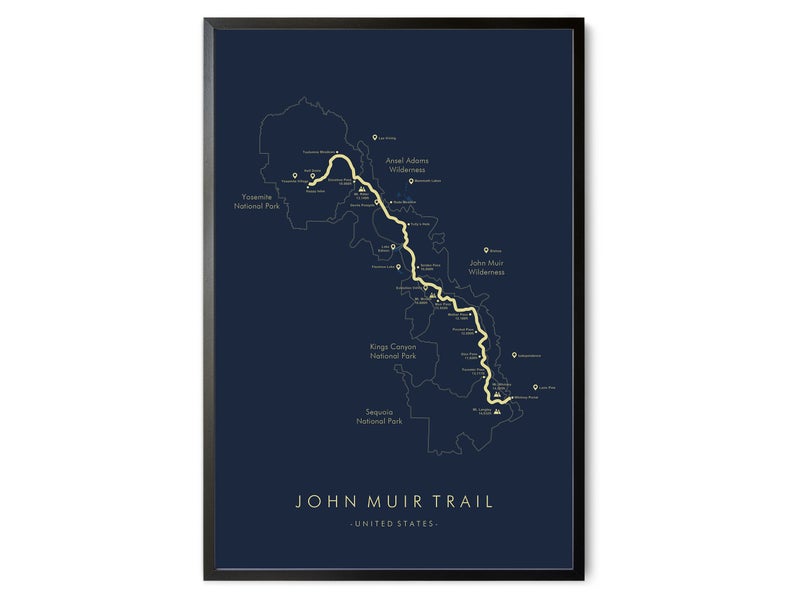
Below we have a map of The John Muir Trail (JMT), also known as Nüümü Poyo, or “The Peoples Trail”. Elegant in its simplicity. 210 miles.
Now let’s take a look at the Dave Boicourt Trail (DBT), also known as The Onomatopoeia, or “The Fool’s Pilgrimage”. Clumsy in its complexity. 360 miles.
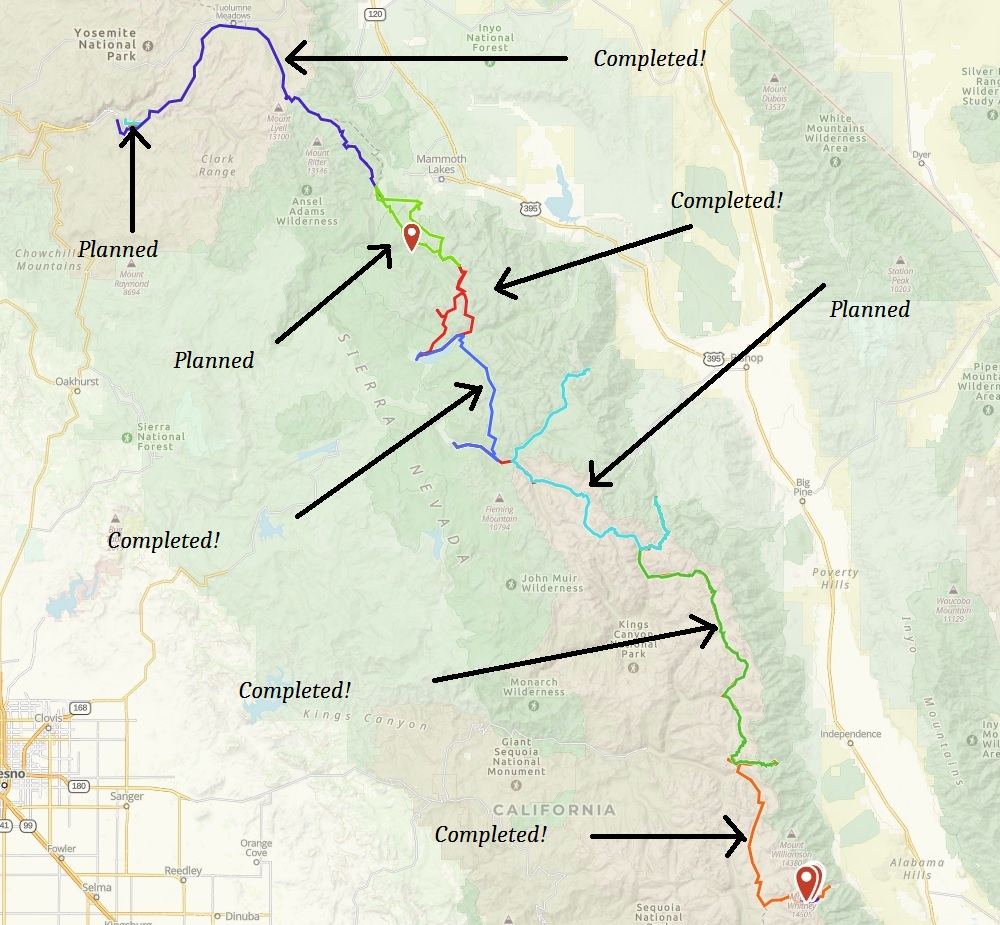
For my most recent section of The Onomatopoeia, I clip clopped my way up the trail from The Vermillion Valley Resort towards Lake Virginia.
Note: The Vermillion Valley Resort will only resemble a “resort” if you have been backpacking for ten days and imagine that a flushing toilet and butane are “resort luxuries”.
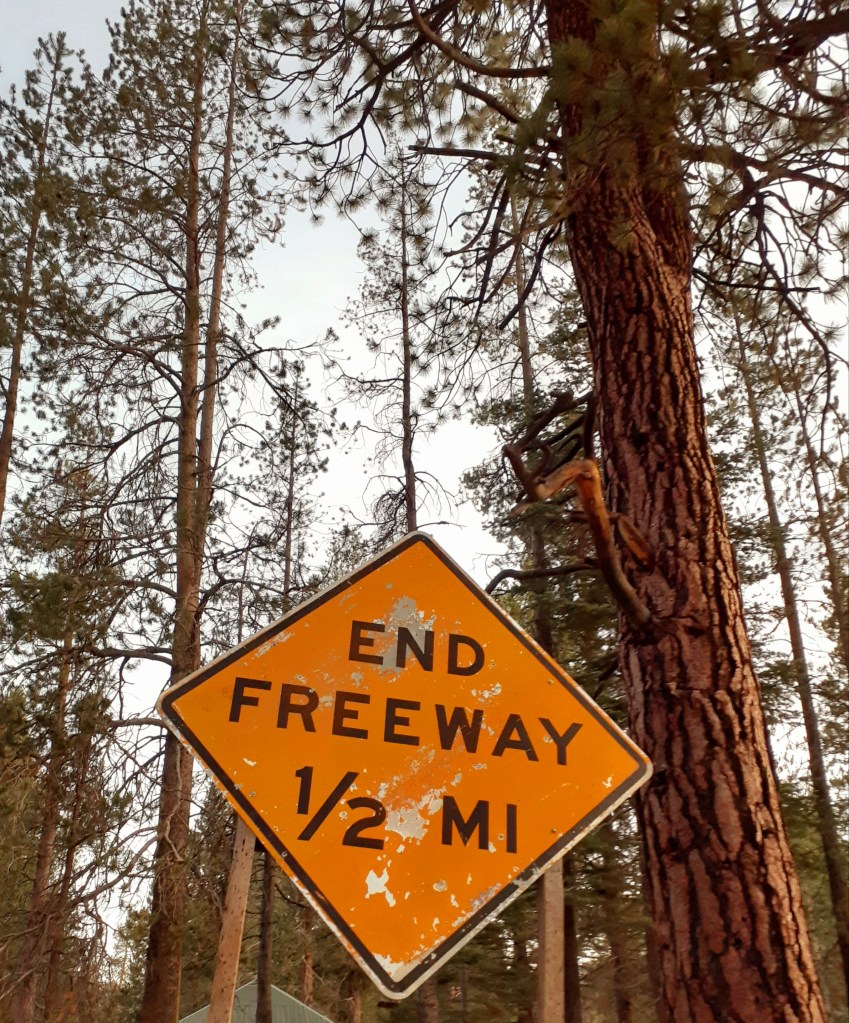
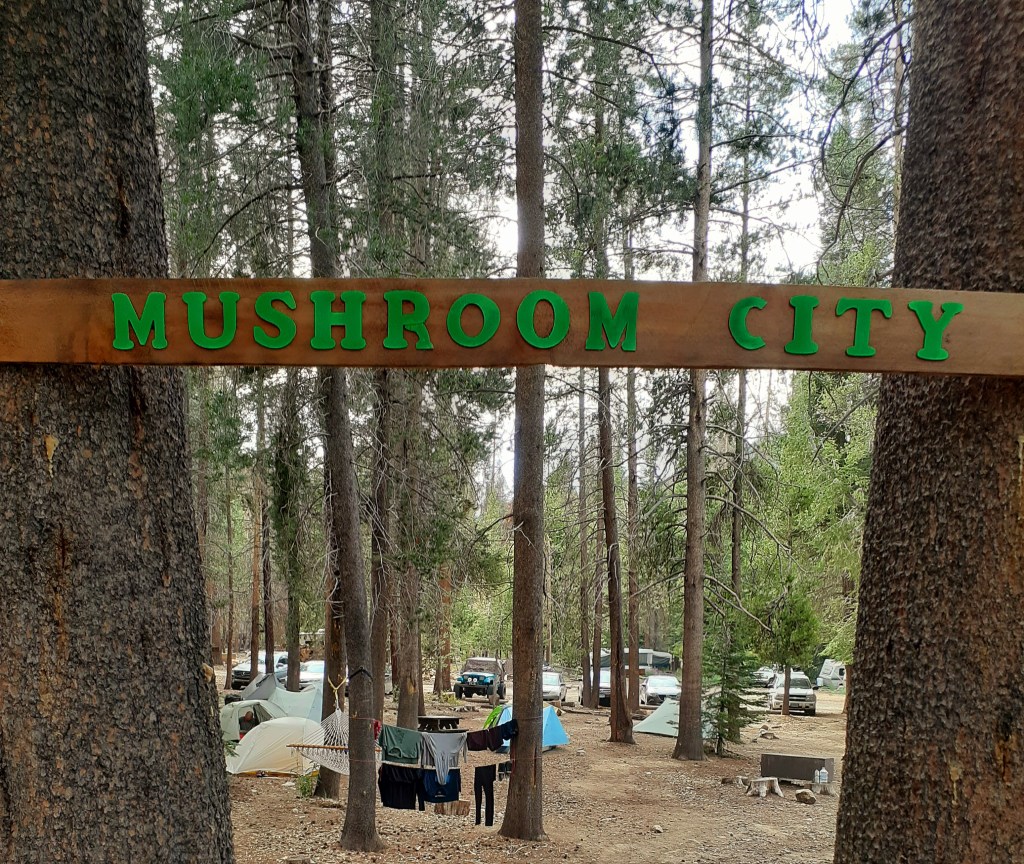
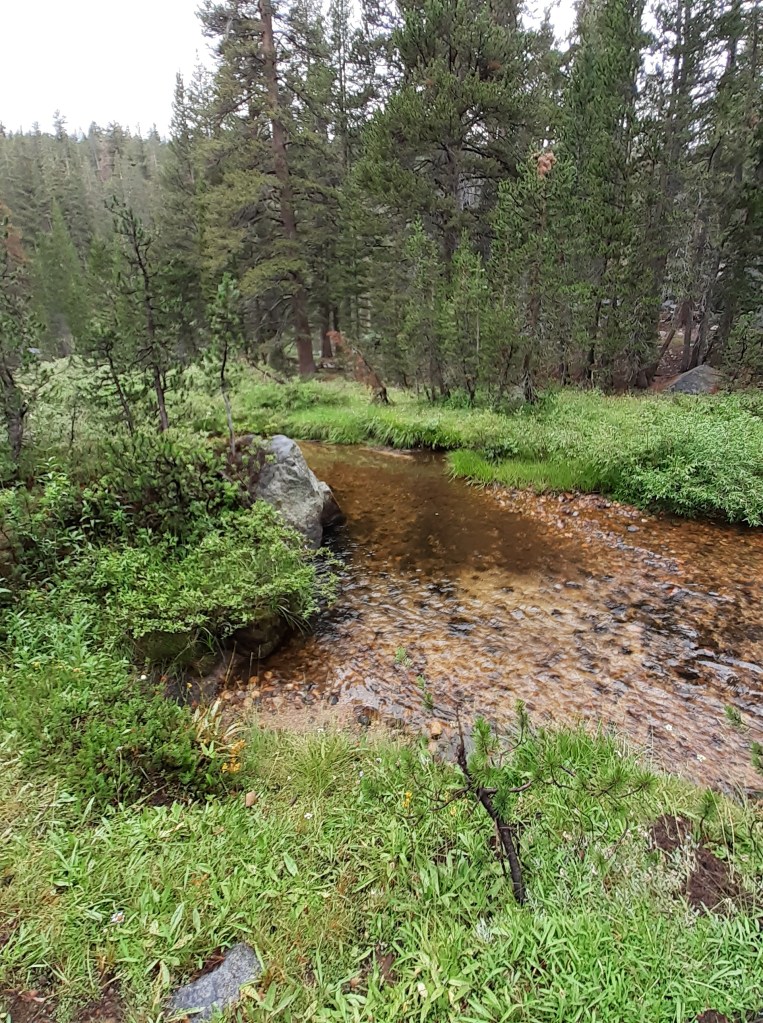
Shuffle, shuffle, shuffle went my boots on the soft sand of the lakeside as I squelched and squerched my way up the trail, which at one point became all squishy squashy.
Leaves rustled in the wind and were whipped into the air. Dry leaves crackled on the ground as the river gurgled. I stopped to toss a stone into a bend of the river and listened as it went kerplunk. The wind whistled through the branches above me.
For this hike I wanted to better understand the common hiking phrase “hike your own hike”, so I was hiking solo. I also wanted to take what hikers call a “zero day”, which is a zero mileage day – what some would call “camping”.
My destination was a two day hike to Lake Virginia where I would spend my zero day fishing, strolling and lying about in a meadow.
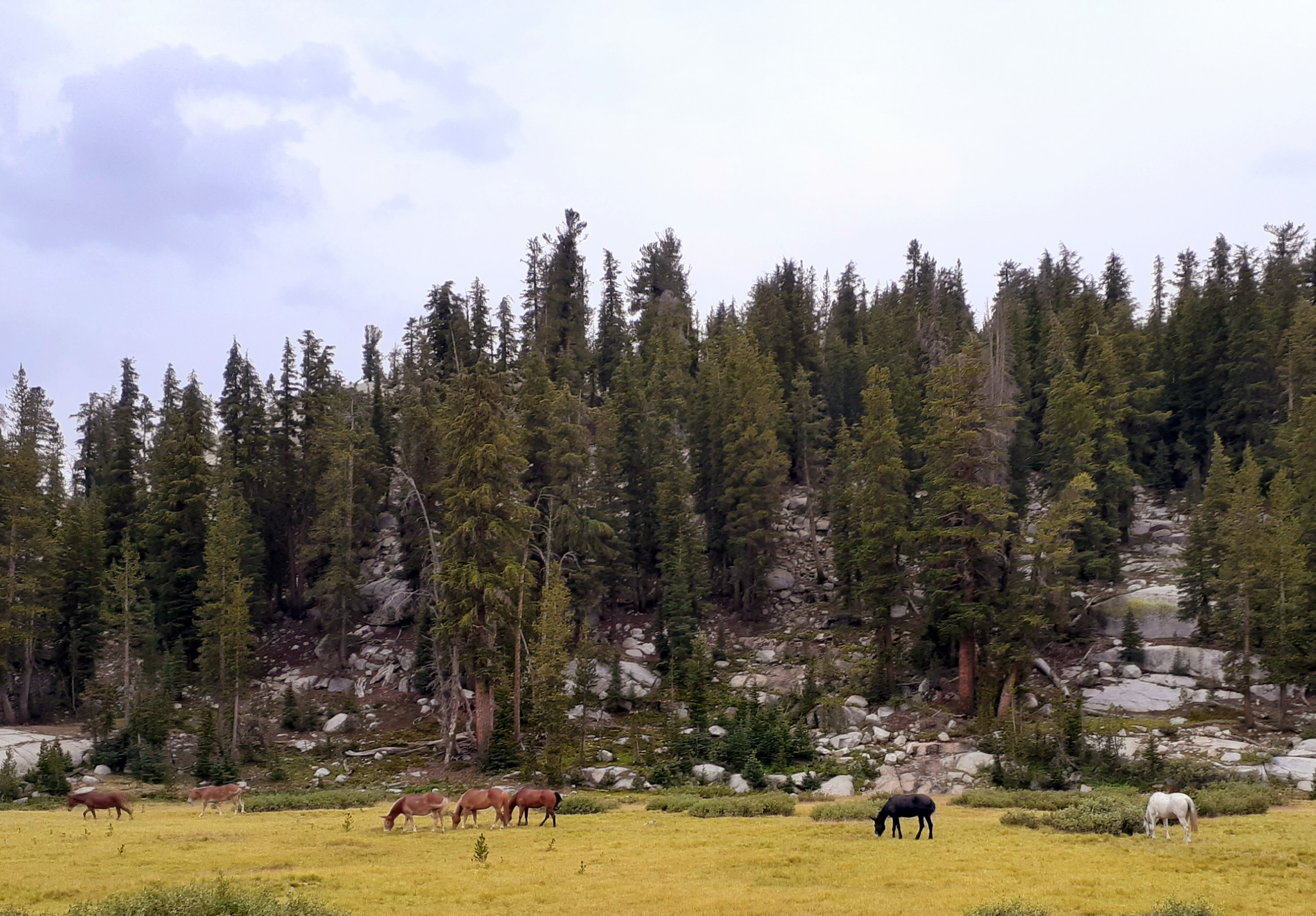
My first night was spent in Silver Meadow, where a pack train had chosen to pasture their stock below majestic granite peaks. It made me think of retired ranger Gus McCrae of Lonesome Dove, Texas. How he would have marvelled at the site of the beautiful horses in such an improbable setting.
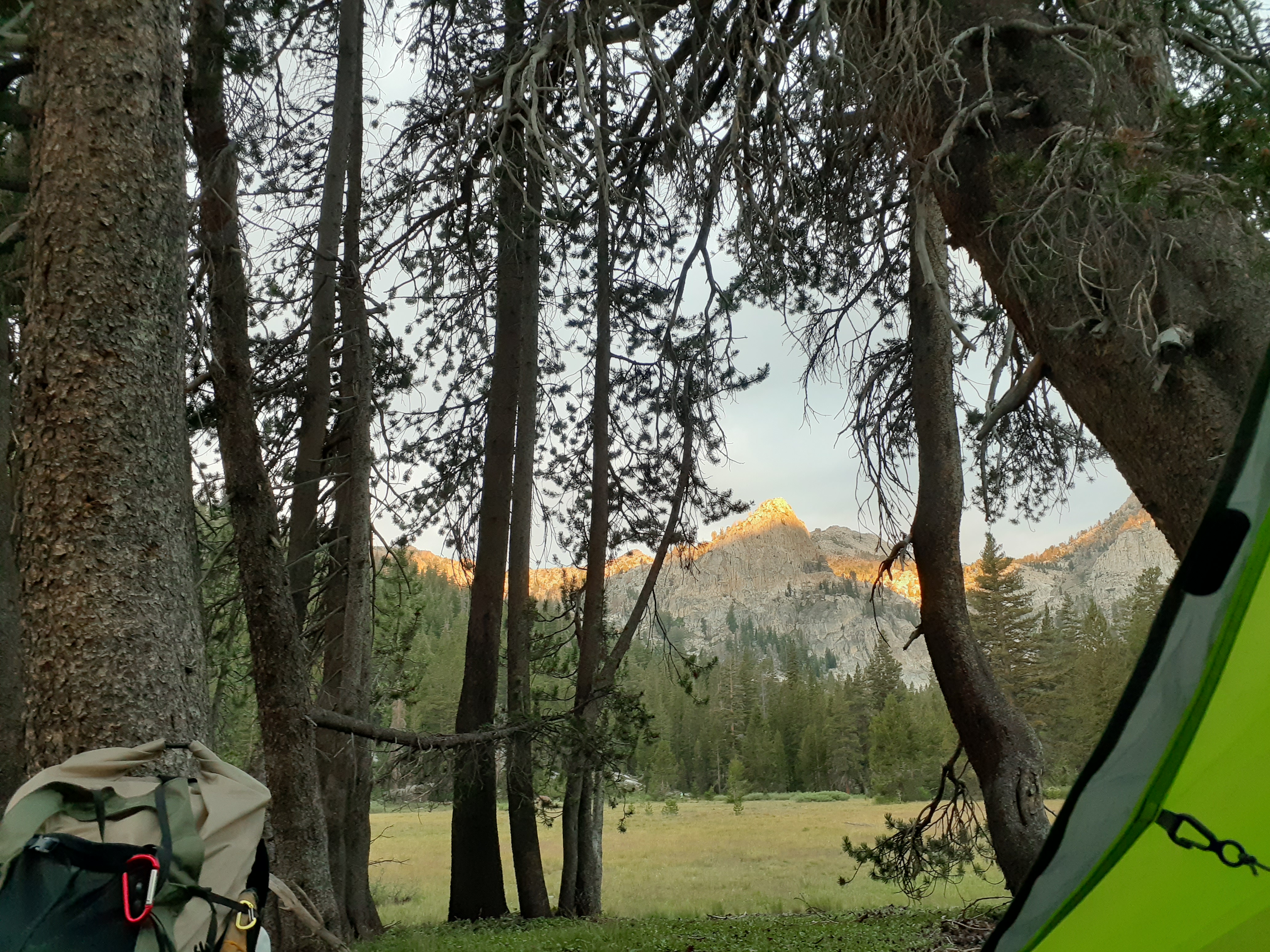
I arrived in good time at Lake Virginia and set up my camp. The following morning I tried my luck at fishing and caught no fish. “There is a reason it’s called fishing, not catching.” This is something I’ve heard many a good dad share with their children.
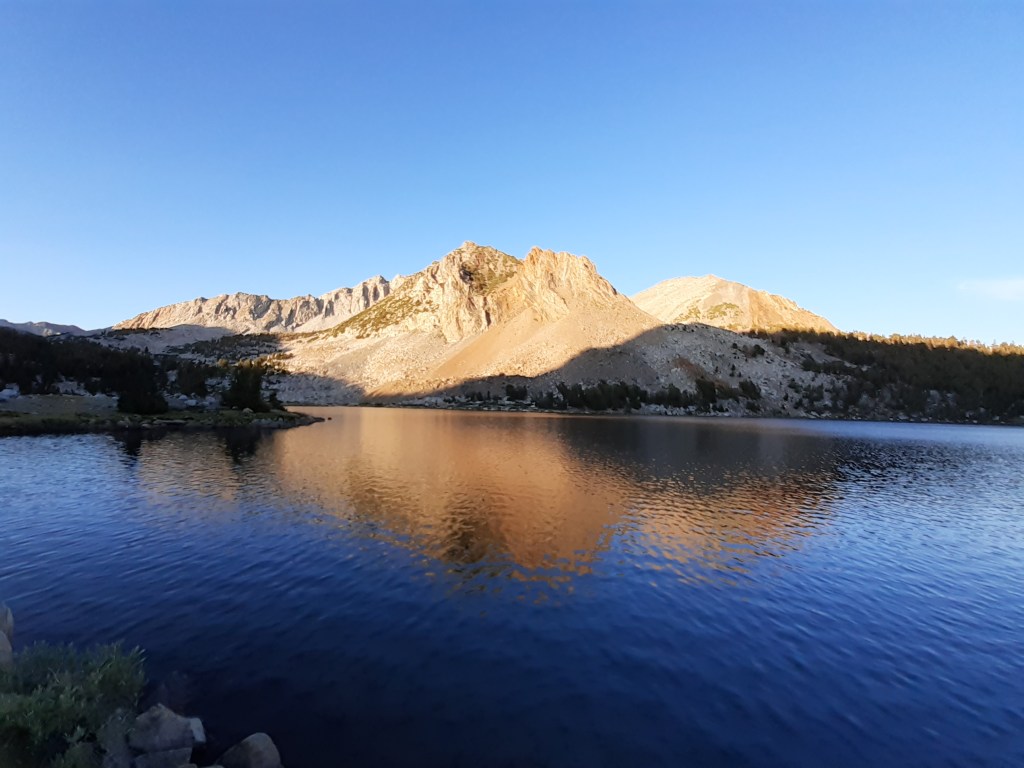
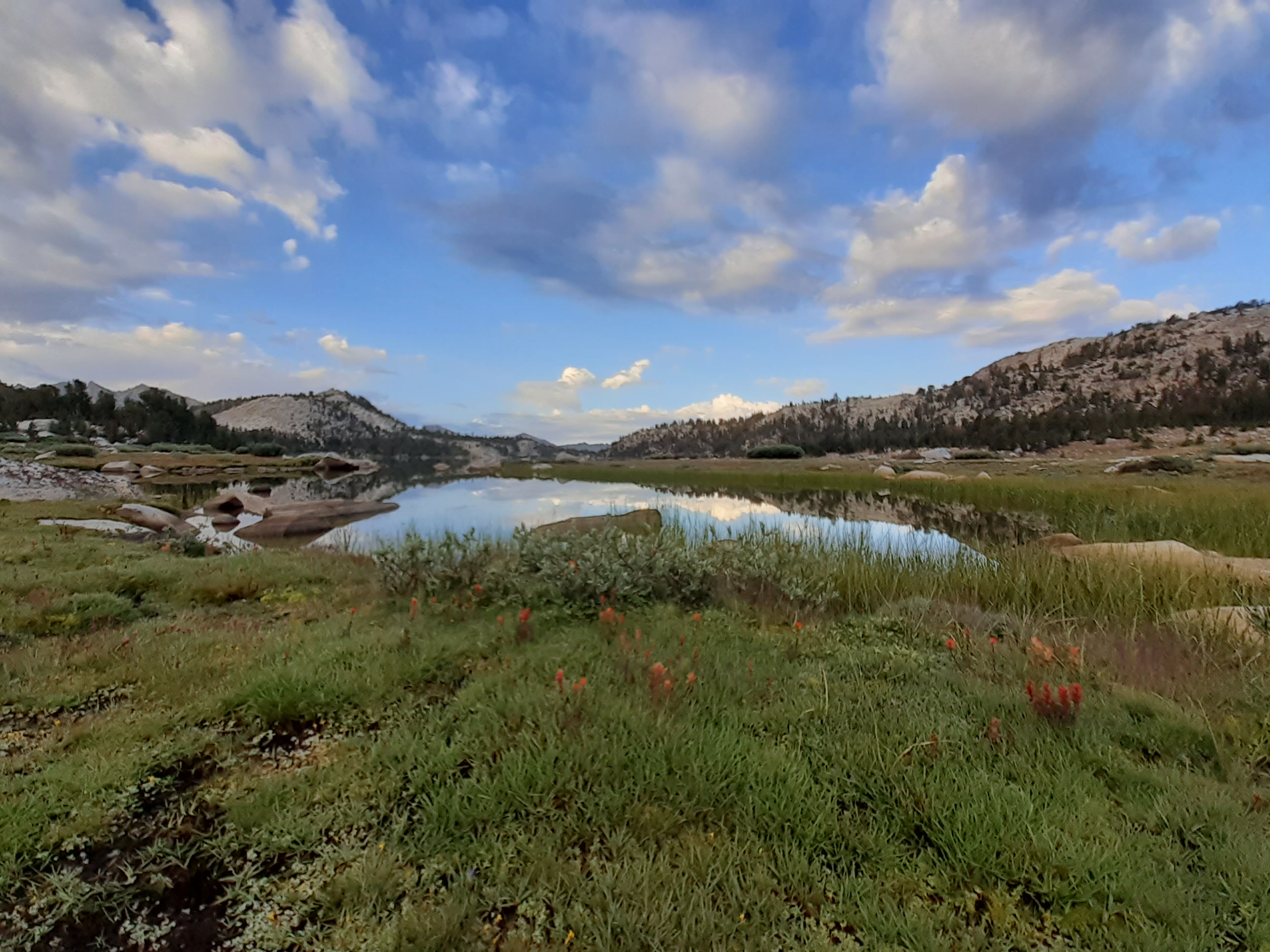
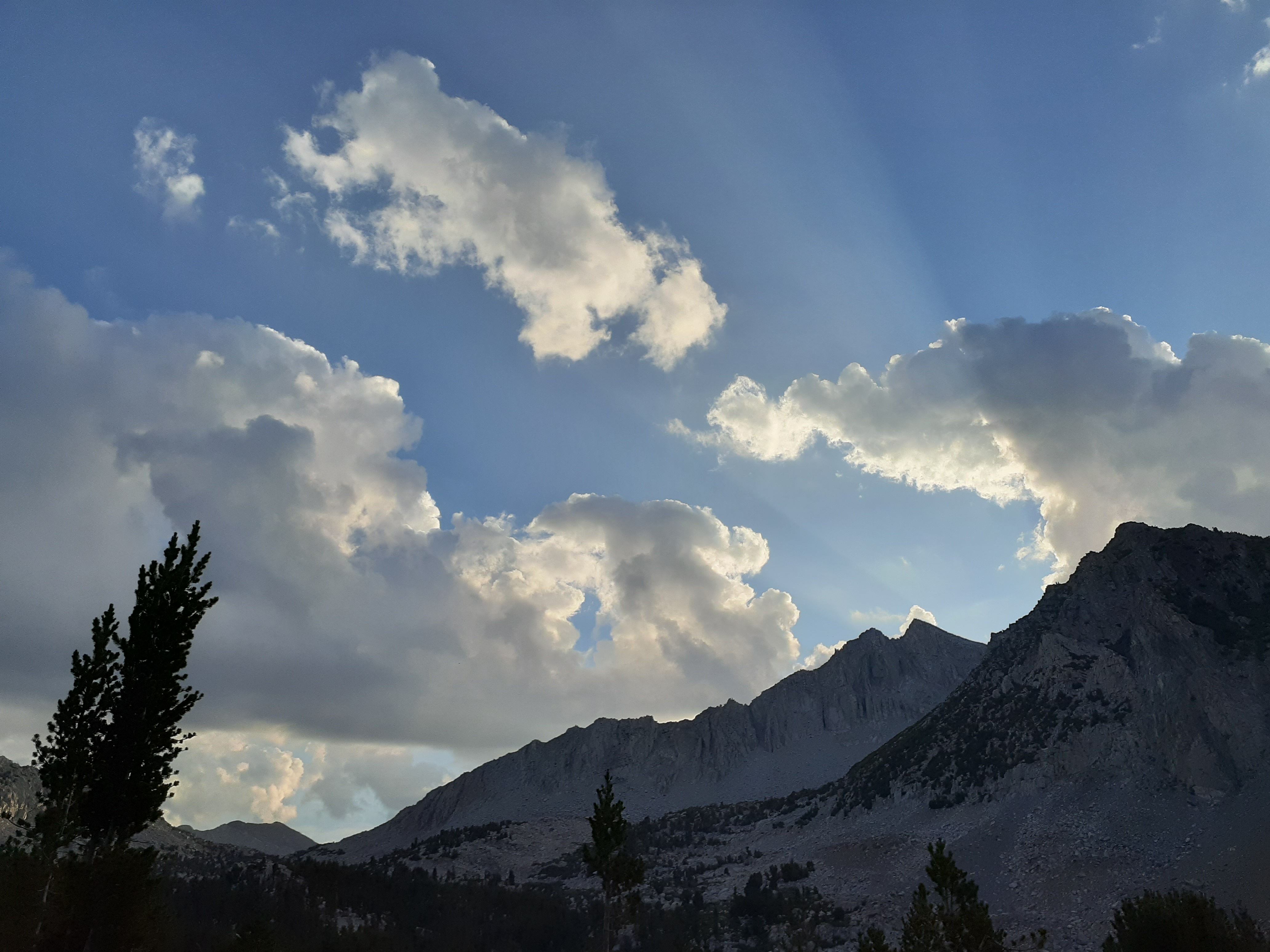
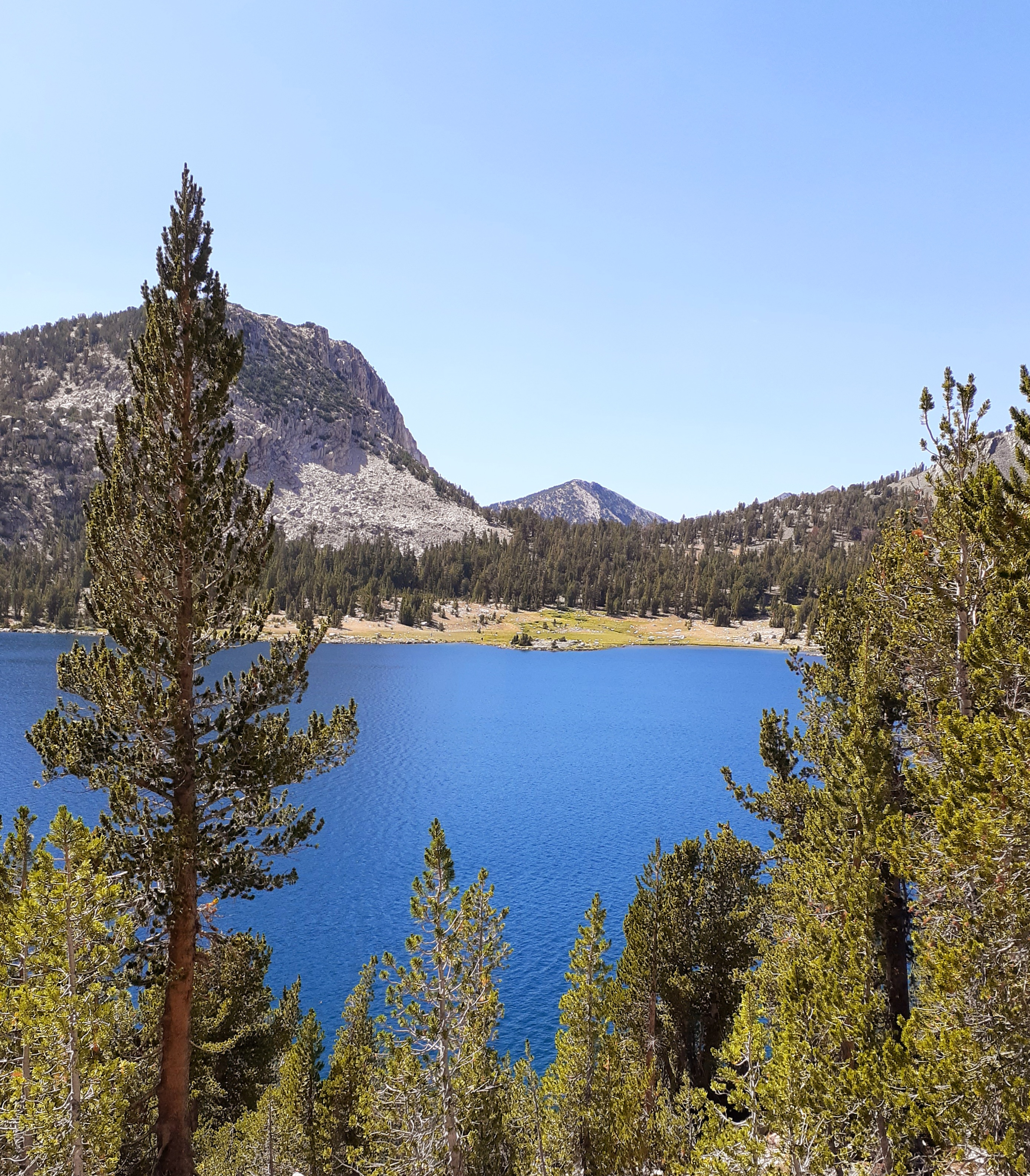
Next, I wanted to see Purple Lake and take a stroll on the John Muir Trail free of encumbrances, so I planned a four mile stroll with nothing more than a pocketful of nuts. This is how John did things. Halfway to Purple Lake it began to hail. Had I been more like John, I would have climbed a tree in order to better appreciate the storm. Instead, I tried to act casual as I made my way toward Purple Lake in a hail storm without any rain gear. This is when I chatted up a trail crew waiting out the storm under the trees in full rain gear. What a privilege I thought it must be to work on maintaining this magnificent trail!
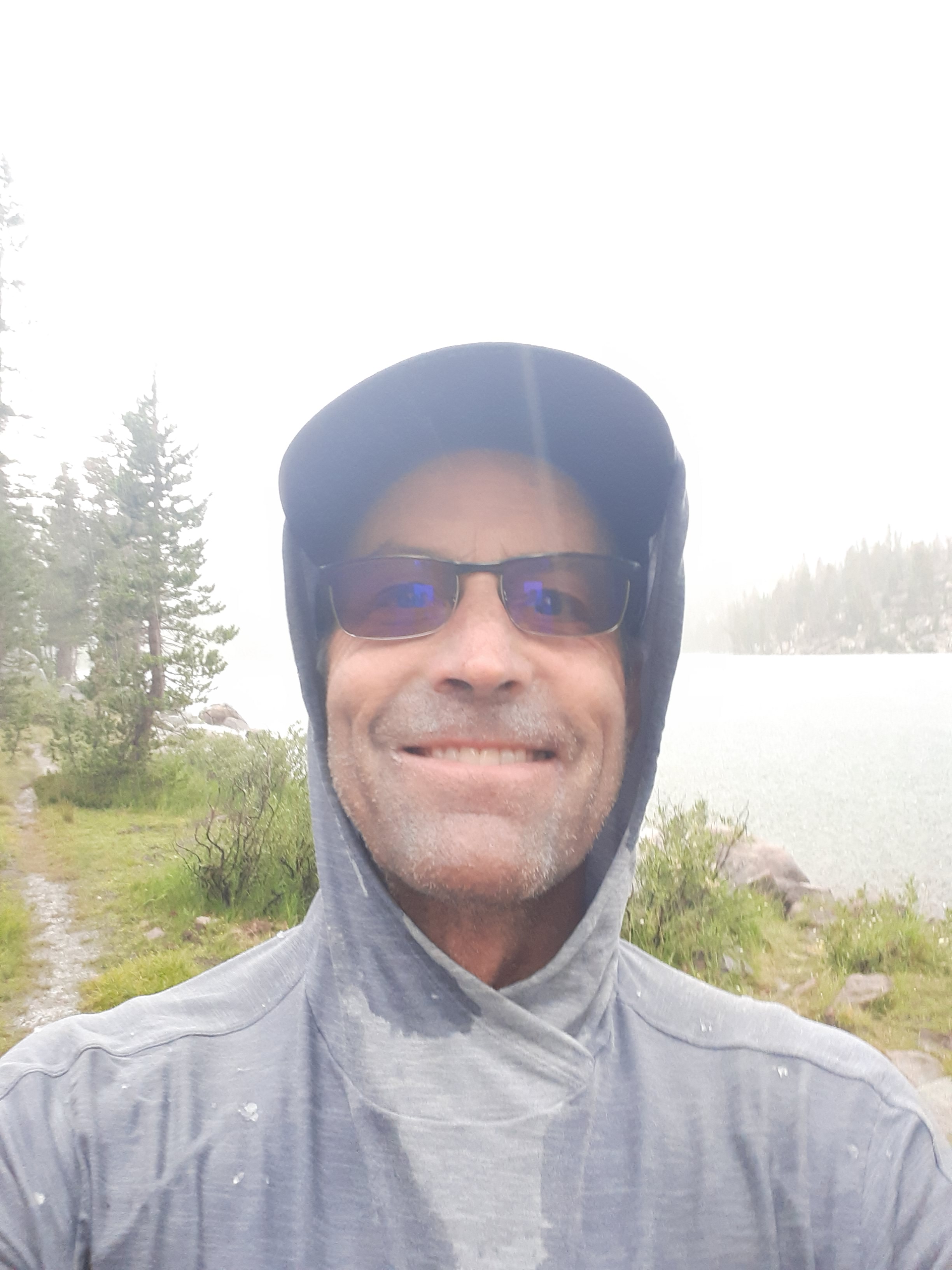
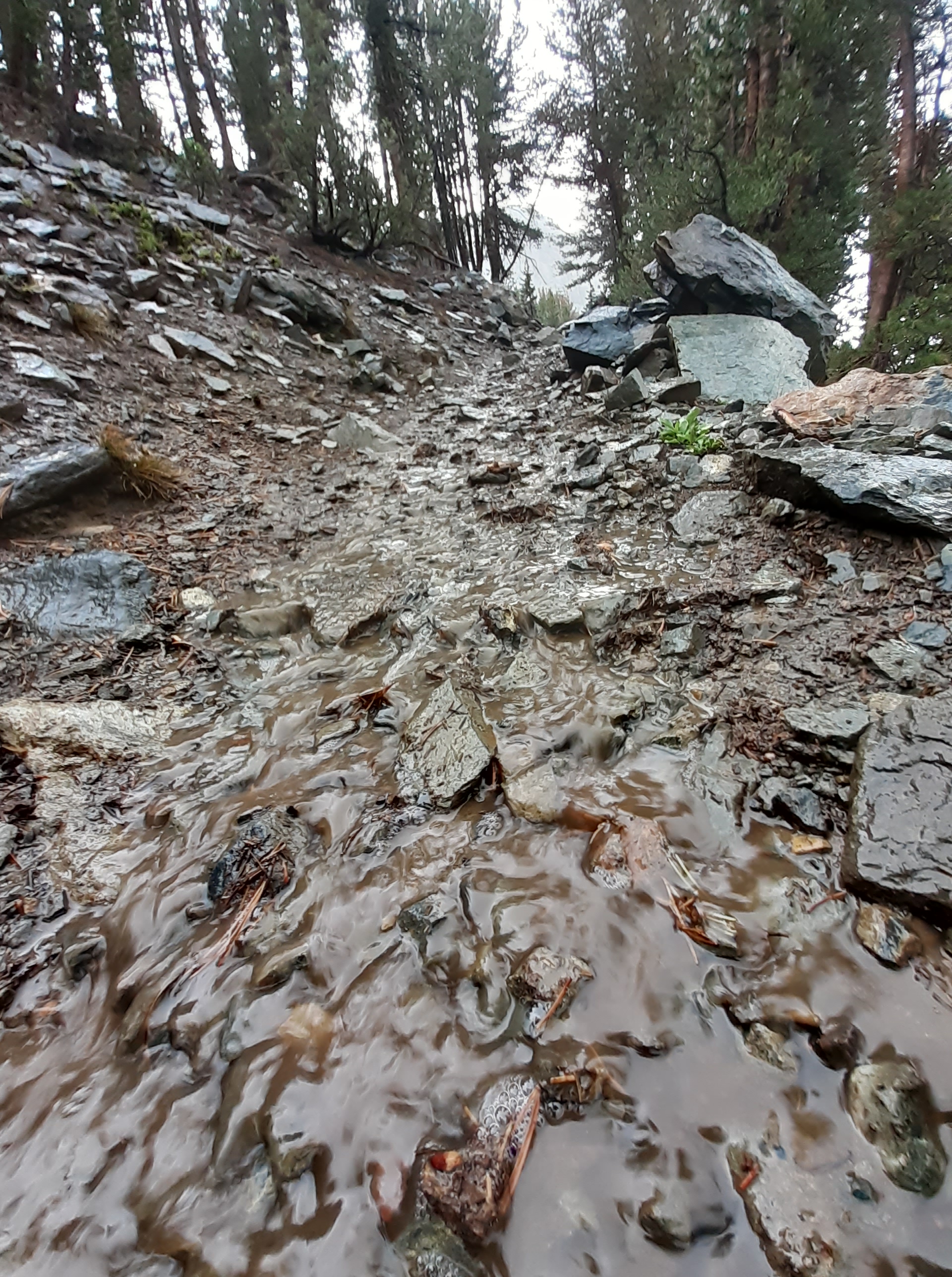
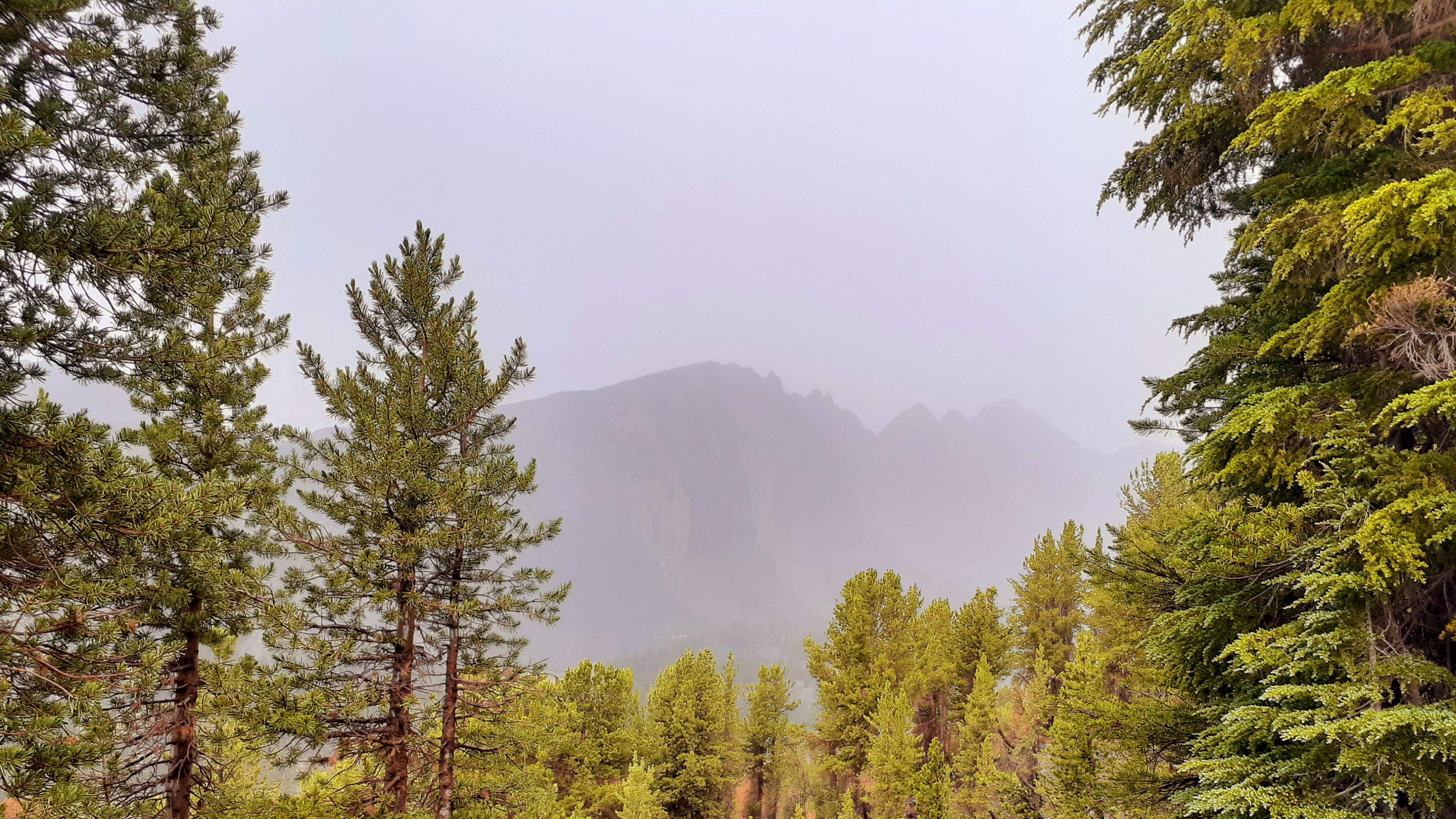
As I hurtled through the storm towards my destination, I felt as if the spirit of John Muir was alive and well on his namesake trail. But I soon realized that the spirit I felt was present in my mind due to my exposure to his writings. What had the original native people thought of being in these mountains during such a dramatic storm?
When I returned to my tent, I put on dry clothes and crawled into my sleeping bag to wait out the tempest. As the thunder exploded around my tent and the hail battered the ground, I read about what is known as a “Thanksgiving Address” in a book called Braiding Sweetgrass. From it I learned that the thunder came from our grandparents and that we should show gratitude for it as it is the provider of water. My only wish was that the lightning was not so close to my tent!
After the rain stopped, I kept my tent window open so I could study the sky. When I awoke later that night I could see stars! In fact, the North Star (or Polaris, the pole star) was perfectly centered in my tent window. It forms the handle of the Small Dipper which was rotating around the pole exactly like the hour hand of an analog clock. When I awoke again later, I could check both the sky and the hour! Then the face of my clock lit up with meteors. It was the Perseid Meteor shower!
After my “zero day”, I was a little nervous about crossing the pass back towards my car. During my hike up to Lake Virginia the pass had been clear. Now I would be returning using a higher, less travelled pass. The skies were grey. I learned that many hikers had been turned away the previous day. They had been forced to hunker down in their tents and take a mandatory zero day. The mountains, like Gandolph, had decided that they “shall not pass”.
Although the pass looked ominous, I was allowed safe passage. It was raining though, and I was enjoying what a friend of mine likes to call “sky water”. On the dry Central California Coast where I live, “sky water” is rare.
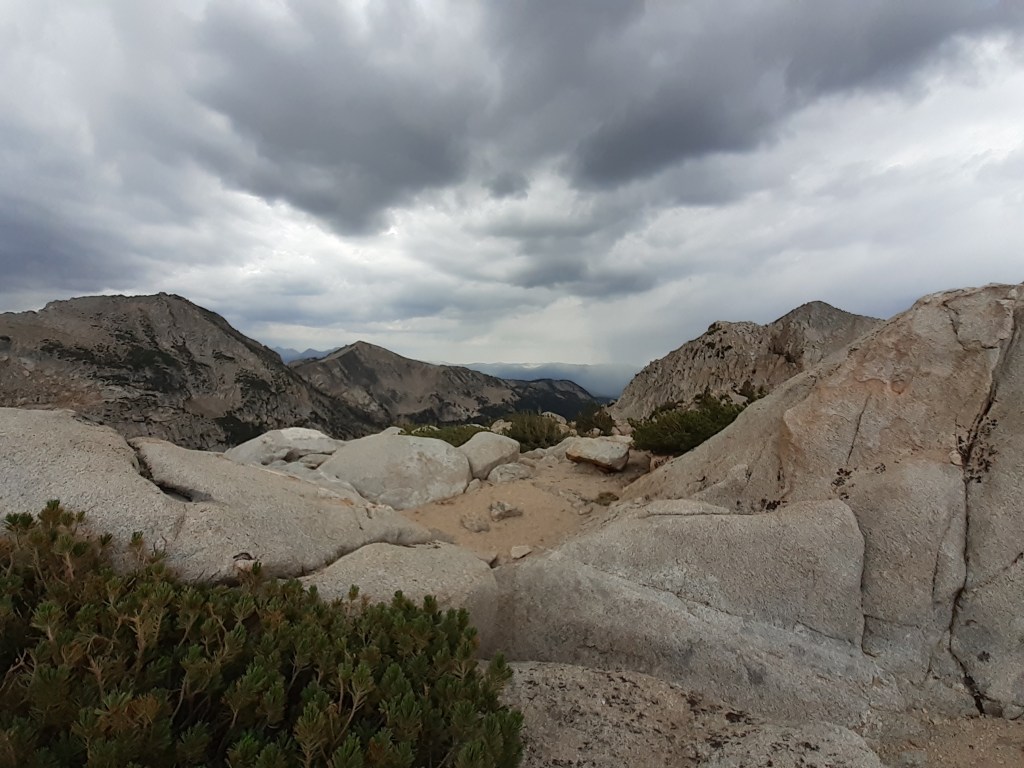
Rather than spending one more rainy night on the trail, I decided to keep hiking. The rivers were flowing. The flowers were glowing. Everything was wet and shiny and alive. I ended up walking all day. Ten hours and 17 miles later I had reached my car. As soon as I had, I was saddened that it was over. Here is one more hiking phrase that I often hear on the trail, loosely attributed to Emerson: “It’s about the journey, not the destination.”
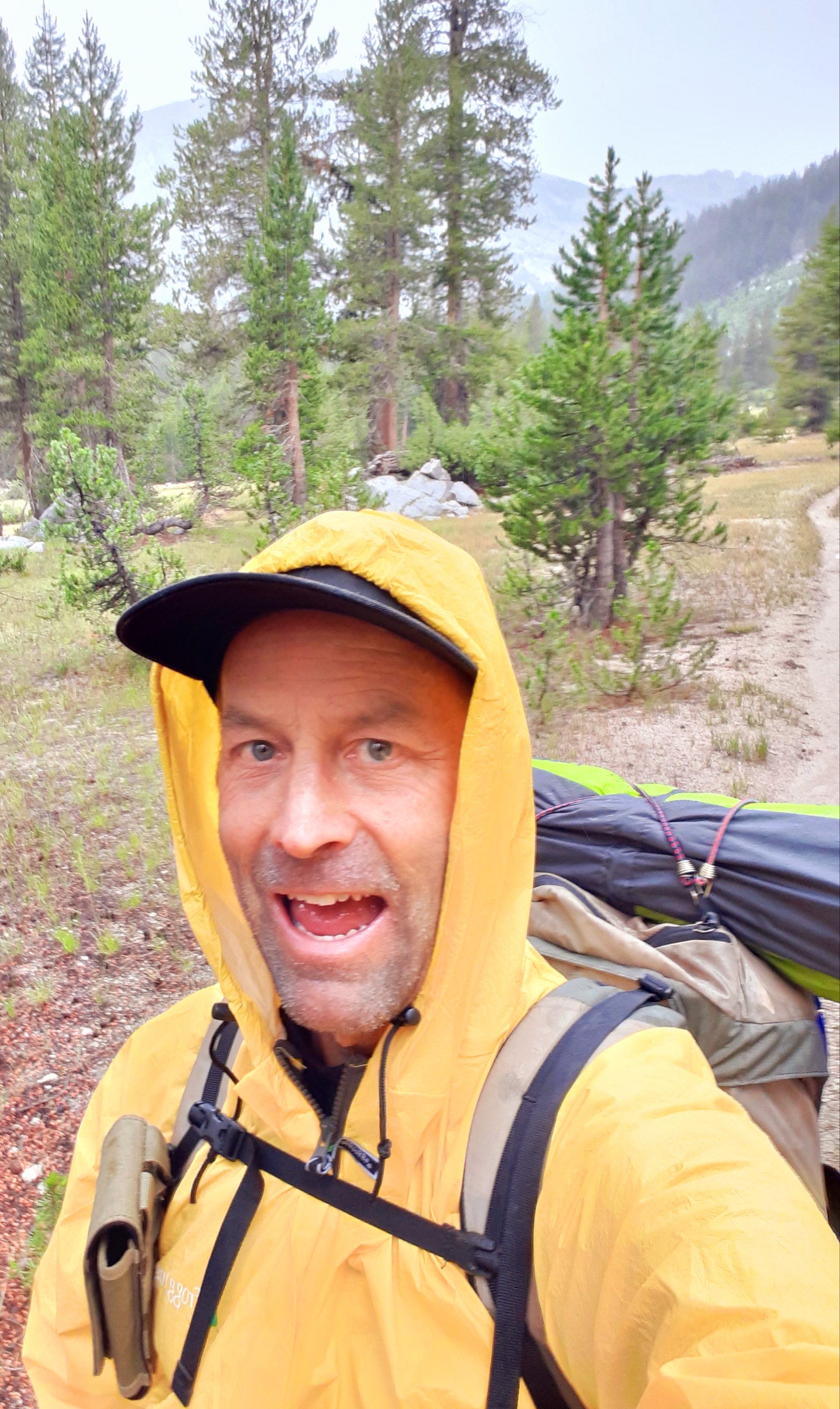
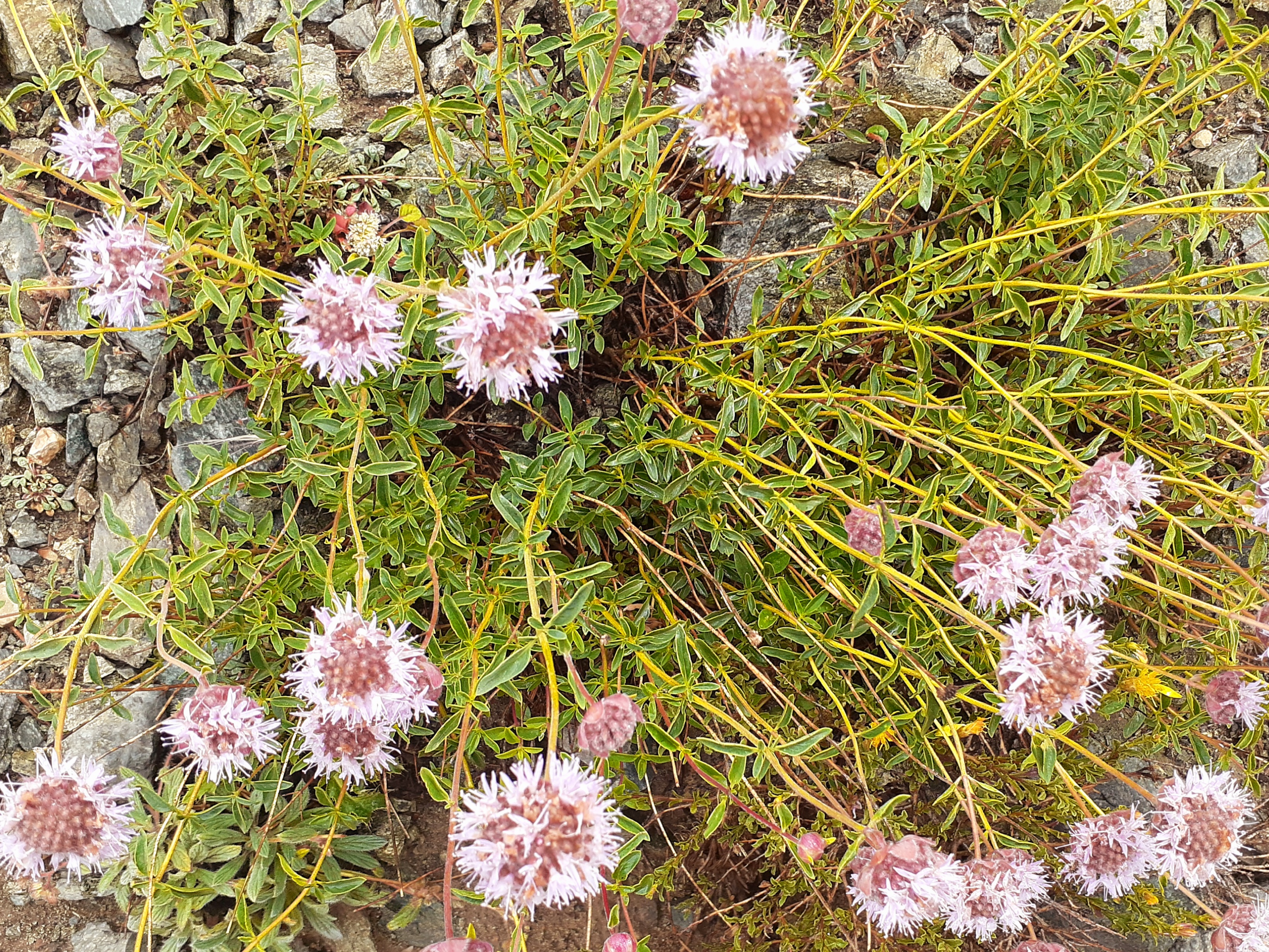
Although I like to finish things, I have to remember: “It’s about the journey, not the destination.”
A final note and some food for thought: I am sure readers have noticed the metaphorical nature of writing about “the trail”. In these trail reports I am careful not to become too philosophical. (I am not sure I want to go down that path – pun intended!) However, the truth of the matter is that for many people close to home and all around the globe “the journey” truly is terrible. When this occurs on the trail, aid is rendered. There is no discussion about fault, circumstance or merit. Resources are pooled and care is given. This holds true for any person who finds themselves in trouble on the trail. This is why we carry an extra day’s worth of food. This is why we carry a good first aid kit. These are small burdens. Knowledge is freely shared. So is water. We are ready with a kind word. If someone falls down we ask “Are you okay?” The notion of offering help is never debated.
(Originally published on July 30, 2021)

 "Trail Reports"
Great entry! Good perspective and fun adventure. I just finished Braiding Sweetgrass. I love the notion of viewing resources from earth as “gifts” instead of “goods”. We treat gifts so much differently than purchased items. I also feel that time to observe the natural world is also a gift. Also fish=100, Dave=0
LikeLike
The fish are safe!
LikeLike
I have one more big hike planned for September (conditions permitting) and then the remaining 3 miles (in Yosemite valley) planned for October with Karen.
LikeLike
UDATE: On the same day and at the same time that the above photo was taken, only 15 miles south of my location, a young man by the name of Nicholas Torchia was killed by a lightning strike. He was a devout Christian. The first person to find him was a pastor. Nicholas was still alive at that point.
The Fresno Bee reported:
For hours after his uncles and other hikers held out hope that Torchia could be revived. A group of around 10 people, including the pastor, a nurse, doctor, firefighter and emergency medical technician, took turns administering CPR for more than three hours. Some of those hikers came up from Muir Trail Ranch, located east of Florence Lake and about three quarters of a mile from where Torchia was hit.
Other hikers worked to keep Torchia’s body warm and dry, and an ultramarathon runner darted up and down trails retrieving supplies from Muir Trail Ranch.
“Their cooperation, compassion and patient work over those hours was a testimony to me of some of the best of what human beings can do and be for each other,” said Cornett, associate pastor of families at Signal Mountain Presbyterian Church in Tennessee.
Here is the full Fresno Bee article:
https://www.fresnobee.com/news/local/article253237278.html
LikeLike