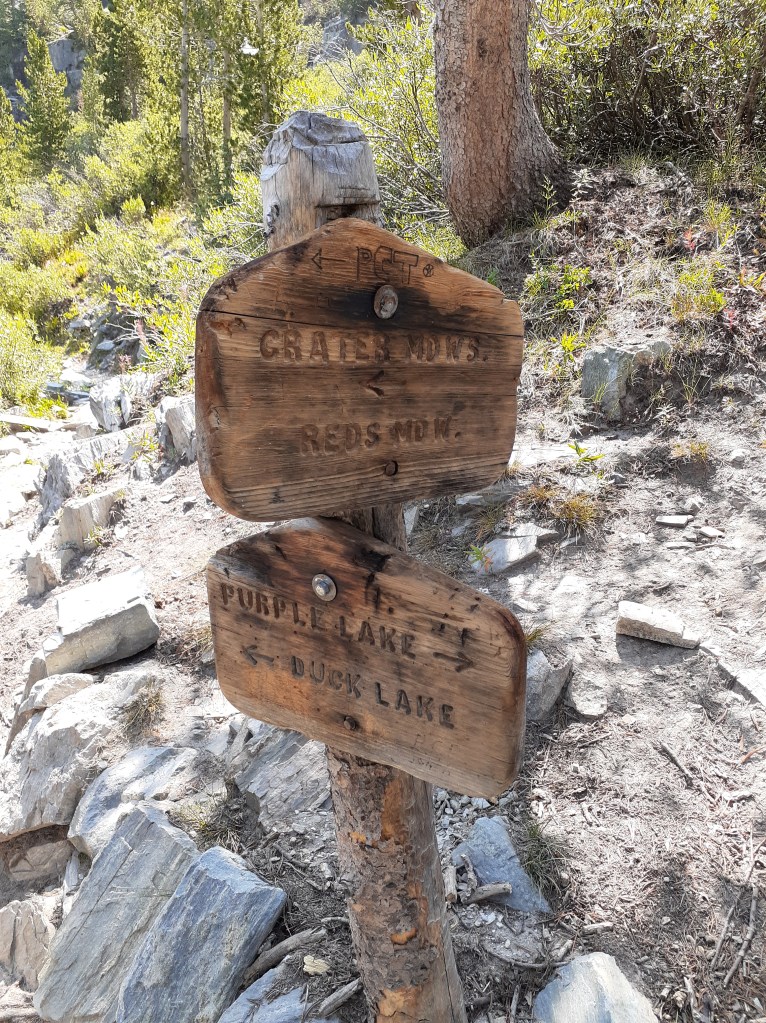
I feel very good after my last sojourn into the mountains. I completed a section of the John Muir Trail between Purple Lake and Reds Meadow which tidied things up quite a bit. All that remains is a short, but remote section that includes Muir Pass and a little section out of Yosemite Valley.
I must admit that this most recent hike was a mammoth undertaking!
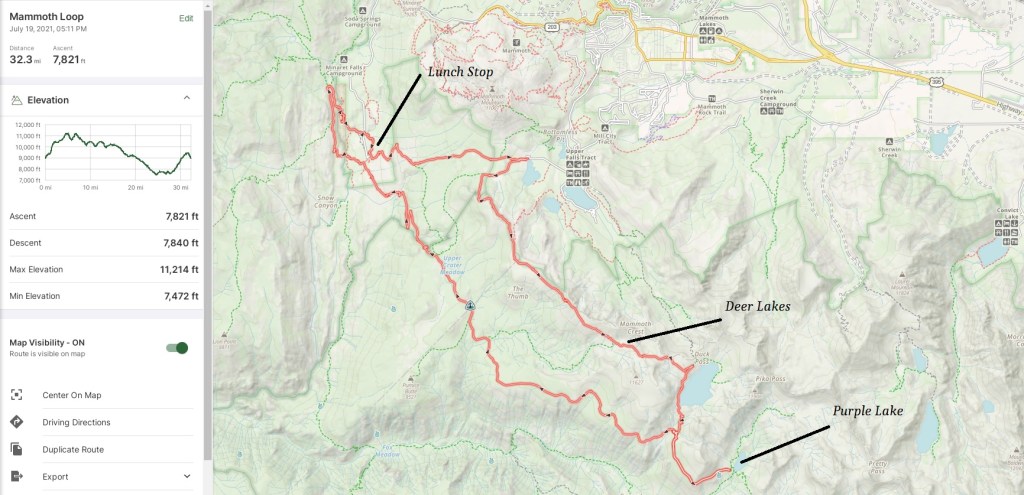
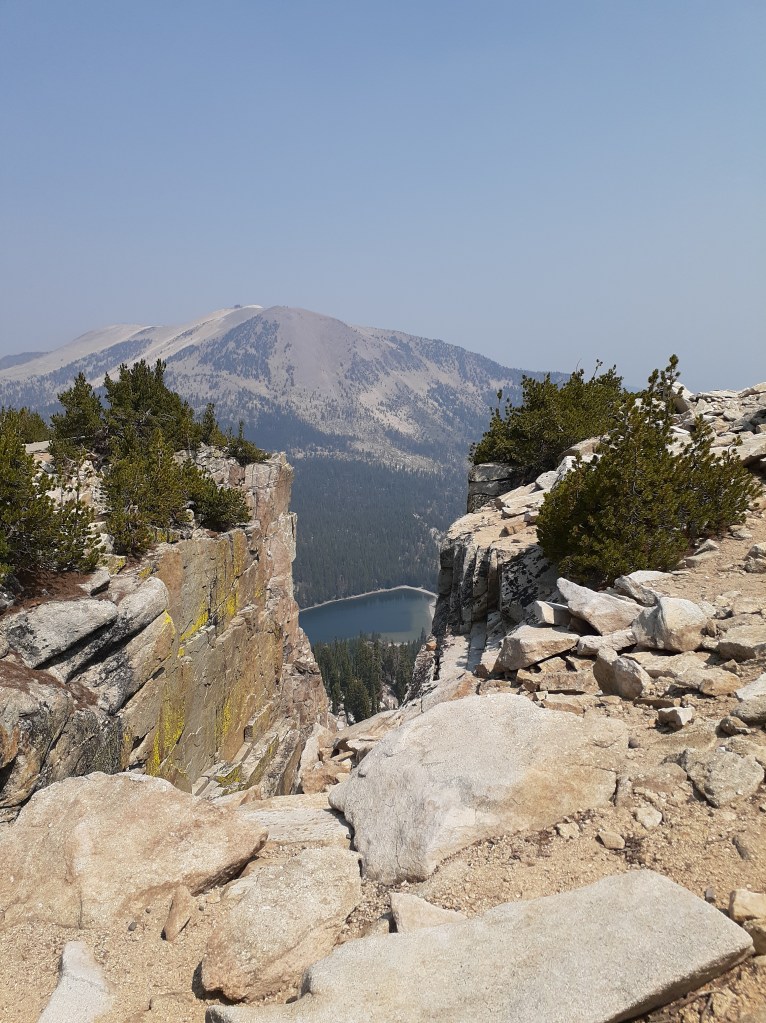
First I drove to Mammoth Lakes, California – the only incorporated town in Mono County. Here you will find a beautiful chain of lakes known as “The Mammoth Lakes”. As their backdrop, the lakes enjoy the mammoth Mammoth Mountain – which is a dormant (not extinct) volcano with a summit elevation of 11,059 feet. That is mammoth! Located on the slopes of Mammoth Mountain is the Mammoth Mountain Ski Area, which is quite mammoth: 3,500 acres of skiable terrain, 28 lifts and 3,100 feet of vertical drop. I began my hike with a steep climb up to the Mammoth Crest – which is quite long – even mammoth. Five days later, I finished the hike by climbing Mammoth Pass out of Reds Meadow. I did this climb after a mammoth meal which included a mammoth milk shake. The climb to Mammoth Pass was about three miles. The first two miles were steep, hot, smoky and exposed. The area had been subjected to both a wildfire and a tree blowdown. Oh how I suffered! I could see the intact forest near the top of the climb. When I finally found myself in the cool, quiet woods I laid down on a bed of pine needles and dozed and continued to digest my mammoth meal.
My trail companion on this trip was Braiding Sweetgrass: Indigenous Wisdom, Scientific Knowledge and the Teachings of Plants, by Robin Wall Kimmerer. The book would surprise me and subtly alter my worldview in interesting ways.
My quarry on this trip was the Rainbow Trout. With a fishing license in hand and two pounds of fishing gear I was committed to catching, killing, cooking and eating a Rainbow Trout.
As I approached the Deer Lakes on the first night of my journey I passed the proverbial, weathered old timer who paused long enough to comment, rather cryptically: “It looks like you’ll have the lakes to yourself tonight.”
I did indeed have the lakes to myself. At least, there were no other humans there that night.
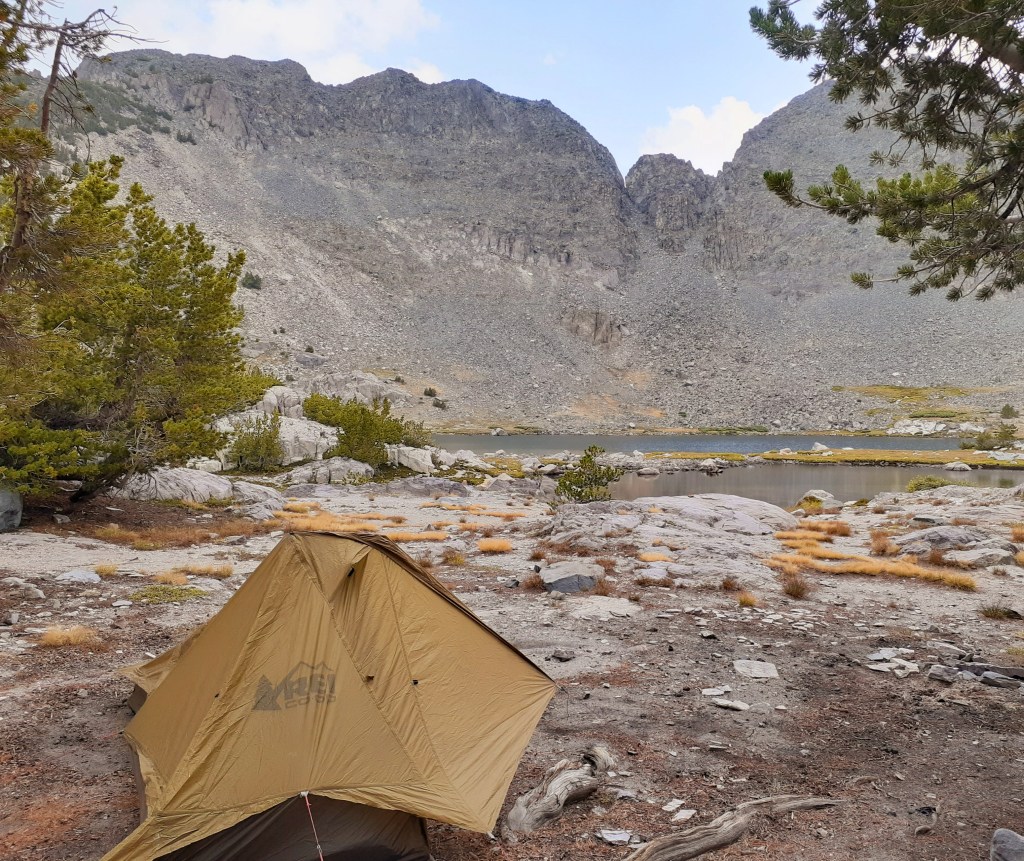
After the usual chores and activities I settled down inside my cozy tent and continued reading Braiding Sweetgrass. As I read I was introduced to The Windigo. The Windigo is an angry spirit. Why is The Windigo angry? The Windigo is angry because many humans on earth take more than they give. This creates an imbalance. This imbalance causes the Windigo to become angry.
As the lakes grew increasingly more quiet and night fell I pondered my role in the imbalance described in the book. What did my balance sheet look like? Was I in the black or in the red?
As night fell and I was almost asleep I was jolted into an upright position by a startling scream that echoed across the lakes. The scream was prolonged – about two seconds. Due to the position of the source and the acoustics of the lakes’ basin the scream echoed not once, not twice but three times – amplifying as it did so. The scream (or “call”) was repeated three more times. The air temperature dropped. Either that, or I was experiencing a chill. The call could have been human, but was not. It could have been animal, but felt all too human. It expressed tension, frustration and need. It was so new to me that it almost felt supernatural. The Windigo?
I was camped at 10,600 feet, so I dismissed the possibility of a mountain lion. This assumption left me in a bit of a quandary. I did not sleep well that night.
The next day I encountered Ranger Jake who checked my wilderness permit and found everything in order. “How was Deer Lakes?”, he asked. “Quiet”, I replied. “Quiet until it was not quiet.”
I described the events of the previous night as dispassionately as I possibly could. Jake followed up with a series of questions, which I dutifully answered. Questions such as: Did you see tents at Deer Lakes? (No.) Did you see people at Deer Lakes? (No.) Did the scream sound like a woman in distress? (Yes. Somewhat.)
His conclusion was that I had heard a mountain lion.
I next took counsel with one of the trail elders. Her trail name is “Ms. Elegant”. Ms. Elegant was on day 40 of her hike towards the Oregon border. Her age is 76. In the picture below (taken with her blessing), please note the pearls – elegant indeed.
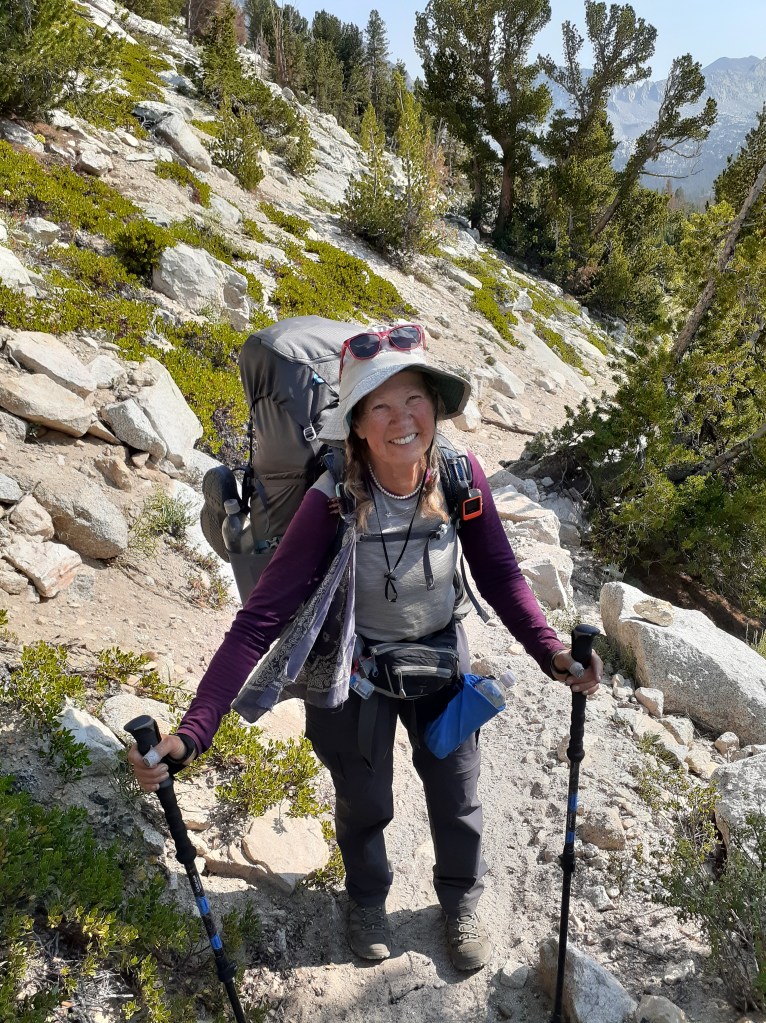
In the opinion of Ms. Elegant, what I heard could have quite possibly been an angry spirit. Years ago, she had a similar experience. Ms. Elegant was wise. She knew things.
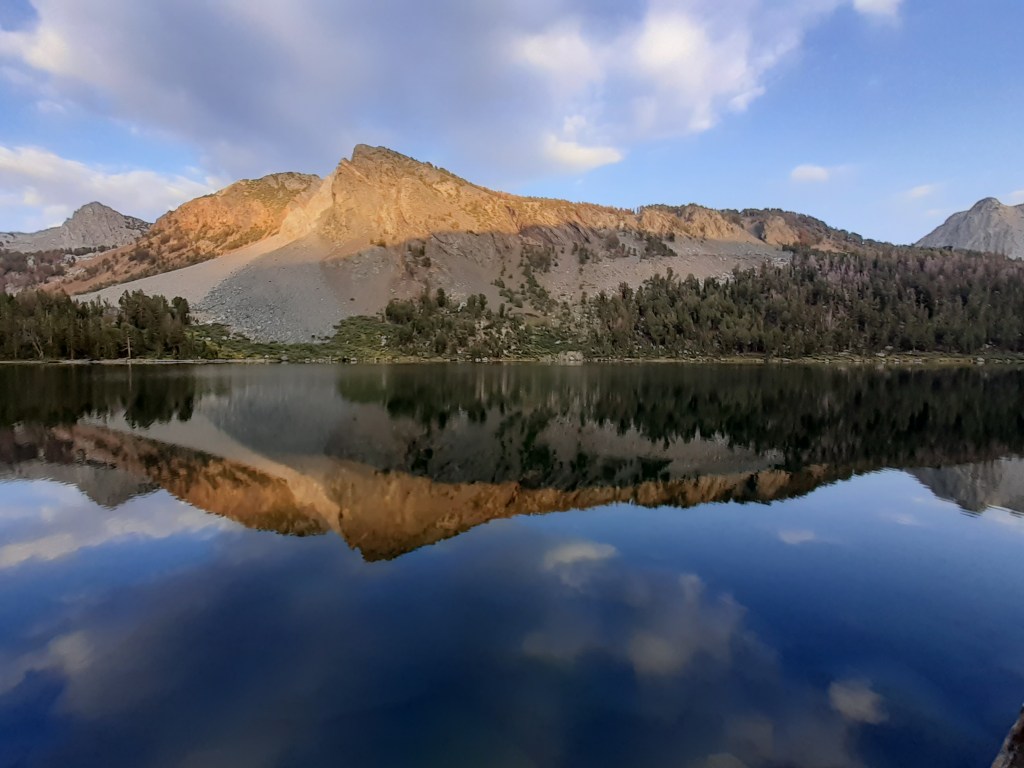
By the time I had reached Purple Lake, I was ready to harvest my trout. The buzz around camp was that a dry fly at 5:30 would get me my quarry. I had every reason to follow through. The principal reason, in my mind, was that the Rainbow Trout in Purple Lake did not belong. (Not to mention that they are delicious.) The Sierra Nevada lakes above about 6,000 feet have never had any native trout. My trout’s ancestors were an introduced species, maybe even deposited by a low flying Cessna back in the 1950s.
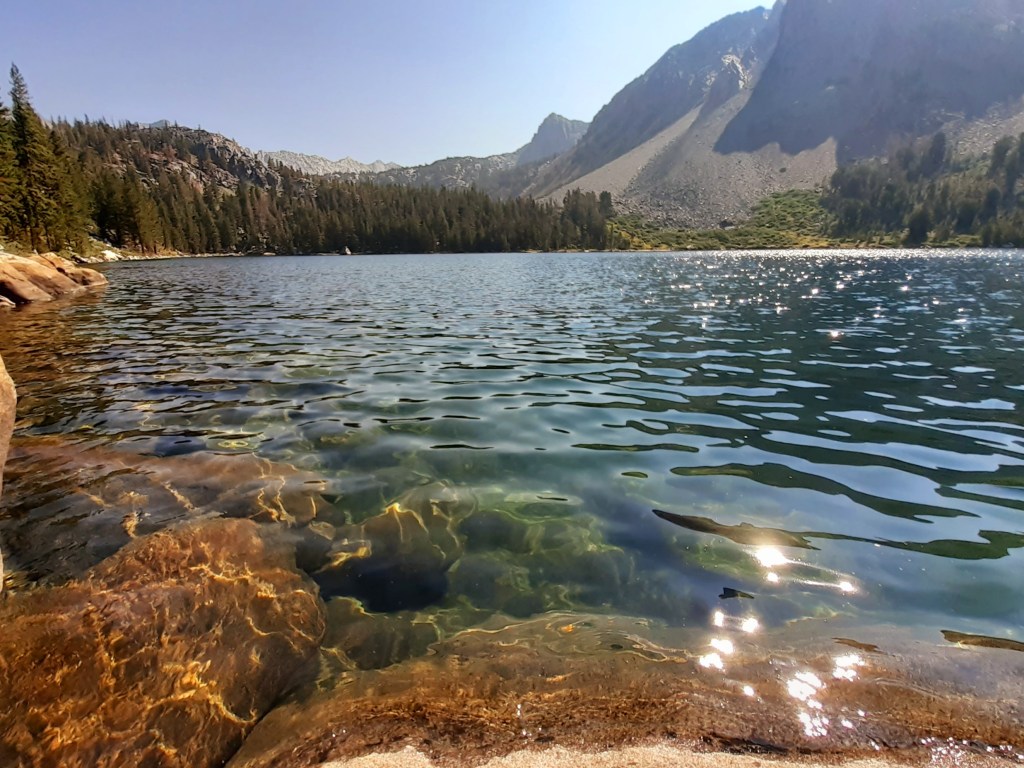
There was one nagging problem and it was that darn book in my backpack. As I read on, the author gently suggested that many non-native species introduced to North America have been destructive. “That’s right!”, I thought. The Rainbow Trout, for example. Once the Department of Fish and Game had stocked these high sierra lakes with trout, the trout ate all the amphibians. Bad fish!
The author suggested other non-native species that had caused much destruction. She explained how these introduced species could never become native, but that they could become naturalized. I understood then that I fell into the category of “introduced”, not-native. I was not that different from the trout I was so eager to eradicate. “Judge not, lest ye be judged.” The author covered this topic with grace and forgiveness.
I felt I owed the trout the same level of grace and forgiveness. I hooked, retrieved and dispatched my trout with as much efficiency, humaneness and humbleness as I could.
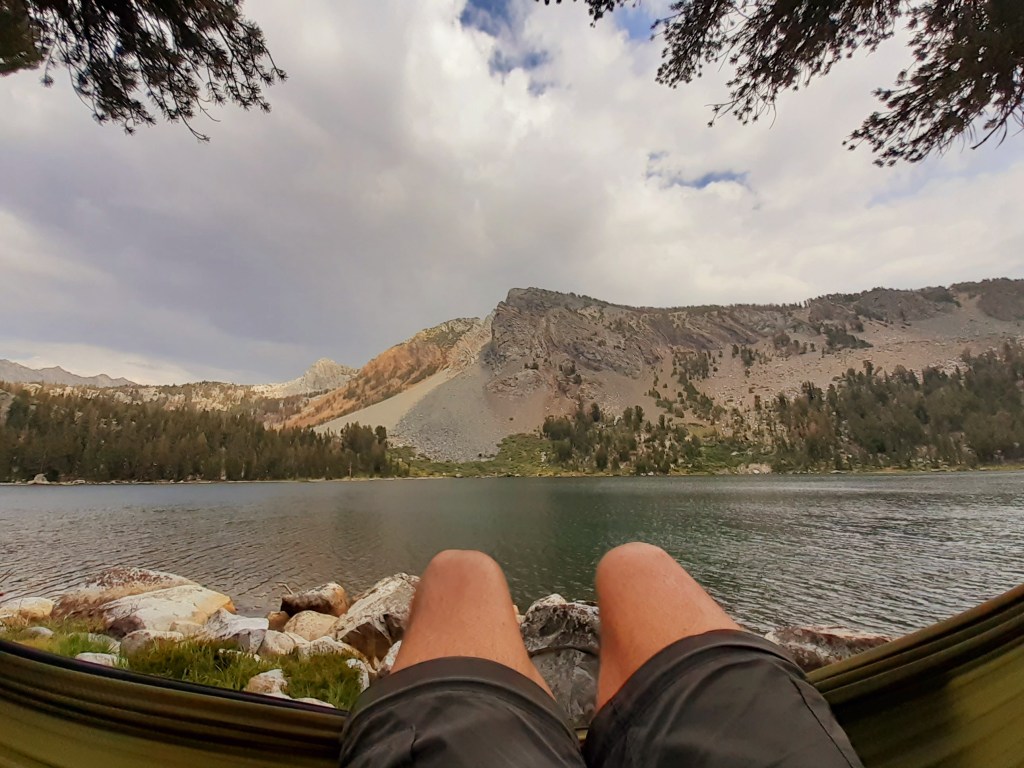
I then enjoyed the best “zero day” yet. I played house around my idyllic trail camp. I swam. I rested in my hammock. I also continued my reading of Braiding Sweetgrass.
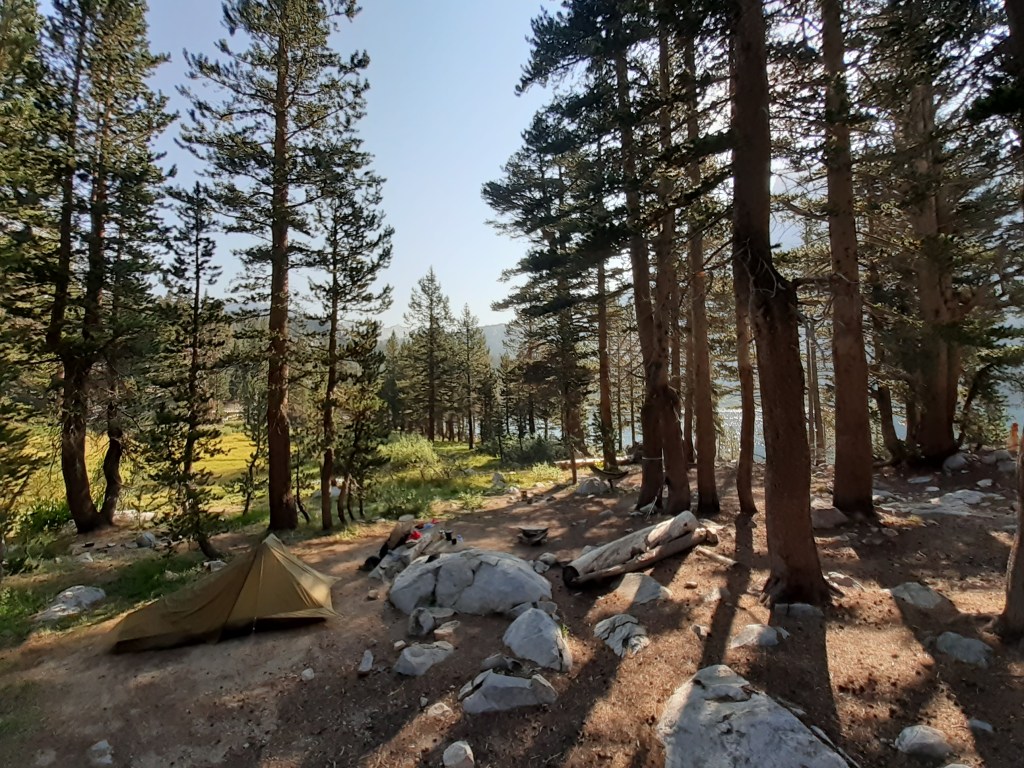
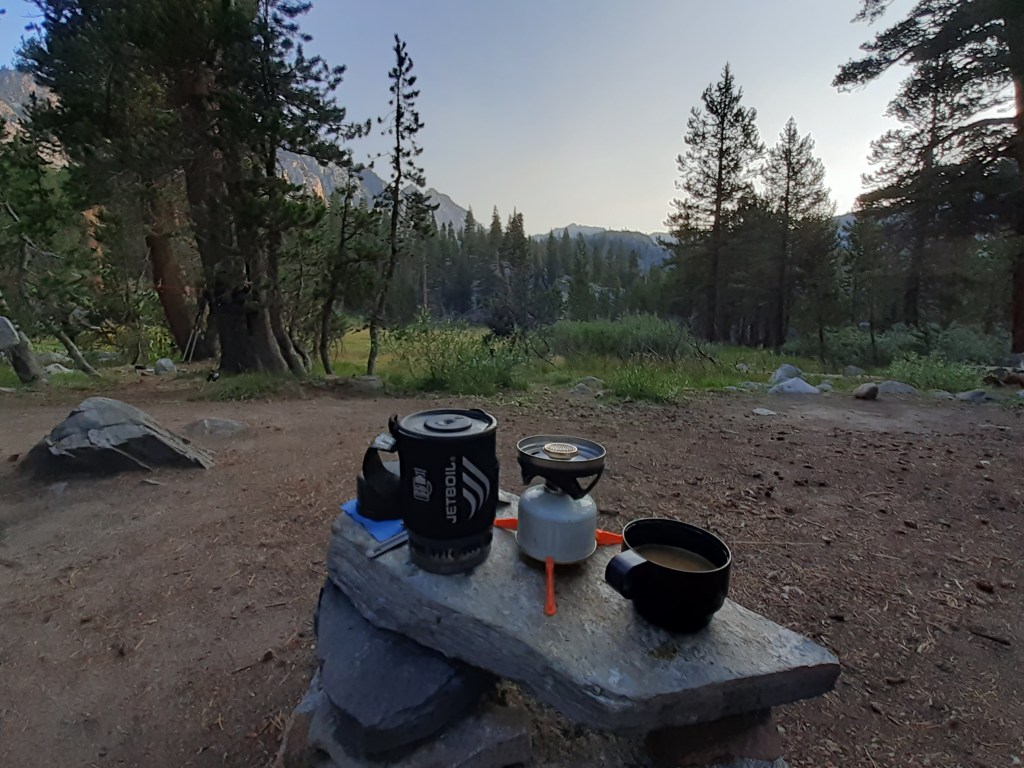
My next lesson was about “reciprocity”. I learned that according to the rule of reciprocity, by taking from Purple Lake I now had to give something back to Purple Lake. As I swung to and fro in my hammock, I considered my options. The author had discussed land “reclamation” as a way to honor reciprocity and give back to the earth. I then noticed an illegal trail camp on the shore of the lake. It was ten feet from the lake shore instead of one hundred. Lakeside trail camps lead to erosion followed by siltation which then leads to decreased lake clarity.
I went to work.
Once again, I had the lake to myself. First I swept the camping area with a pine bough. Next I dragged three dead trees and laid them across the camp. I then planted boulders here and there – much like a zen garden. As I finished up my work, I heard footsteps on the trail. Startled, and feeling a little guilty about my unsanctioned reclamation project, I quickly greeted the hiker and asked about the weather. (It had begun to rain.)
As we got to know one another, I learned that the hiker was a Stanford undergraduate student who had taken an internship with the John Muir Trail Conservancy. Her job for the summer was to map and document illegal campsites along the John Muir Trail.
I pointed to my reclaimed campsite and asked “What about this one?”. “Oh that one is way too close to the lake, but it looks like one of our volunteers got a good start on reclaiming it.” At this point, I proudly revealed that it was I, “Guardian of Purple Lake” who had done the handy work. The intern was very happy and thanked me many times. “But you really should iceberg those boulders” was her closing comment. I had simply placed the boulders on the ground. To discourage future campers from using the site, the boulders should be buried in the ground with only their pointy tops exposed. This way they are not so easily removed.
Has my balance sheet changed? Was I still in the red, or was I in the black? When could I expect another visit from The Windigo? Or was The Windigo just a female cougar who was “in season” and simply saying: “Hey boy, get over here! Momma wants a baby!”
I’m not quite sure. All I know is this: I sure am anxious and ready to return to Purple Lake and “iceberg” those boulders.
(Originally published on August 17, 2021)

 "Trail Reports"
These stories are great. I’m still a bit confounded by not knowing this all was so much of your life
Ms Elegant 76?? Day 40 crazy. Great pics. “Iceberging” genius term and that scream who the heck knows??
Don Fred Colegio Nueva Granada class of 79.
LikeLike
I know, right? I guess Colombia in the ’80s just wasn’t that “backpacking friendly”! : )
LikeLike
once again your story (short) is wonderful. I expect a whole book eventually with this one and the others as chapters. Fine work! ps. have known about the Windigo for many years… glad to see your encounter… and you lived to tell the tale.
LikeLike
I feel very fortunate!
LikeLike
Thank you! They say that “the trail provides.” In this case the trail provided a good story.
LikeLike
Simply Mammoth!
LikeLike
Indeed! Especially lunch at Reds Meadow!
LikeLike
Reminds me of the scream from the classic book Where the Red Fern Grows. Best to have a dog with you, like Billy Coleman! You have found your retirement niche, so happy for you!
LikeLike
I loved that book! It’s time to read it again. (I often think of how comforting it would be to have a trail dog.)
LikeLike
Happy to hear you’ve been enjoying the book! I have heard that mountain lions do sound eerily like a woman in distress. Whether it was a mountain lion or a spirit, it sounds like your hike provided you with a lot to consider!
LikeLike
Indeed!
LikeLike
The milkshakes!!
LikeLike
Worth every cent!
LikeLike